


Route Briefing: Houston to Belize
From Houston's George Bush Intercontinental, you're just three and a half hours from one of the most quietly spectacular destinations in the Western Hemisphere. That's barely enough time to finish a movie before you're touching down in a country where the jungle meets the Caribbean Sea and ancient civilizations left their mark on nearly every hillside. For a trip this transformative, the distance is almost laughably short.
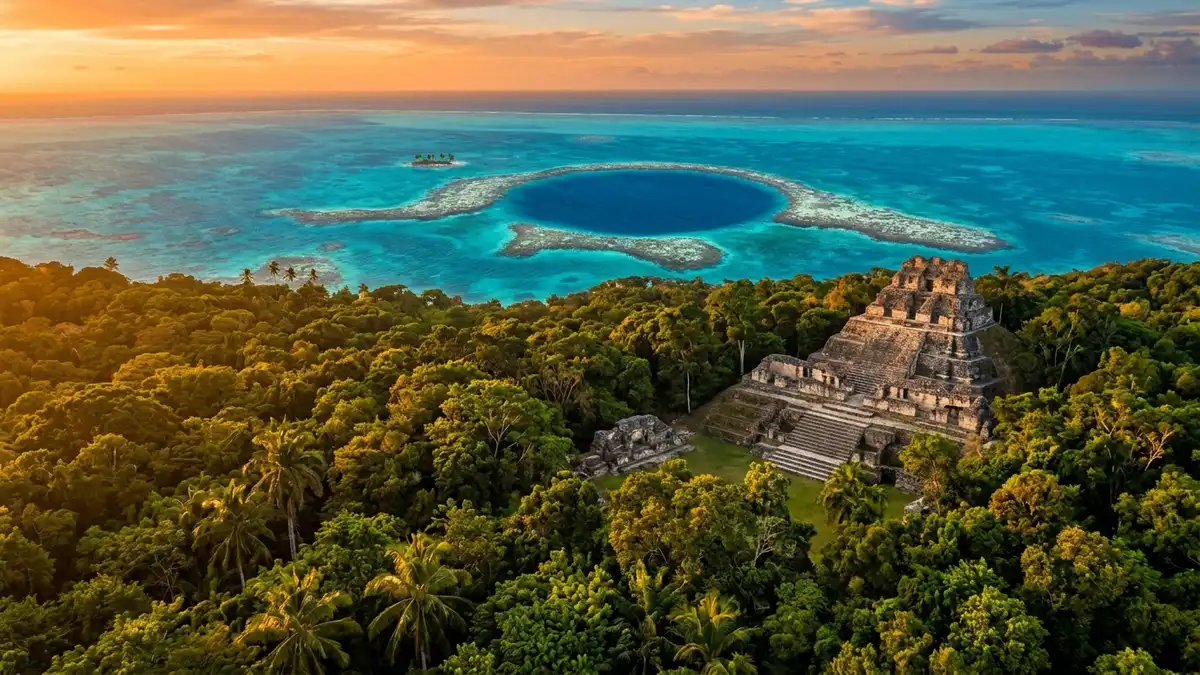
Belize punches well above its weight. The Great Blue Hole — a massive underwater sinkhole off the coast — is one of the most iconic dive sites on the planet, drawing snorkelers and scuba divers from around the world. Inland, the Mayan ruins at Caracol and Xunantunich are genuinely awe-inspiring, and unlike some of the more tourist-heavy archaeological sites in the region, you can often explore them without enormous crowds pressing in around you. The rainforests are alive with howler monkeys, toucans, and jaguars, and the country's commitment to conservation means much of that wilderness is protected. English is the official language, which makes navigating everything from menus to tour bookings refreshingly straightforward for American travelers.
Philip S. W. Goldson International Airport sits just outside Belize City, and water taxis and domestic flights connect you quickly to the cayes — the small islands like Caye Caulker and Ambergris Caye where most visitors base themselves for beach and reef adventures. Ambergris Caye is the more developed and lively of the two; Caye Caulker is famously laid-back, with the local motto "Go Slow" painted on signs throughout the village.
United Airlines, American Airlines, and Copa Airlines all serve this route, giving you solid options for finding competitive fares. A roundtrip under $350 is a genuinely good deal here — standard pricing tends to run $550 or more. To hit that sweet spot, book six to eight weeks ahead and steer clear of the Thanksgiving and Christmas windows, when prices climb sharply. The peak season runs December through April, when the weather is dry and breezy, but that's also when fares and accommodation costs are highest. Shoulder season — late spring or early fall — can offer meaningful savings if you're flexible and don't mind the occasional afternoon shower.
The one tip worth burning into your memory: Belize uses the Belize dollar, which is pegged at a fixed two-to-one rate against the US dollar. Many places accept US cash directly, so you can skip the currency exchange confusion entirely and always know exactly what you're spending. Simple, practical, and one less thing to think about when you're busy watching the reef slide past beneath your snorkel.