


Route Briefing: Houston to Reykjavik
Flying from Houston to Reykjavik is one of those routes that genuinely rewards the effort. You're looking at around 11 and a half hours with one stop, typically connecting through a hub like Newark or a European city, and carriers like Icelandair, United, and Lufthansa cover this route well. It's not a quick hop, but the moment you land in Iceland, you'll understand immediately why people keep coming back.
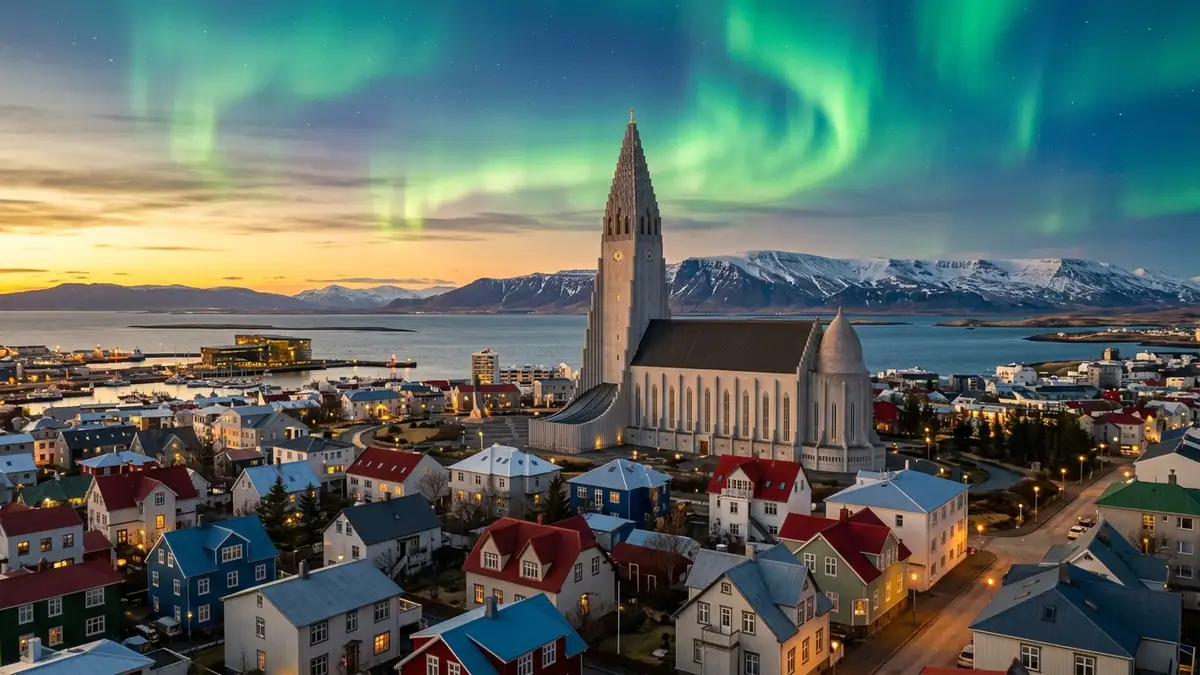
Reykjavik holds the distinction of being the world's northernmost capital, and that geographic quirk shapes everything about the experience. The city is compact, walkable, and surprisingly cosmopolitan — colorful corrugated-iron houses sit alongside excellent restaurants, lively bars, and a genuinely warm local culture. But let's be honest: most people come for what lies just outside the city. The Golden Circle route loops you through Þingvellir National Park, the Geysir geothermal area, and the thundering Gullfoss waterfall — all within a day trip. The Blue Lagoon, that iconic milky-blue geothermal spa, sits conveniently close to Keflavik Airport, making it a brilliant first or last stop on your trip. And if you visit between late September and March, the Northern Lights are a genuine possibility on clear nights away from the city lights.
Timing matters enormously on this route. Peak season runs June through August, when Iceland basks in near-constant daylight — the famous midnight sun is a surreal, magical experience. Demand surges dramatically during these months, so if summer is your target, book four to six months in advance. Fares under $600 roundtrip represent a genuinely good deal; standard pricing climbs well above $900, so patience and early planning pay off here.
From Keflavik Airport, regular bus services run directly into Reykjavik, making the transfer straightforward and affordable without needing to arrange a private transfer in advance.
The one tip worth burning into your memory: seriously consider shoulder season travel in May or September. You'll catch decent weather, far smaller crowds at popular sites like the Golden Circle, and meaningfully lower airfares. Iceland's landscapes don't need sunshine to be dramatic — the moody skies and raw volcanic terrain are arguably more atmospheric when the tourist rush has thinned out. For a destination this extraordinary, a little strategic timing goes a very long way.