


Route Briefing: Las Vegas to Bangkok
Las Vegas and Bangkok share a certain audacity — both cities refuse to sleep, both overwhelm the senses in the best possible way, and both reward travelers who lean into the chaos rather than resist it. That spiritual kinship makes this long-haul journey feel less like a departure and more like a natural progression.
The flight runs roughly 17 hours and 30 minutes with one stop, and that layover is actually part of the appeal. Korean Air, EVA Air, and Cathay Pacific dominate this route, routing you through Seoul, Taipei, or Hong Kong respectively — all genuinely world-class transit hubs where even a few hours in the terminal feels like a preview of Asia's efficiency and hospitality. Snag a roundtrip under $700 and you've done exceptionally well; standard fares typically land between $1,000 and $1,400, so booking three to six months ahead is the single most effective move you can make. Flexibility on your layover city can unlock meaningful savings, so compare all three hub options before committing.
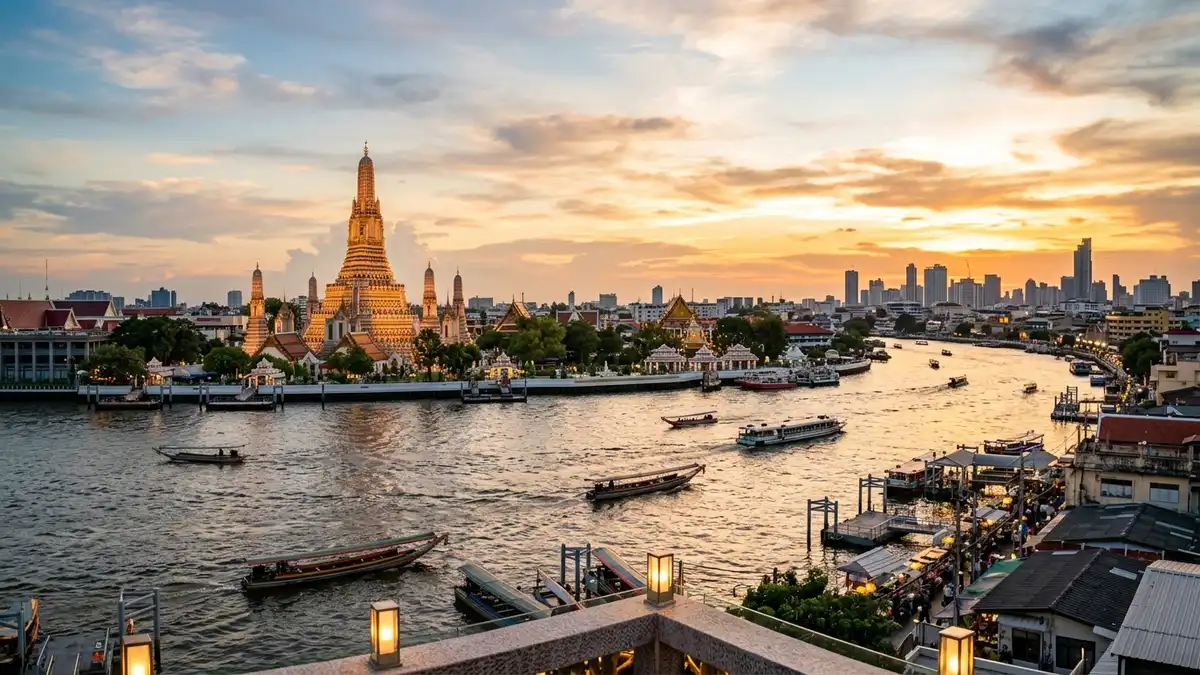
Bangkok itself is one of those cities that permanently rearranges your sense of what a metropolis can be. The temples alone justify the journey — Wat Phra Kaew inside the Grand Palace complex and Wat Arun rising above the Chao Phraya River are genuinely among the most visually stunning religious sites on earth. But Bangkok's real magic lives at street level, in the sizzle of pad kra pao from a cart, the organized chaos of Chatuchak Weekend Market, and the surreal experience of watching the city's rooftop bar scene glitter above the sprawl at dusk.
From Suvarnabhumi Airport, the Airport Rail Link connects directly into the city center quickly and cheaply — it's the smartest way to avoid Bangkok's notorious traffic, especially during rush hours. Grab a transit card and you'll navigate the BTS Skytrain network across the city with ease.
Timing matters here. November through February is peak season for good reason — the weather is drier and cooler, making temple-hopping and outdoor markets genuinely comfortable. July and August also see a surge in visitors, though the wet season means afternoon downpours are common. If you want lower fares and thinner crowds, the shoulder months of March, April, and October offer a reasonable trade-off.
One tip that separates good Bangkok trips from great ones: build at least one full unscheduled day into your itinerary. Some of the city's best experiences — a longtail boat ride through the canals, stumbling into a neighborhood market, finding a temple courtyard completely to yourself — happen when you put the map away and simply wander.