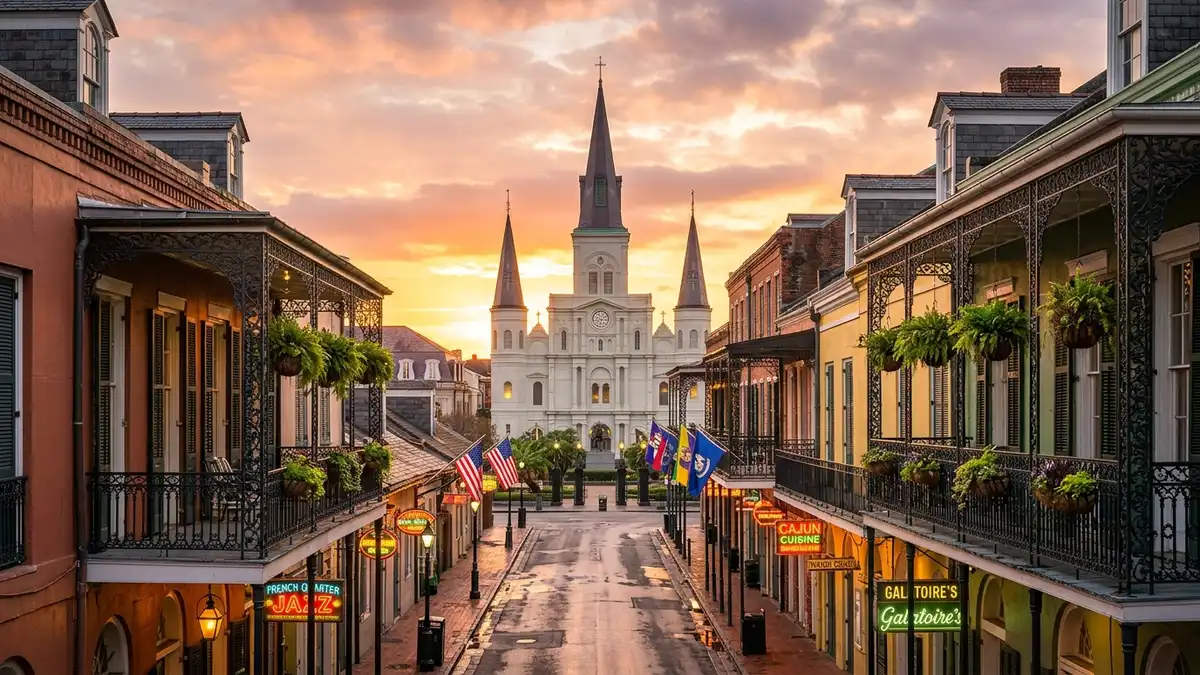



Route Briefing: Las Vegas to New Orleans
Trading the neon desert of Las Vegas for the sultry, moss-draped streets of New Orleans is one of those trips that feels like swapping one fever dream for another — except in the best possible way. Both cities know how to have a good time, but New Orleans does it with a century-old soulfulness that Vegas simply can't manufacture. At around four and a half hours with a connection, this route is entirely manageable, and when you snag a roundtrip fare under $250 — which is genuinely achievable if you plan ahead — it becomes one of the more compelling value trips in the American South.
Southwest, American, and United all service this route, so you have real options when it comes to timing and flexibility. The key is booking four to six weeks out, which tends to be the sweet spot before prices climb toward that $400-plus standard fare territory. One thing worth knowing upfront: if Mardi Gras is on your radar, understand that the entire city transforms in February, and airfare and accommodation prices spike dramatically. Unless the parade experience is your primary goal, you'll get far more for your money — and a more relaxed version of the city — by visiting in the fall or early winter.
Once you land at Louis Armstrong New Orleans International Airport, the city center is accessible by taxi, rideshare, or the airport's direct bus connection into downtown. The French Quarter is your natural first stop, a neighborhood where the architecture alone — those wrought-iron balconies dripping with ferns and hanging plants — tells you immediately that you're somewhere unlike anywhere else in America. Bourbon Street gets all the headlines, but wander a few blocks to Frenchmen Street in the Marigny neighborhood and you'll find live jazz spilling out of small clubs every single night, played by musicians who treat it as a genuine art form rather than a tourist performance.
New Orleans cuisine is its own education. Beignets dusted in powdered sugar, a bowl of gumbo, a proper po'boy sandwich, crawfish étouffée — these aren't just meals, they're cultural artifacts. The city's Creole and Cajun food traditions run deep, and eating well here doesn't require spending a fortune.
The genuinely useful tip: visit in October or November. The brutal summer humidity has broken, the crowds are thinner than peak season, and the city's music festivals and food events keep the calendar lively. You'll experience the real rhythm of New Orleans without the chaos — and your wallet will thank you for it.