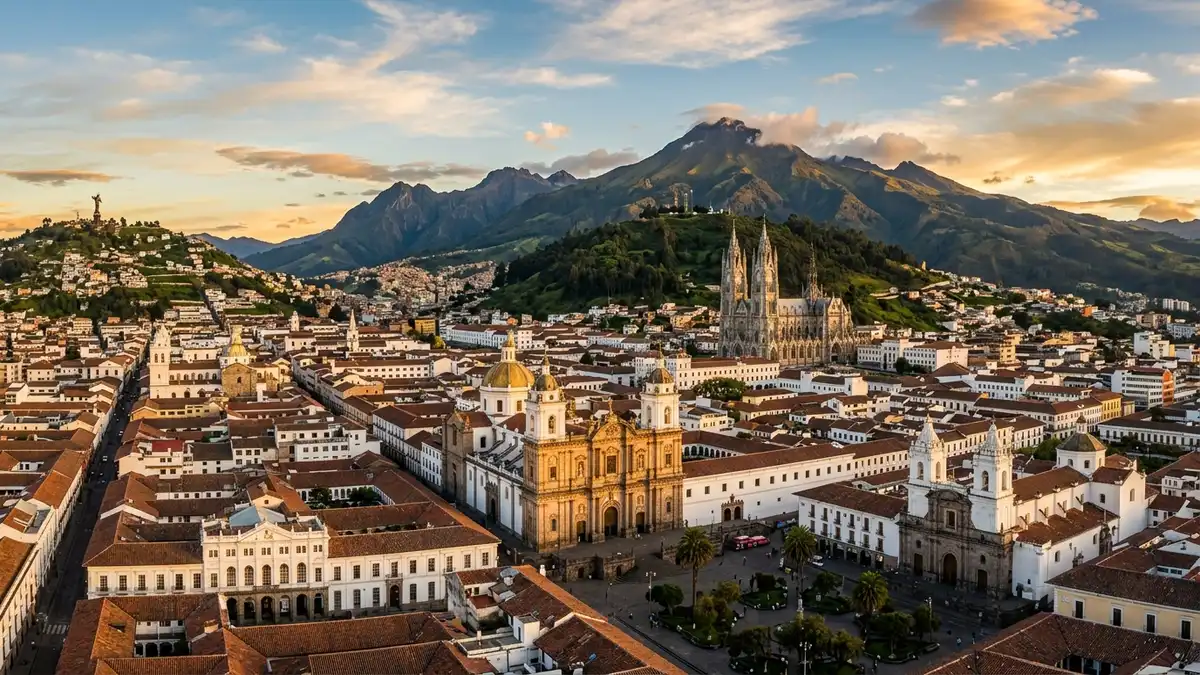



Route Briefing: Las Vegas to Quito
Trading the neon sprawl of the Las Vegas Strip for the cloud-kissed spires of a 16th-century Andean capital is one of those travel contrasts that reminds you why you bought a passport in the first place. The journey from LAS to Quito runs around 13 and a half hours with a connection, typically routing through Miami, Houston, or Panama City — American Airlines, United, and Copa Airlines all serve this corridor regularly. It's not a quick hop, but what's waiting on the other end more than justifies the travel day.
Quito sits at roughly 9,350 feet above sea level, making it one of the highest capital cities on Earth, and that altitude shapes everything about the experience — the crisp mountain air, the dramatic cloud formations rolling over the surrounding volcanoes, and yes, the gentle reminder to take it easy your first day while your body adjusts. The city's historic center is a UNESCO World Heritage Site, and for good reason. The colonial architecture here is among the best-preserved in the Americas, with ornate churches like La Compañía de Jesús dazzling visitors with gilded interiors that feel almost surreal. Wander the cobblestone streets of the old town and you'll find yourself in a living museum that somehow still feels genuinely inhabited and alive.
Quito also serves as the primary gateway to the Galápagos Islands, so if that bucket-list trip is on your radar, this route does double duty. Even without island-hopping, the surrounding Andean highlands offer incredible day trips — the Mitad del Mundo monument marking the equatorial line is a short drive from the city center.
From Mariscal Sucre International Airport, taxis and rideshare services are widely available to reach the city, and the journey into central Quito typically takes around 45 minutes depending on traffic. Agree on a fare or use a metered cab to avoid surprises.
On the pricing front, this route rewards patience and planning. A roundtrip under $450 is genuinely achievable if you book two to four months ahead — compared to the standard $700-plus fares that appear when you leave it to the last minute. Flying mid-week rather than on weekends can shave another 10 to 20 percent off the ticket price, which in this case is real money worth saving for ceviche and cloud forest excursions.
Peak travel falls between June and August and again in December and January, so if flexibility is on your side, the shoulder months offer thinner crowds and friendlier prices without sacrificing the experience. Quito operates year-round, and its equatorial location means the climate stays relatively consistent — cool and pleasant rather than tropical, which often surprises first-time visitors expecting equator to mean heat.