


Route Briefing: London to Budapest
Budapest is one of those cities that genuinely rewards the traveller who makes the effort, and from London, that effort is barely two hours and forty-five minutes. It's one of Europe's most underrated short breaks, and the flight prices reflect a route that's been quietly popular for years — snag a roundtrip under $120 and you're doing very well, though $200 to $350 is a more typical range depending on when you book.
Wizz Air and Ryanair dominate this corridor, with British Airways also flying the route if you prefer a more traditional experience. The budget carriers tend to operate out of Stansted or Gatwick, and here's a tip worth remembering: choosing either of those over Heathrow can shave a meaningful chunk off your fare — sometimes 20 to 30 percent. Midweek departures tend to be cheaper too, so if your schedule has any flexibility at all, use it. Aim to book six to ten weeks ahead for the best prices on what is a consistently popular route.
Once you land at Budapest Ferenc Liszt International Airport, the city centre is straightforward to reach. A dedicated airport shuttle bus connects to the metro network, which then drops you into the heart of the city relatively quickly and cheaply — far more economical than a taxi for solo travellers or couples.
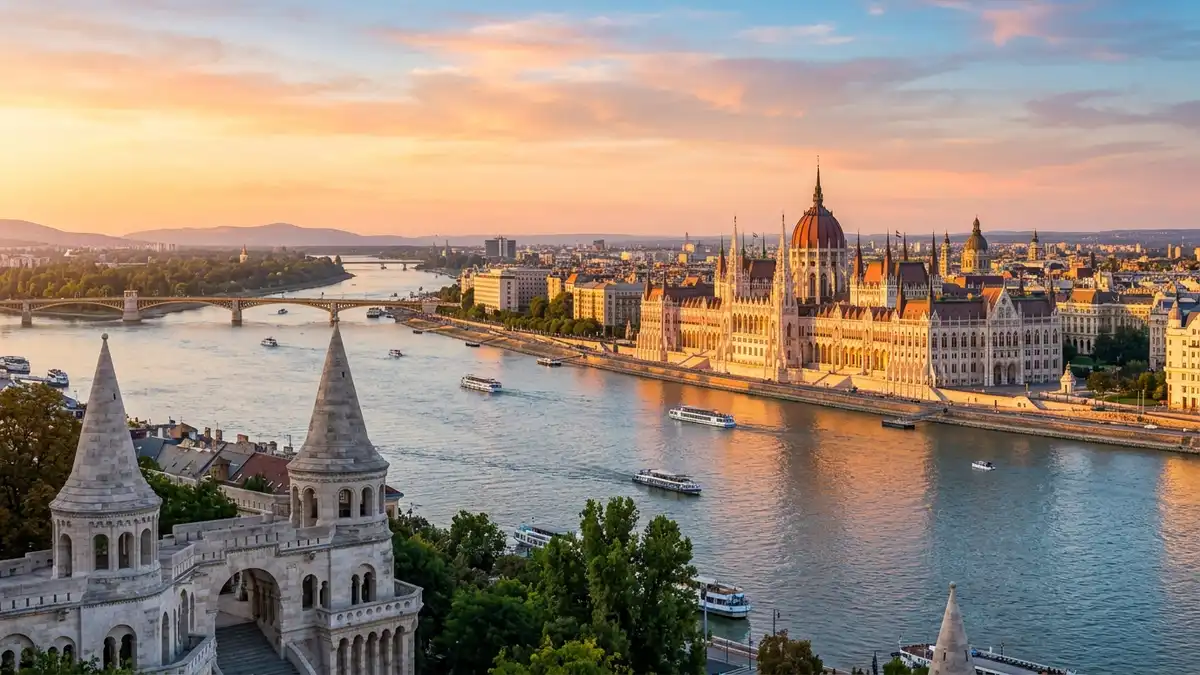
Budapest itself is the kind of place that makes you feel like you've discovered something, even though millions of visitors have been here before you. The Hungarian capital straddles the Danube with an almost theatrical confidence — Buda's castle district rising on one side, the flat grandeur of Pest on the other. The neo-Gothic Parliament building, one of the most beautiful in the world, is best seen at dusk when the lights come on and the river turns gold.
The thermal baths are non-negotiable. Budapest sits on a network of natural hot springs, and soaking in one of the grand historic bathhouses is as much a cultural experience as a relaxing one. The ruin bars of the Jewish Quarter are equally iconic — sprawling, eclectic spaces built into crumbling courtyards that somehow manage to feel both chaotic and welcoming.
Food and drink here punch well above their price point. Hungarian cuisine is hearty and deeply satisfying, and your money goes considerably further than it does in Western Europe. That value extends across accommodation, restaurants, and nightlife, making Budapest a genuinely affordable city break even when airfares aren't at their cheapest.
Peak season runs June through August when the city is warm, lively, and buzzing with festivals. But shoulder season — particularly spring and early autumn — offers a sweeter deal: fewer crowds, pleasant temperatures, and the same extraordinary city at a fraction of the summer cost.