


Route Briefing: London to Siem Reap
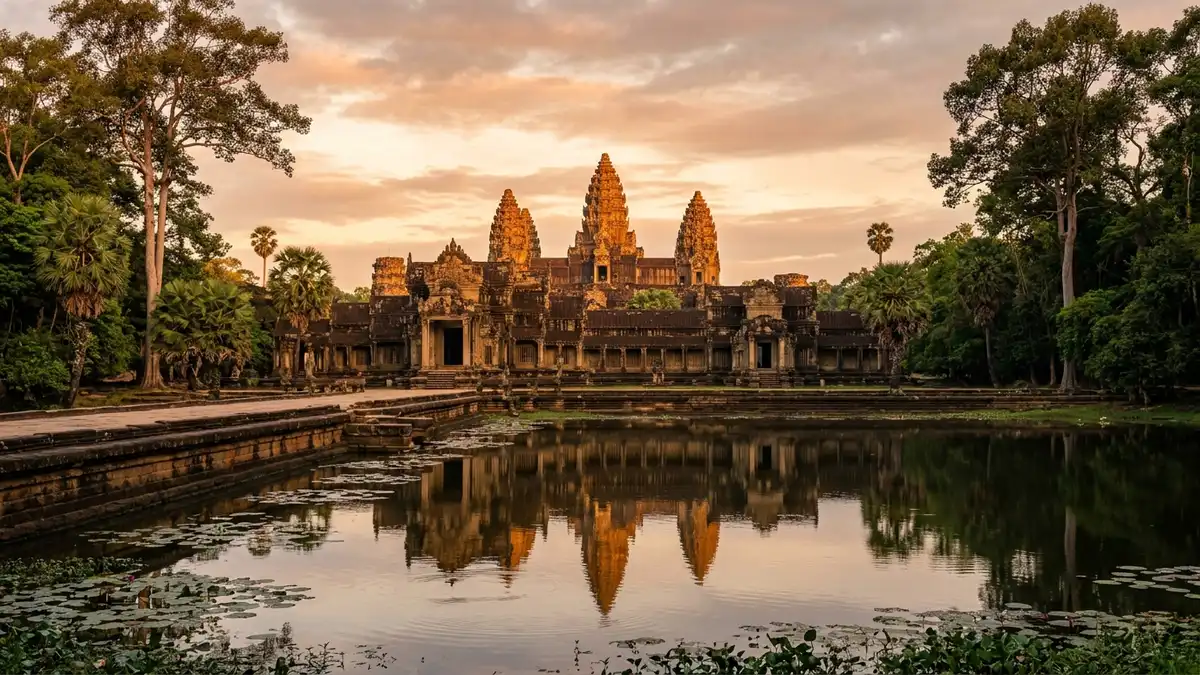
Few routes from London reward the journey quite like the flight to Siem Reap. Yes, you're looking at around fourteen and a half hours in the air with a stop along the way, but what waits at the other end is genuinely unlike anywhere else on earth — the ancient temple complex of Angkor Wat, the world's largest religious monument, rising out of the Cambodian jungle in a way that photographs simply cannot prepare you for.
Airlines like Thai Airways, Vietnam Airlines, and Cathay Pacific serve this route well, and connecting through Bangkok or Ho Chi Minh City tends to bring the most competitive fares. If you can snag a roundtrip under $700, you're doing well — standard fares regularly push past $1,000, so it's worth setting fare alerts and being flexible with your dates. Booking three to six months ahead is the sweet spot, particularly if you're targeting the peak season between November and February, when the skies are dry and blue and the temples glow in cool, golden light. That said, the shoulder months either side of peak season offer a quieter, often cheaper experience, and even the wetter months have their own dramatic beauty.
Siem Reap itself is a small, walkable city that has grown gracefully around its role as the gateway to Angkor. Tuk-tuks are the classic way to get from the airport into town and out to the temple complex — affordable, breezy, and genuinely fun. The old market area, known as Psar Chas, is a good anchor point for eating and exploring, with street food stalls and local restaurants serving Khmer dishes like fish amok and lok lak. Cambodian cuisine is subtler and more herb-forward than some of its Southeast Asian neighbours, and it's worth eating as locally as possible.
For the temples themselves, an early start is non-negotiable. Arriving at Angkor Wat before sunrise means you'll see the reflection of the towers in the moat as the sky shifts colour — one of those rare travel moments that genuinely lives up to the hype. Beyond the main temple, the jungle-consumed ruins of Ta Prohm and the vast faces of Bayon at Angkor Thom are equally extraordinary and often less crowded later in the morning.
The one tip that makes a real difference: buy a multi-day Angkor pass rather than a single-day ticket. The complex is enormous, and trying to rush it in one visit means missing the quieter corners where the atmosphere is most powerful.