


Route Briefing: Los Angeles to Munich
Los Angeles to Munich is one of those transatlantic routes that genuinely rewards the effort of a long-haul flight. You're trading Pacific sunshine for Alpine air, and the contrast alone feels worth every hour in the sky. Expect around 11 hours 30 minutes with a connection — Lufthansa, United, and Air Canada all serve this route regularly, with Lufthansa often routing through Frankfurt before continuing on to Munich. It's a year-round route, which means flexibility is on your side if your travel dates are open.
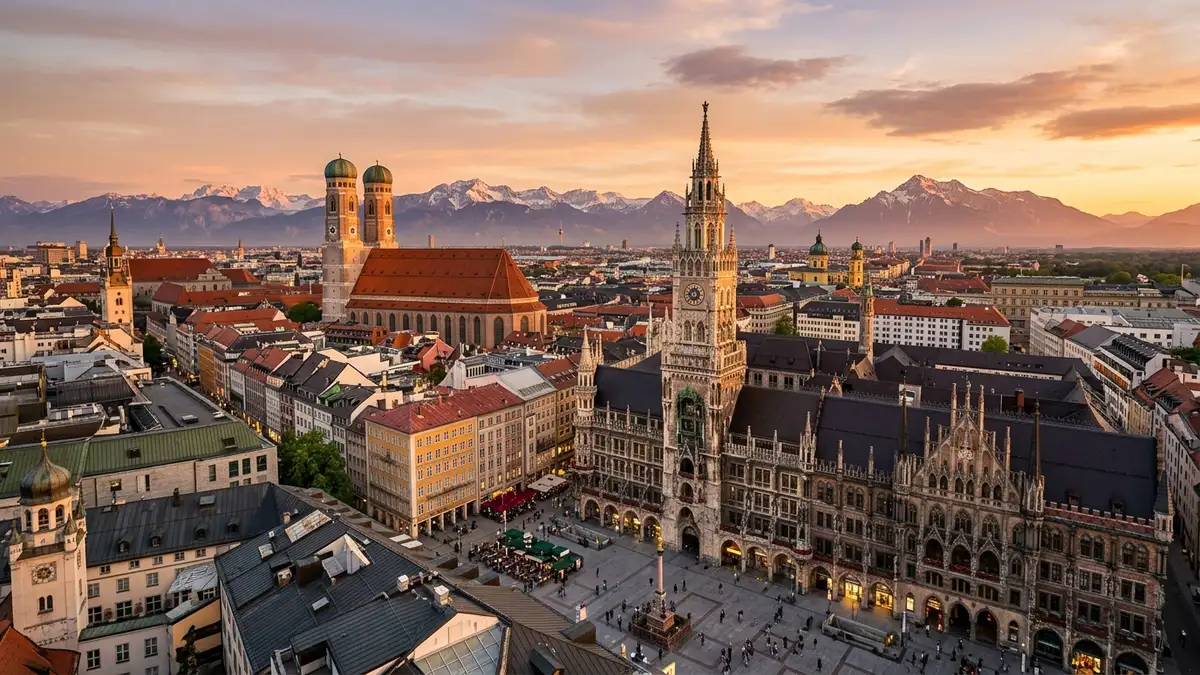
Munich has a way of surprising people who expect it to be purely about lederhosen and lager. Yes, the beer gardens are real and genuinely wonderful — sitting under chestnut trees with a Mass of Helles on a warm afternoon is one of Europe's great simple pleasures. But the city is also home to world-class museums, a beautifully preserved old town centered on Marienplatz, and a sophistication that reflects its status as one of Germany's wealthiest cities. The BMW Museum is a legitimate highlight even for non-car enthusiasts, and the English Garden is one of the largest urban parks in the world, complete with a river wave that surfers ride year-round.
The real magic, though, is Munich's position as a gateway. Neuschwanstein Castle, the fairytale fortress that inspired Disney, is roughly two hours by train. The Austrian Alps and Salzburg are similarly accessible for day trips. You're not just visiting a city — you're unlocking a whole corner of Central Europe.
On arrival, the S-Bahn train connects Munich Airport directly to the city center efficiently and affordably, making a taxi largely unnecessary unless you're traveling with heavy luggage or in a group.
For timing, June through August is peak season and the city is buzzing, but fares reflect that demand. A roundtrip under $700 represents a solid deal on this route, with occasional finds in the $550–$650 range if you're watching fares closely. Standard pricing runs $900 to $1,200 or more. Book three to five months ahead for summer travel, and if you can fly mid-week rather than Friday or Sunday, you can realistically save 15 to 25 percent compared to peak weekend departures.
One genuinely useful tip: consider timing your visit for late September rather than Oktoberfest's opening weeks. The festival runs into early October, crowds thin slightly toward the end, accommodation prices ease, and the autumn light on the Alps is extraordinary. You still get the full experience without the most chaotic weekend crush.