


Route Briefing: Los Angeles to Penang
Getting from Los Angeles to Penang takes around 20 and a half hours with one or two stops, but seasoned travelers will tell you this is one of those journeys where the destination absolutely justifies the effort. You're trading a long flight for one of Southeast Asia's most rewarding food and culture destinations — a UNESCO-listed city that genuinely earns every superlative thrown at it.
Cathay Pacific, Malaysia Airlines, and Singapore Airlines all serve this route well, with connections typically routing through Hong Kong, Kuala Lumpur, or Singapore. That last leg into Penang International Airport is short and scenic, and once you land, getting into Georgetown is straightforward — taxis and ride-hailing apps like Grab are widely available and affordable by Western standards. Grab in particular is worth downloading before you arrive, as it'll save you any fare negotiation headaches and works seamlessly throughout Malaysia.
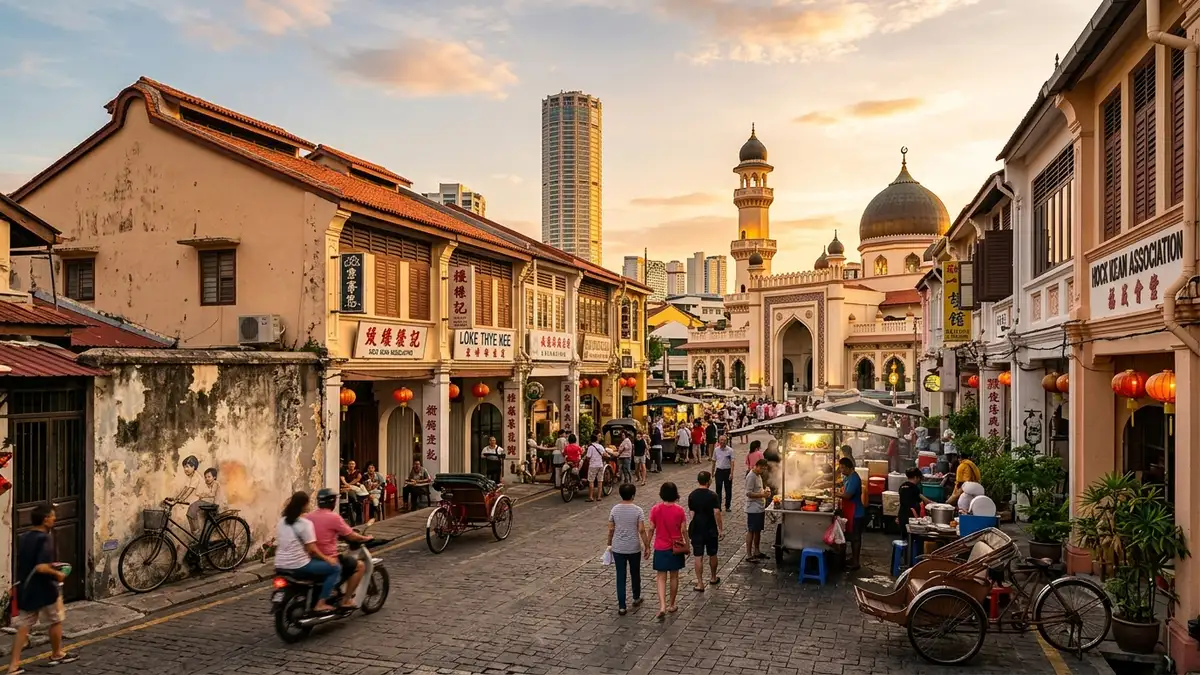
Georgetown itself is a living, breathing museum of multicultural heritage. The old town's streets layer Malay, Chinese, Indian, and colonial British influences into an architectural patchwork that feels genuinely unlike anywhere else in the region. The famous street art — large-scale murals and iron rod caricatures scattered across the heritage quarter — gives the city a playful, discoverable quality that rewards slow, wandering exploration on foot.
But let's be honest: most people come for the food. Penang's hawker culture is legendary even by Malaysia's exceptionally high culinary standards. Char kway teow, assam laksa, nasi kandar, and cendol are dishes that locals and food pilgrims alike will argue about passionately. Eating well here costs almost nothing, which makes the overall trip surprisingly budget-friendly once you've landed.
On the fare side, a roundtrip under $700 is a genuinely good deal on this route — standard pricing tends to sit between $1,000 and $1,400 or higher. Book two to four months out for the best shot at those lower fares, as prices can spike sharply closer to departure. Peak travel periods run June through August and again December through January, so if your schedule is flexible, the shoulder months on either side offer both better prices and slightly thinner crowds.
One tip worth remembering: if you're connecting through Singapore or Kuala Lumpur on a longer layover, both airports are exceptional — consider building in a few extra hours to explore rather than rushing the connection. Changi Airport in Singapore in particular is an experience in itself, and a quick city dash is very doable with the right timing.