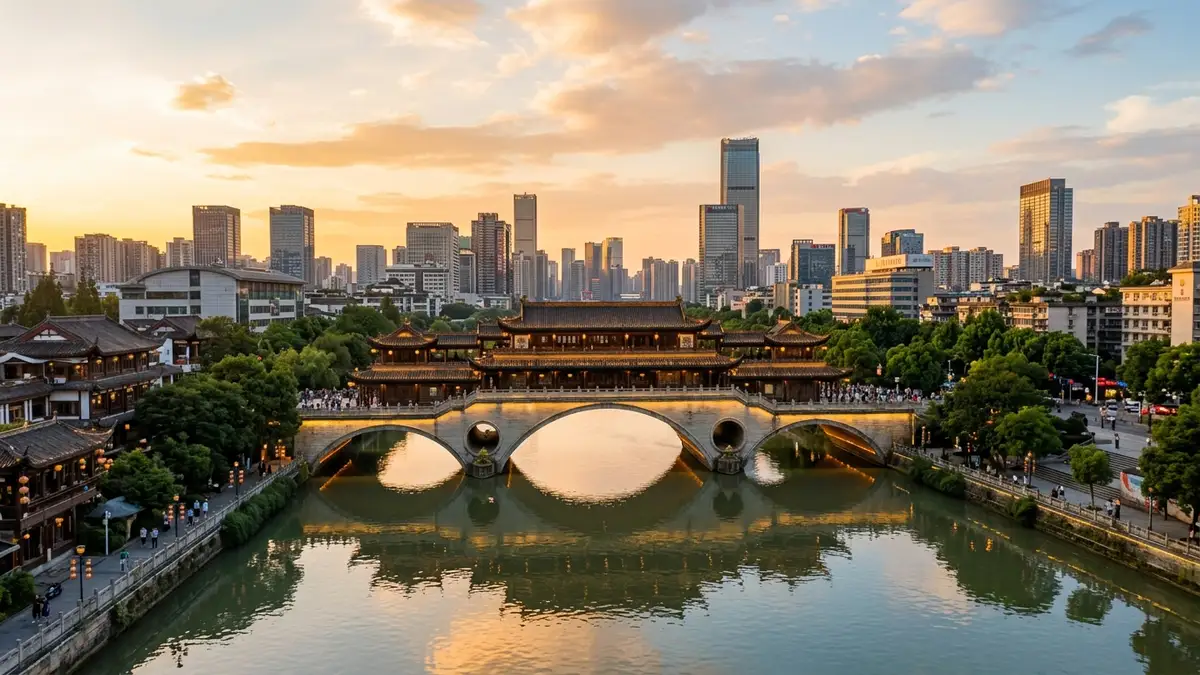



Route Briefing: Miami to Chengdu
Few American cities feel as far from Chengdu as Miami does — one is all salt air and salsa rhythms, the other a sprawling inland metropolis where pandas munch bamboo and chili oil perfumes every alleyway. That contrast alone makes this roughly 20-and-a-half-hour journey (with one stop) one of the more rewarding long-haul adventures you can book out of South Florida.
Fares are the first thing to get excited about. Roundtrip tickets under $700 represent genuinely strong value for a transpacific route of this distance, though standard pricing climbs past $1,100, so timing your search matters. Air China, China Eastern, and United Airlines all serve this route, typically connecting through Beijing, Shanghai, or San Francisco. It's worth checking each hub separately when you search — the cheapest itinerary shifts depending on the season, and a little flexibility on your connection city can save you real money. Book two to four months ahead to catch the best windows before prices firm up.
Once you land at Chengdu Tianfu International Airport or Chengdu Shuangliu International Airport, the city's metro system offers a reliable and affordable way to reach the center without the stress of negotiating taxis after a long flight.
Chengdu itself rewards slow travel. This is a city that takes leisure seriously — locals have been gathering in teahouses for centuries, playing mahjong and sipping tea for hours without any apparent guilt about it. Let that culture wash over you. The Sichuan cuisine here is the real thing: numbing, fiery, deeply aromatic, built around the famous Sichuan peppercorn that creates that electric tingle on your tongue. Hotpot is practically a religion, and even a simple bowl of dan dan noodles from a street stall will recalibrate your understanding of what noodles can be.
The giant pandas are not a tourist cliché — they are genuinely extraordinary. The Chengdu Research Base of Giant Panda Breeding sits close to the city and gives you a chance to see these animals in a thoughtful, conservation-focused environment. Go early in the morning when the pandas are most active and the crowds are thinner.
Timing your trip wisely makes a real difference. June through August is peak season, busy and warm. Chinese New Year, falling in January or February, brings festive energy but also heavy domestic travel and higher prices. Shoulder seasons in spring and autumn offer pleasant temperatures and more breathing room.
The one tip worth burning into your memory: Chengdu is the perfect base for day trips and longer excursions into Sichuan province, so don't treat it as just a city destination. The surrounding region has some of the most dramatic landscapes in all of China.