


Route Briefing: Miami to Muscat
Few routes from Miami carry you quite as far from the familiar as this one — nearly 8,000 miles east to a city that somehow manages to feel both ancient and immaculately modern. Muscat is Oman's quietly confident capital, a place that never shouts for attention but rewards every traveler who makes the effort to arrive. And effort is part of the deal here: at around 17 hours and 30 minutes with a connection, this is a genuine long-haul commitment. But for those willing to make it, the payoff is a destination that remains genuinely off the beaten path for most American travelers.
Emirates and Qatar Airways are your workhorses on this route, connecting through Dubai or Doha respectively, while Oman Air offers its own connections with a natural home-carrier pride. Those hub connections aren't just logistical stops — both Dubai and Doha airports are world-class transit experiences in their own right, worth building a few extra hours into if your schedule allows. Fares under $900 roundtrip represent a genuinely good deal on this route; standard pricing climbs above $1,300, so booking three to six months ahead is the single most effective move you can make. Prices on long-haul routes with limited competition firm up fast.
Once you land at Muscat International Airport, taxis and ride-hailing apps will get you into the city comfortably, and the airport's modern facilities make arrival straightforward after a long journey.
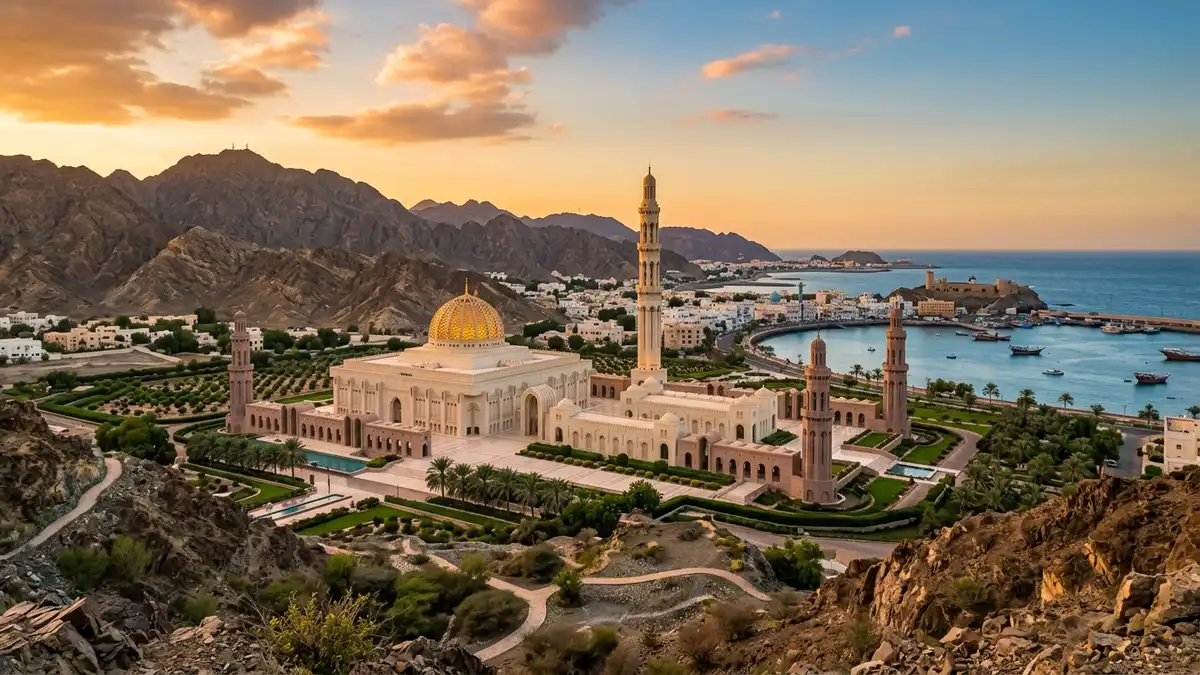
Muscat itself operates at its own unhurried pace. The Mutrah Souq is one of the Arabian Peninsula's most atmospheric traditional markets — frankincense, silver jewelry, and woven textiles spill through its covered lanes in a way that feels genuinely lived-in rather than staged for tourists. The Sultan Qaboos Grand Mosque is a masterpiece of Islamic architecture open to respectful non-Muslim visitors during morning hours. Beyond the city, Oman's landscape is extraordinary: wadis carved through limestone mountains, vast desert dunes accessible within a few hours' drive, and a coastline that sees relatively few international visitors.
Timing matters here. December through January brings Muscat's most pleasant weather — warm, dry, and ideal for exploring outdoors. The summer peak of June through August might surprise you; while temperatures are intense, this is when many regional visitors arrive and hotel deals can actually improve for those who don't mind the heat.
One tip worth holding onto: Oman is consistently ranked among the safest countries in the Middle East for travelers, which makes solo exploration — wandering the corniche at dusk, haggling gently in the souq, driving into the mountains — feel genuinely relaxed rather than guarded. That ease of movement is rarer than it should be, and it's one of Muscat's most underrated gifts.