


Route Briefing: San Francisco to Muscat
Few routes from the Bay Area reward the journey quite like this one. Yes, you're looking at around seventeen and a half hours with a connection, but Muscat has a way of making that feel entirely worth it — a destination that genuinely surprises travelers who expect the Gulf to be all glass towers and shopping malls. Oman's capital is quieter, more considered, and frankly more interesting than many of its neighbors.
Connecting through Dubai or Doha is your smartest move here, both geographically and financially. Emirates and Qatar Airways route naturally through their respective hubs, and Oman Air — one of the more underrated carriers in the region — also serves this corridor. If you can snag a roundtrip under $900, that's a genuinely strong deal on a long-haul route; standard pricing tends to sit above $1,300, so booking two to four months ahead gives you the best shot at the lower end. Avoid European hub connections — they add time and typically add cost.
Timing matters more here than on most routes. Muscat in summer is brutally hot, which keeps some travelers away — but it also drives prices down and thins the crowds considerably. If you can handle the heat, June through August has its own logic. The sweet spot for most visitors is the cooler months between December and January, when temperatures are genuinely pleasant and the city is at its most walkable. That said, this is a year-round destination, and the shoulder months on either side of peak season offer a nice balance.
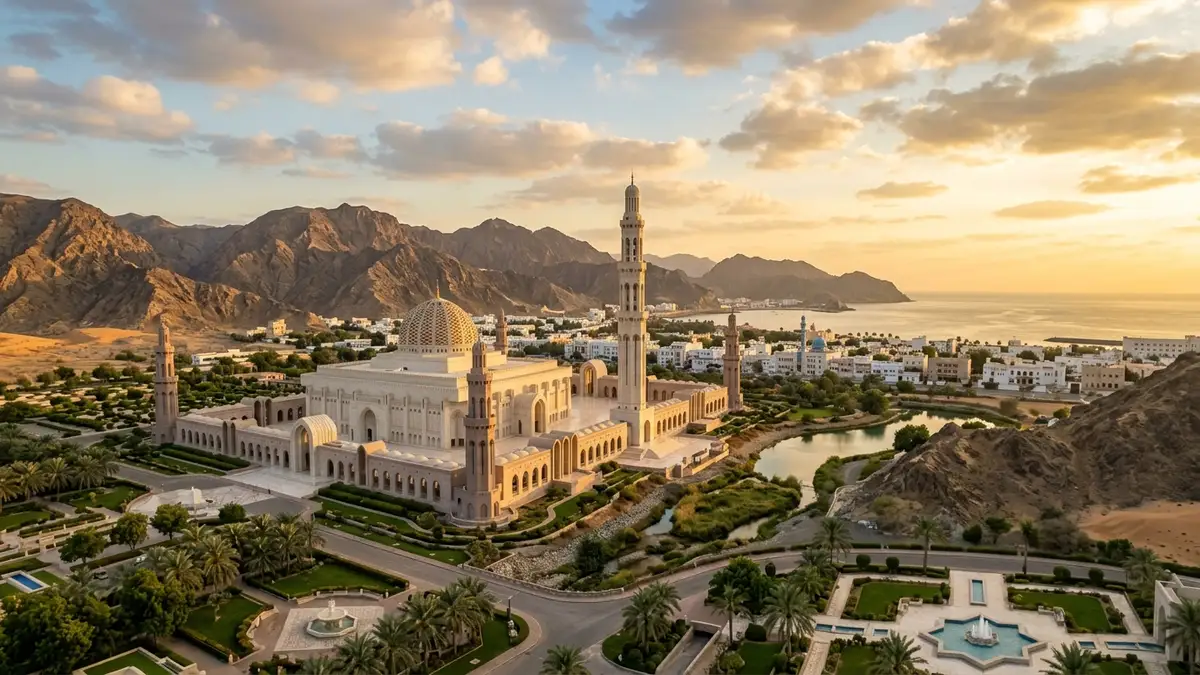
The city itself is a slow reveal. The Sultan Qaboos Grand Mosque is one of the most beautiful in the Islamic world and worth an early morning visit before the heat builds. The Mutrah Souk is the real thing — incense, silver, textiles, and locals who actually shop there. Beyond the city, Oman opens up dramatically: wadis with turquoise pools, rolling sand dunes, and mountain roads that feel like another world entirely. Renting a car unlocks the country in a way that organized tours simply can't match.
Muscat International Airport is modern and well-organized, and taxis into the city center are readily available from the arrivals hall. Agree on a fare before you get in, or look for metered options. The drive into central Muscat is straightforward and gives you a first glimpse of the low-rise, whitewashed architecture that defines the city's understated aesthetic.
One tip that genuinely changes the experience: don't rush Muscat itself. Most travelers treat it as a base and bolt for the interior immediately. Spend at least two full days in the capital first — the corniche, the old town, the souk at dusk — and you'll leave with a much richer sense of what makes Oman different from everywhere else in the region.