


Route Briefing: Miami to Riyadh
Miami to Riyadh is one of those routes that feels genuinely frontier — you're flying into a country that only opened its doors to leisure tourism in 2019, and the sense of arriving somewhere still figuring out how to welcome the world is part of the thrill. At around 16 hours and 30 minutes with one stop, it's a long haul, but the Gulf carriers make it bearable. Emirates routes through Dubai, Etihad through Abu Dhabi, and Qatar Airways through Doha — all three are consistently ranked among the world's best airlines for comfort and service, so the journey itself becomes part of the experience rather than something to merely survive.
On fares, the sweet spot is anything under $900 roundtrip, which represents genuine value for this distance. Standard pricing climbs above $1,300, so timing your booking matters. Aim to lock in tickets two to four months ahead of your travel dates. The most important timing warning: avoid Ramadan and Hajj season entirely if you can. Demand surges, prices spike, and the city operates on a completely different rhythm that can catch unprepared visitors off guard. Outside those periods, Riyadh is a year-round destination with peak travel falling between June and August.
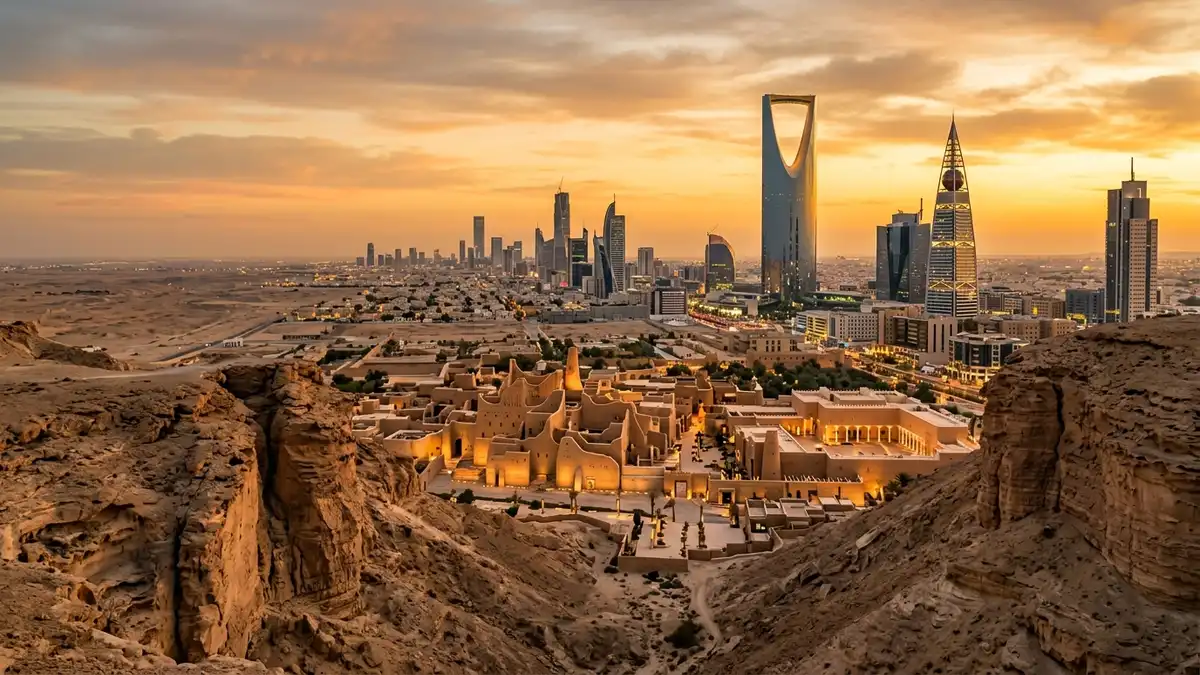
The city itself is in the middle of a remarkable transformation. Diriyah, on the northwestern edge of Riyadh, is where the Saudi state was born — a UNESCO-listed mud-brick city that tells the story of the Arabian Peninsula in a way no museum quite can. The Edge of the World, a dramatic escarpment about an hour's drive from the city, drops hundreds of meters into an ancient seabed and offers views that feel genuinely otherworldly. These aren't manufactured tourist attractions — they're places with real weight and scale.
Riyadh's food scene has exploded alongside the tourism opening, with traditional Saudi cuisine — slow-cooked lamb, fragrant rice dishes, fresh flatbreads — sitting alongside international options in a city that's rapidly modernizing. The old conservatism around dining and socializing has loosened considerably in recent years, and the city's energy after dark, particularly on weekends, is something most visitors don't expect.
King Khalid International Airport sits north of the city center, and taxis and ride-hailing apps are the most practical way to reach your accommodation. The metro system has also expanded significantly and connects key parts of the city if you're staying near a station.
One genuinely useful tip: book your Diriyah visit in advance and go late afternoon. The golden light on those ancient mud walls as the sun drops is extraordinary, and the crowds thin considerably compared to midday.