


Route Briefing: Mumbai to Cairo
Few routes connect two of the world's great ancient civilizations quite like Mumbai to Cairo. You're trading the chaos and colour of one legendary river city for another — swapping the Arabian Sea for the Nile, Bollywood for hieroglyphics, and the scent of chai for the smoky warmth of koshary and cardamom coffee. The journey takes around eight and a half hours with one stop, typically routing through Gulf hubs like Dubai or Sharjah, which actually works in your favour — airlines like Air Arabia, flydubai, and Emirates dominate this route, and connecting through these hubs is precisely where the competitive pricing lives. If you can snag a roundtrip under $500, you're doing very well. Standard fares creep above $800, so booking six to eight weeks ahead is the move that separates the savvy travellers from the ones wincing at checkout.
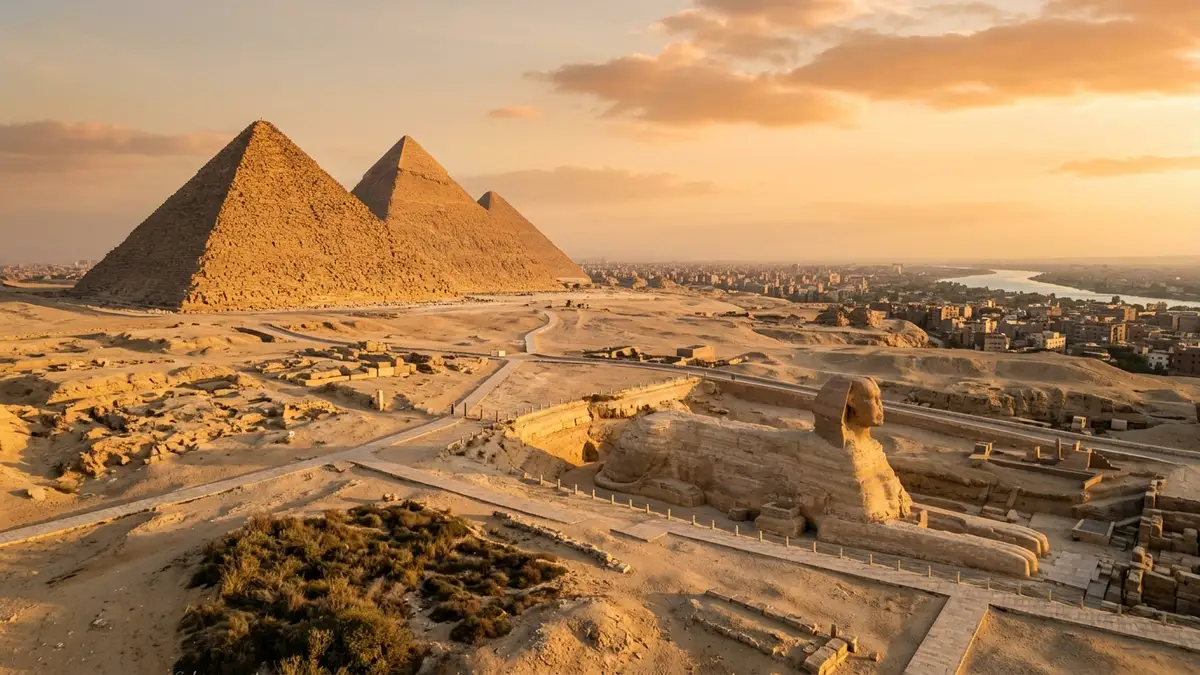
Cairo is one of those cities that hits you immediately and never quite lets go. The scale of it, the noise, the layered history pressing in from every direction — it's genuinely overwhelming in the best possible way. The Pyramids of Giza and the Sphinx are, of course, the headline act, and no amount of photographs prepares you for standing in front of them in person. The Egyptian Museum in Tahrir Square holds one of the most extraordinary collections of ancient artefacts on earth, including the treasures of Tutankhamun. Beyond the monuments, Islamic Cairo — with its medieval mosques, bustling souks, and the famous Khan el-Khalili bazaar — rewards slow, aimless wandering more than any itinerary ever could.
From Cairo International Airport, taxis and ride-hailing apps are the most practical way into the city centre, and the journey typically takes 30 to 45 minutes depending on traffic, which in Cairo is always a variable worth respecting.
Timing matters here. December and January bring pleasantly cool, dry weather — ideal for outdoor sightseeing without the punishing heat. June through August is peak season too, though summer temperatures can be intense, so early morning visits to outdoor sites become essential rather than optional. Spring, particularly March and April, offers a quieter, more affordable window with comfortable temperatures before the summer crowds arrive.
The one tip worth burning into your memory: haggling is not just acceptable in the souks and with local vendors, it's genuinely expected and part of the cultural fabric. Approach it with good humour, take your time, and you'll walk away with better prices and better stories.