


Route Briefing: Mumbai to Koh Samui
For anyone based in Mumbai dreaming of white sand and warm turquoise water, Koh Samui is closer than it feels — and this route makes it genuinely accessible. At around ten and a half hours with a single stop, you're not looking at an epic journey, and when you can snag a roundtrip fare under five hundred dollars, the value proposition becomes hard to ignore. Standard fares creep above eight hundred, so timing your search carefully makes a real difference here.
The connection almost always runs through Bangkok, and Bangkok Airways tends to be your most reliable bet for the onward leg into Koh Samui's airport. That matters more than it sounds — USM is a smaller, hub-dependent airport, and Bangkok Airways has long operated it almost like a private terminal, offering a noticeably smoother transit experience than you might expect. IndiGo and Thai Airways are also worth checking for the Mumbai-Bangkok leg, especially if you're flexible on dates and hunting for that sub-five-hundred-dollar window.
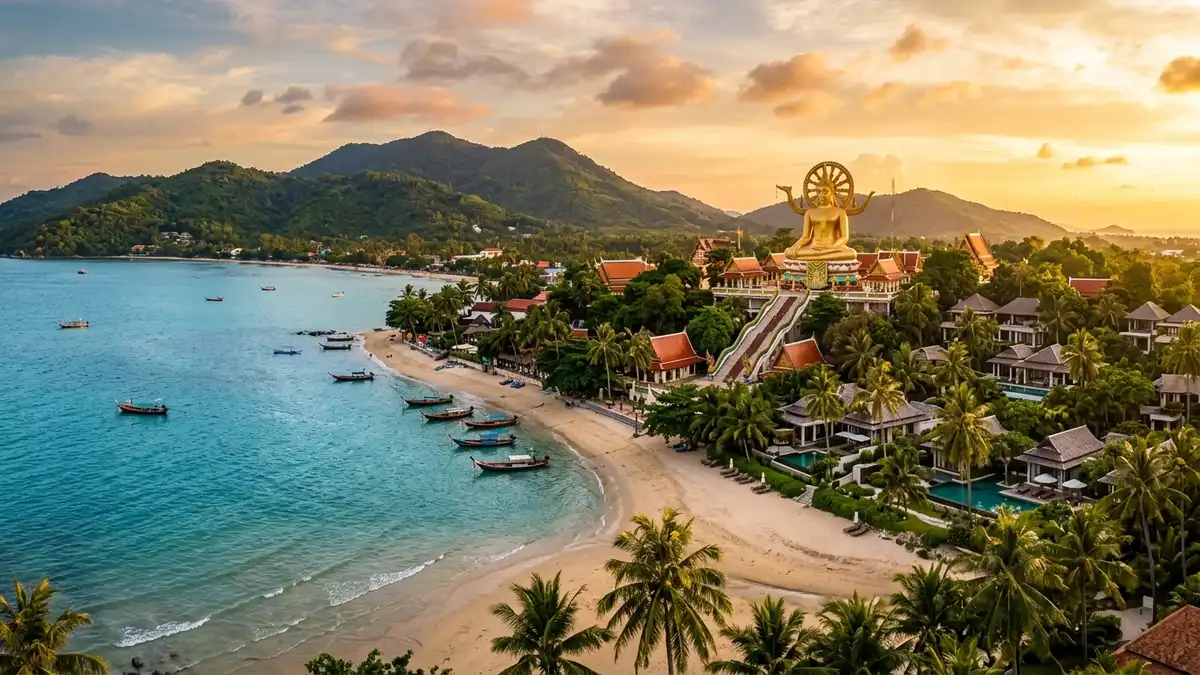
Koh Samui itself rewards the effort immediately. The island has a distinct personality — it's more developed and resort-polished than some of its neighbours, which means excellent food, reliable infrastructure, and beaches that genuinely live up to the photographs. Chaweng is the liveliest stretch, buzzing with restaurants and nightlife, while Lamai offers a slightly more relaxed pace. If you want to escape the beach entirely for a few hours, the island's interior is lush and hilly, dotted with temples including the famous Big Buddha at Wat Phra Yai, which is well worth the short trip.
Arriving at USM is refreshingly painless by regional standards. The airport sits close to the northeast coast, and taxis are readily available to most parts of the island, with journey times varying depending on your resort's location.
December through February is peak season for good reason — the Gulf of Thailand side of the island is calm, sunny, and at its most beautiful during these months. Prices for flights and accommodation rise accordingly, so if you're booking for this window, the two-to-four month advance booking rule isn't just a suggestion, it's genuinely necessary to lock in competitive fares.
The smartest move for experience and budget alike is to consider travelling in the shoulder months of March or early November. You'll find meaningfully lower fares, thinner crowds, and weather that's still largely cooperative. That combination — cheaper flights, quieter beaches, and the same stunning island — is the kind of travel sweet spot that's worth planning your calendar around.