


Route Briefing: Mumbai to Quito
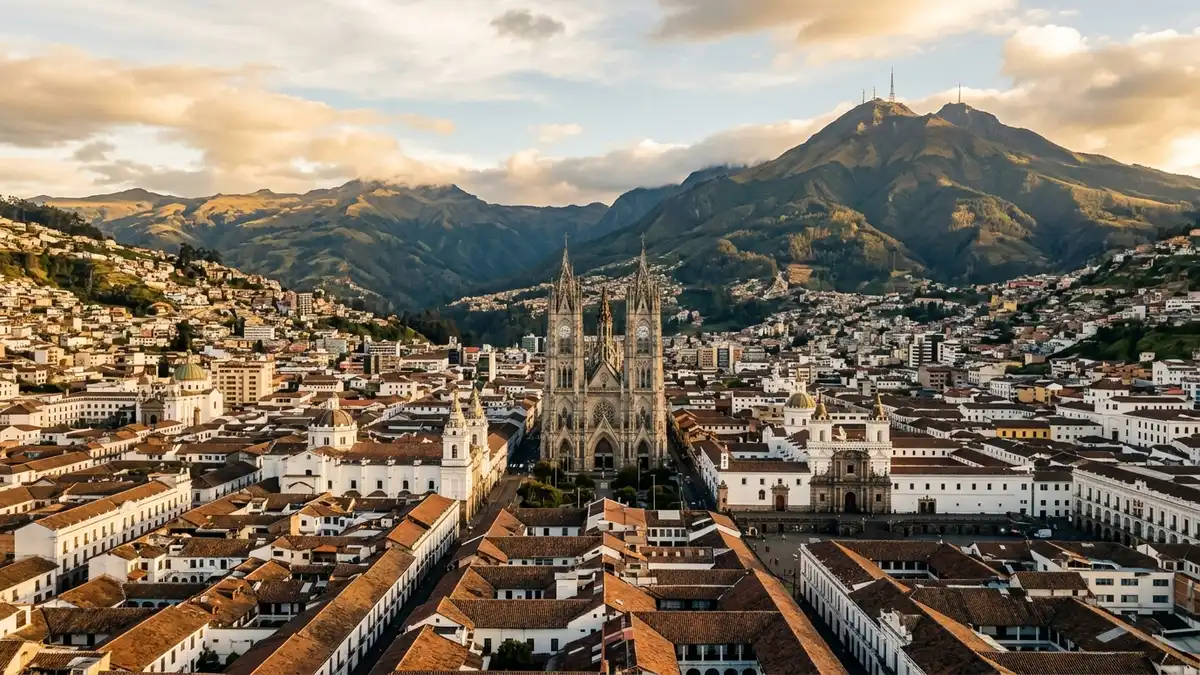
Few routes on the planet carry quite the sense of adventure that this one does — Mumbai to Quito is a journey between two worlds, connecting the chaotic, sun-drenched energy of India's financial capital with one of the most dramatically situated cities on Earth. Sitting at roughly 2,850 metres above sea level in the Andes, Quito is a city that genuinely earns its UNESCO World Heritage status, with a colonial old town so well-preserved it feels like stepping into a living museum of Spanish baroque architecture.
The flight itself is a commitment — expect 22 hours or more with at least two stops, typically routing through Miami, Houston, or Bogotá depending on which carrier you choose. American Airlines, United Airlines, and Avianca all serve this corridor, and Bogotá connections via Avianca can be particularly smooth given the airline's strong South American network. Snag a roundtrip under $900 and you've genuinely done well on this route; standard fares tend to sit between $1,200 and $1,600, so flexible date searching and booking three to six months ahead can make a meaningful difference to your budget.
Once you land at Mariscal Sucre International Airport, the city centre is roughly 45 minutes away by taxi or the dedicated airport bus service — a straightforward and affordable transfer. One immediate practical note: altitude sickness is real here. Give yourself a day or two to acclimatise before charging up staircases or hiking viewpoints. Drink water, take it slow, and your body will thank you.
Quito's old town is the obvious starting point — the Church of La Compañía de Jesús alone is worth the journey, its gilded interior one of the most ornate in all of Latin America. The city also sits close to the Mitad del Mundo monument marking the equatorial line, a genuinely fun stop. And of course, Quito is the primary gateway for flights to the Galápagos Islands, making it a natural launchpad for one of the world's great wildlife experiences if your budget and schedule allow.
Timing matters here. Peak season runs December through January and again June through August, when prices climb and the Galápagos fills up fast. Shoulder months like April, May, or October can offer a quieter, more affordable experience while still delivering perfectly pleasant Andean weather. Quito's climate is famously mild year-round thanks to its elevation, so there's rarely a truly bad time to visit — just busier and quieter ones.
The experience-enhancing tip worth remembering: if you're connecting through Bogotá with a longer layover, Colombia's capital is worth stepping out into rather than sitting in the terminal. It's a city that rewards even a few hours of exploration.