


Route Briefing: New York to Beijing
Few routes carry the weight of history that this one does — thirteen and a half hours separating the world's most famous skyline from one of its oldest civilizations. Flying New York to Beijing is not just a long-haul journey; it's a genuine crossing between worlds, and for travelers who plan smartly, it doesn't have to cost a fortune.
A good roundtrip fare comes in under $600, though standard pricing typically runs $900 to $1,200 or more. Air China is the natural flagship choice on this route, with United Airlines and Korean Air also offering strong options. Many itineraries route through Seoul's Incheon Airport or Tokyo Narita, and these connections frequently produce the most competitive prices — so don't dismiss a one-stop journey as a compromise. Book two to four months out for the best fares, and be especially vigilant around Chinese New Year in late January or February, when prices spike sharply and seats disappear fast.
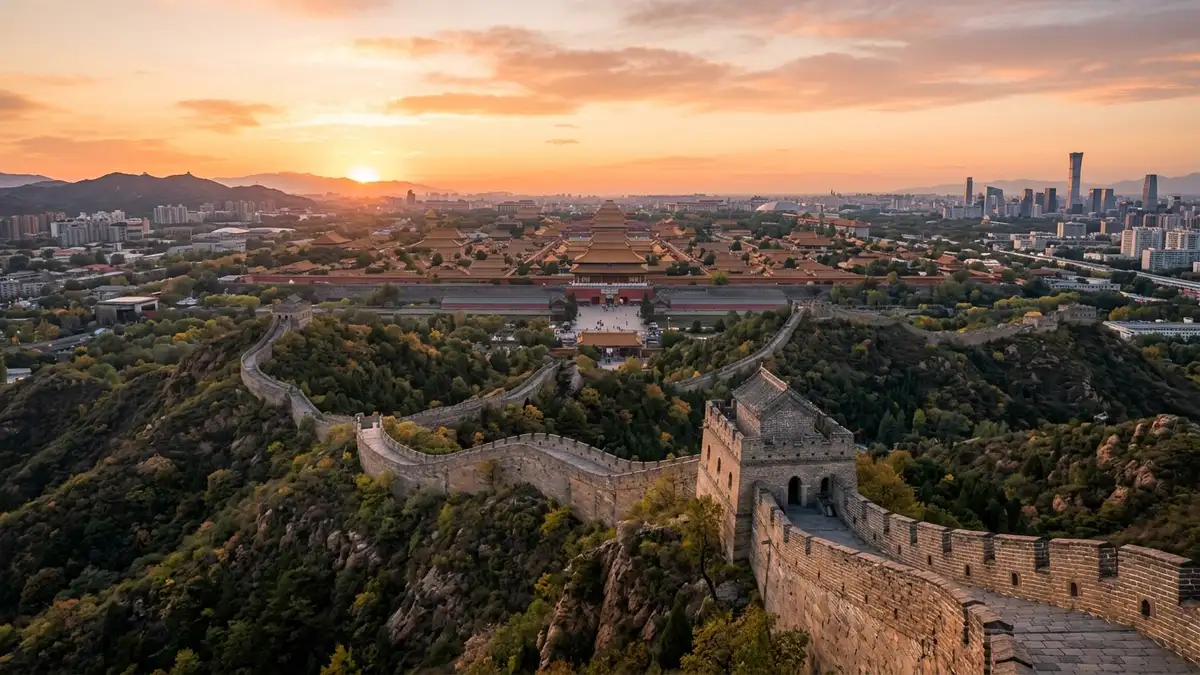
Beijing rewards the effort immediately. The Forbidden City — the vast imperial palace complex at the heart of the city — is genuinely one of the most awe-inspiring places on earth, a labyrinth of ceremonial halls and courtyards that housed Chinese emperors for nearly five centuries. The Great Wall, accessible from several points outside the city, is equally transformative in person; sections like Mutianyu tend to be less crowded than the most heavily visited stretches and offer a more atmospheric experience. Beyond the headline attractions, Beijing's hutong neighborhoods — the ancient alleyway districts — give you a street-level sense of the city's layered character that no palace can replicate.
The cuisine alone justifies the flight. Peking duck is the obvious starting point, but the city's food scene spans hand-pulled noodles, dumplings, lamb skewers, and regional styles from across China. Eating adventurously and cheaply is entirely possible here.
From Beijing Capital International Airport, the Airport Express train connects efficiently to the city center, making it one of the more straightforward major airport arrivals in Asia — a welcome relief after a long flight. Spring (April to May) and autumn (September to October) offer the most pleasant weather, with mild temperatures and clearer skies than the hazy summer months. Summer is peak tourist season, so if you visit then, book accommodations and major attractions well in advance.
The single best tip for this route: if you're flexible on dates, shifting your travel even a week away from Chinese New Year can save you hundreds of dollars and spare you the most intense crowds at every major site.