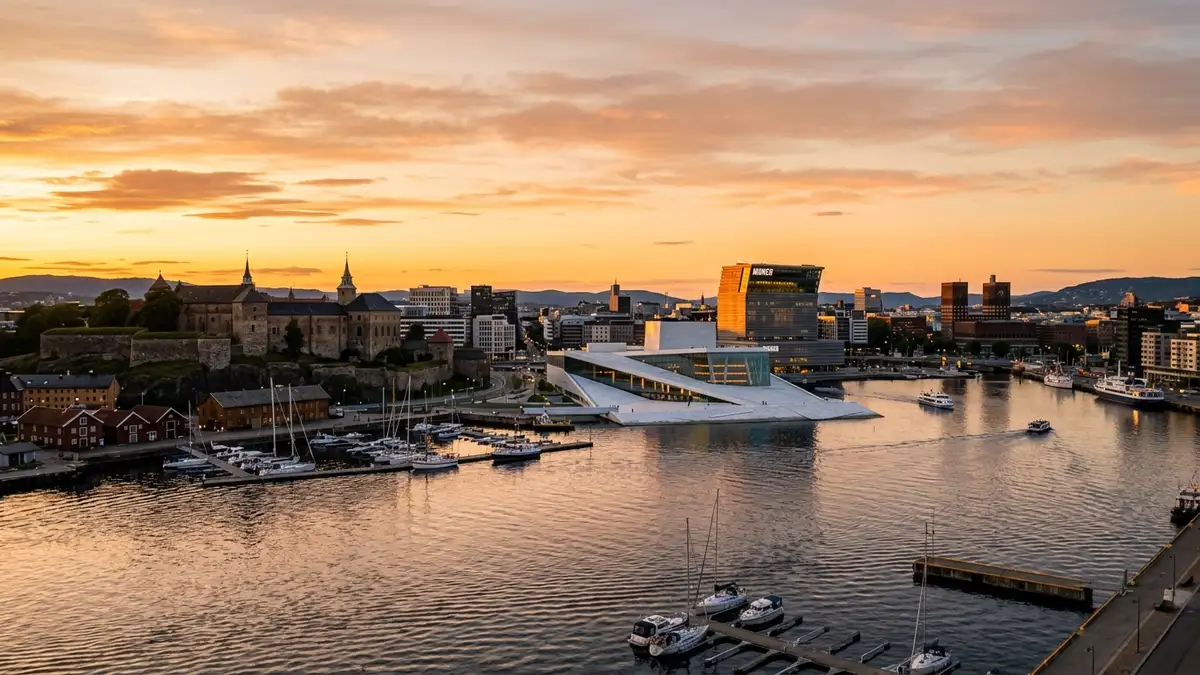



Route Briefing: New York to Oslo
Oslo has a way of surprising first-time visitors. You expect Vikings and cold weather — and yes, you get both — but what catches people off guard is how effortlessly livable and genuinely beautiful this city feels. From New York, you're looking at a direct flight of around seven hours and forty-five minutes, which means you can board in the evening, sleep reasonably well, and wake up ready to explore one of Scandinavia's most compelling capitals.
SAS and Norse Atlantic Airways are your primary carriers on this route, with United also operating service. Norse Atlantic in particular has shaken up transatlantic pricing on this corridor, so it's worth checking their fares alongside the legacy carriers. A genuinely good deal lands under $600 roundtrip — that's your benchmark. Standard fares push past $900, so patience and timing matter here. Book three to six months ahead if you're targeting summer, when demand surges hard between June and August. Flying mid-week rather than Friday or Sunday, and sidestepping school holiday windows, can realistically save you fifteen to twenty-five percent on the fare.
Summer is Oslo at its most magical — long daylight hours that stretch well past midnight, outdoor terraces buzzing with life, and easy access to the surrounding fjords. But don't dismiss the shoulder seasons. September brings golden light and far thinner crowds, while winter offers a completely different kind of Nordic atmosphere, with Christmas markets and the possibility of seeing the northern lights if you venture slightly outside the city.
Once you land at Oslo Airport Gardermoen, the Airport Express train — locally known as Flytoget — connects you to Oslo Central Station in roughly twenty minutes. It's fast, reliable, and far less stressful than navigating an unfamiliar city by taxi after a transatlantic flight.
In terms of what to actually do: the Viking Ship Museum houses some of the best-preserved Viking vessels in the world, and the Vigeland Sculpture Park is one of those rare outdoor spaces that genuinely earns its reputation. The waterfront Aker Brygge area is excellent for wandering, and the city's relationship with outdoor life — hiking, cycling, skiing in winter — is deeply embedded in daily culture rather than just a tourist pitch.
One honest tip: Oslo is expensive, full stop. Budget accordingly, and consider picking up groceries at a local supermarket for breakfasts and lunches. It stretches your money considerably without sacrificing the experience of eating well at dinner, which is where Oslo's food scene genuinely shines.