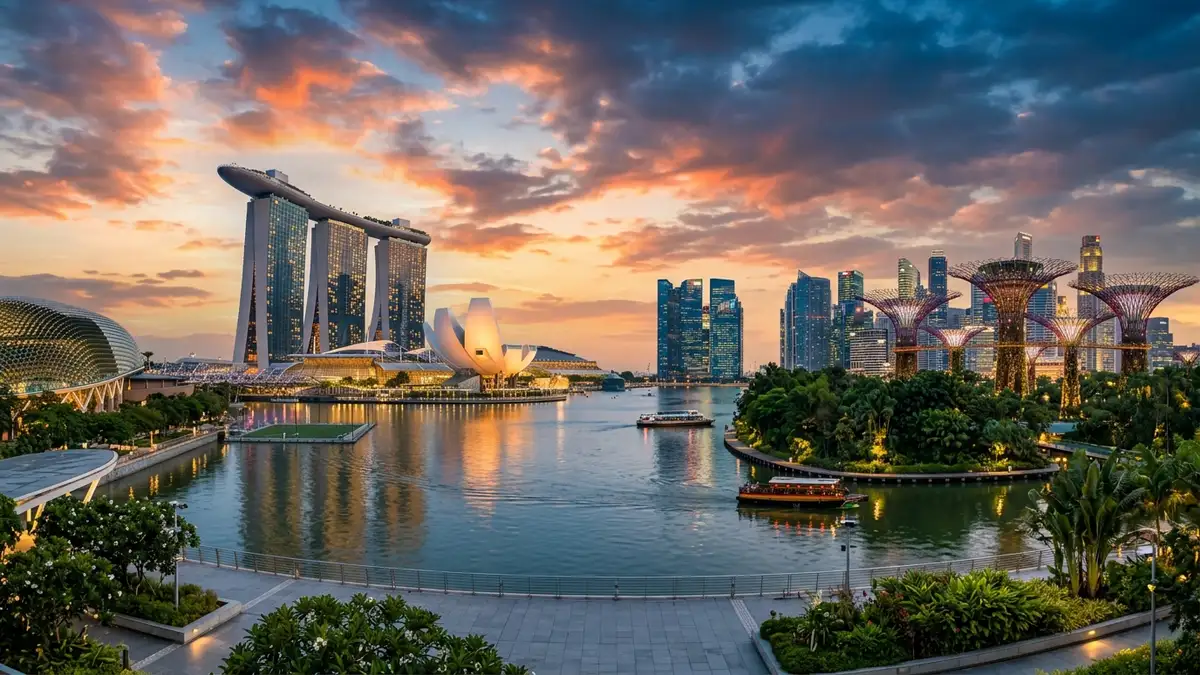



Route Briefing: New York to Singapore
Few long-haul routes reward the effort quite like New York to Singapore. Yes, you're looking at around eighteen and a half hours in the air with a stop along the way, but Singapore Airlines — one of the world's most consistently celebrated carriers — operates this route, and their economy cabin genuinely softens the blow. Cathay Pacific and Japan Airlines are also solid choices, often routing you through Hong Kong or Tokyo respectively, and those Asian hub connections frequently come in cheaper than alternatives through Middle Eastern airports. If you can snag a roundtrip under $900, you're doing very well. Standard fares run $1,200 to $1,800 or more, so booking three to six months out is the move that separates the savvy traveler from the one quietly weeping at checkout.
Singapore itself is one of those cities that immediately makes you feel like you've arrived somewhere that takes its own excellence seriously. The skyline alone — anchored by the iconic Marina Bay Sands with its rooftop infinity pool — is worth the jet lag. Gardens by the Bay, with its surreal Supertree structures, is the kind of place that sounds gimmicky until you're standing inside it at night watching the light show and reconsidering everything you thought you knew about urban green spaces.
But the real soul of Singapore lives in its hawker centres. These open-air food courts are where Malay, Chinese, Indian, and Peranakan culinary traditions collide in the most delicious way imaginable. Dishes like Hainanese chicken rice, laksa, and char kway teow are eaten here by everyone — locals, tourists, business travelers — and the prices are remarkably low for a city that can otherwise feel expensive. Eating at hawker centres isn't just budget-smart, it's genuinely the best food experience the city offers.
Getting from Changi Airport into the city is straightforward. The MRT train connects the airport directly to the city center quickly and cheaply, making it one of the smoothest airport arrivals in Asia. Changi itself is frequently ranked among the world's best airports, so even a layover there feels less like a punishment and more like a preview of Singapore's obsessive attention to quality.
Timing-wise, peak travel falls between June and August and again December through January, when prices climb and crowds thicken. If your schedule allows, the shoulder months on either side of those windows offer a more relaxed experience. Singapore sits close to the equator, so expect warmth and humidity year-round — pack light, breathable clothing regardless of when you go.
One tip worth its weight: use your layover city strategically. A stopover in Tokyo or Hong Kong, even for a night, can stretch a single long-haul ticket into two destinations for minimal extra cost. Singapore rewards the journey. Start planning early.