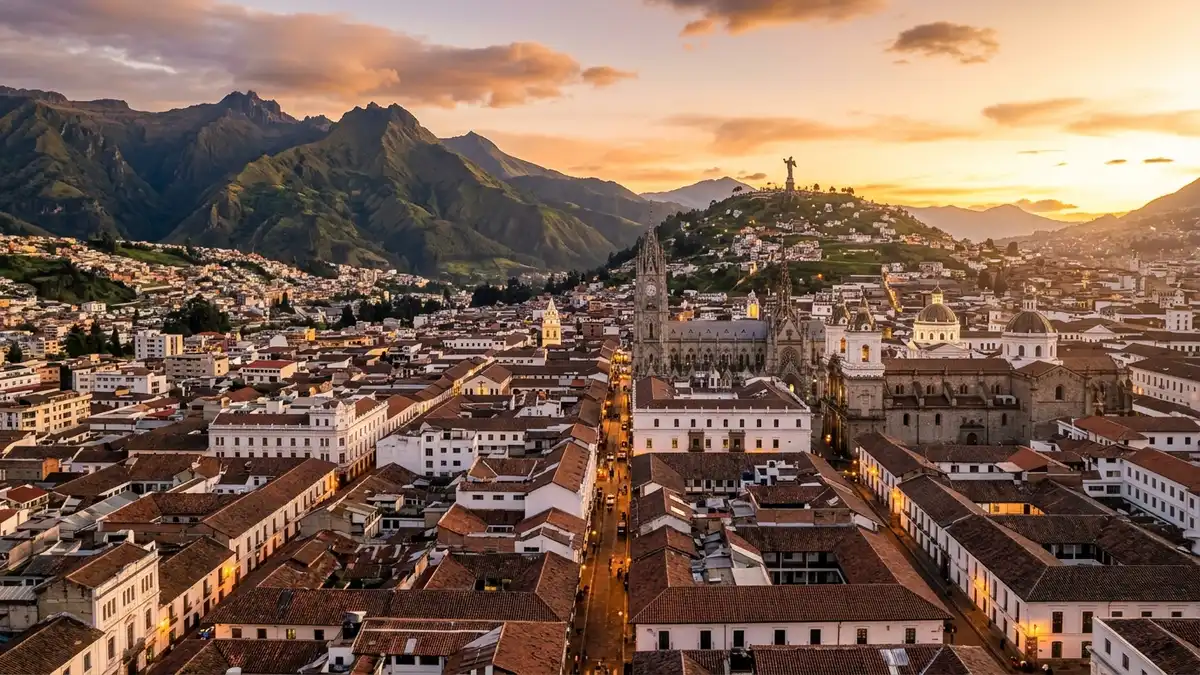



Route Briefing: Paris to Quito
Paris to Quito is one of those routes that rewards the patient traveller. You're trading the boulevards of the Seine for a city perched at nearly 2,800 metres above sea level, where colonial gold-leaf churches glow against a backdrop of Andean peaks and the equator runs through the suburbs. It's a long haul — expect around 13 and a half hours with a connection — but the payoff is extraordinary.
Iberia routing through Madrid is a popular choice and often well-priced, while Air France connects through its own hub and American Airlines runs useful options via Miami or JFK. Speaking of Miami, that connection is worth keeping in mind beyond just convenience: routing through Miami or Bogotá frequently turns up cheaper fares than going via a European hub, so it's worth being flexible when you search. A genuinely good deal lands under $600 roundtrip; standard fares tend to sit above $900, so booking two to four months ahead gives you the best shot at the lower end.
Once you land at Mariscal Sucre International Airport, you'll find it sits outside the city — taxis and pre-booked transfers are the standard way into the centre, and it's worth arranging something in advance rather than navigating the options after a long flight.
Quito's Historic Centre is a UNESCO World Heritage Site and one of the best-preserved colonial old towns in Latin America. The Church of La Compañía de Jesús alone is worth the flight — its interior is a baroque fever dream of gilded carvings that took over 160 years to complete. The neighbourhood of La Ronda is atmospheric for an evening wander, and the food scene leans heavily on hearty Andean staples: locro de papa (potato soup), ceviche, and roasted pork are all worth seeking out at local markets.
Timing matters here. June through August brings dry, clear skies and is peak season for good reason — the light is spectacular and conditions are ideal for day trips to the Mitad del Mundo monument or the Cotopaxi volcano area. December and January also see a surge in visitors. If you prefer fewer crowds and don't mind the occasional shower, the shoulder months either side of these windows offer a quieter, often cheaper experience.
The altitude catches almost everyone off guard. Give yourself a full day to acclimatise before doing anything strenuous — drink plenty of water, take it slow, and resist the urge to immediately hike or explore aggressively. Quito is also the classic jumping-off point for the Galápagos Islands, so if that's on your list, building it into this trip makes obvious geographic sense. This route is open year-round, and for anyone who's been meaning to finally make it to South America, Paris to Quito is a genuinely compelling way to begin.