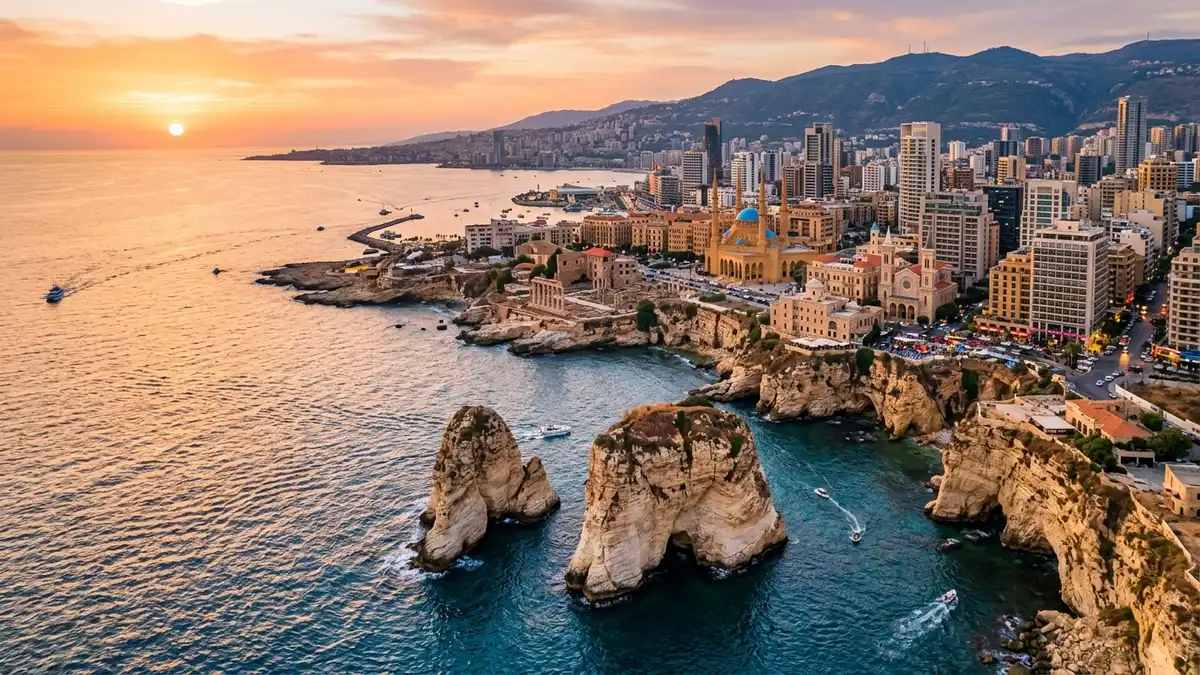



Route Briefing: San Francisco to Beirut
Few cities in the world carry Beirut's particular electricity — a place where ancient Phoenician history sits comfortably alongside rooftop bars and some of the most celebrated cuisine in the entire Mediterranean. Flying from San Francisco to get there takes around 18 and a half hours with a connection, but for a city this layered and alive, that's time well spent.
The routing itself is part of the appeal. Turkish Airlines, Air France, and Lufthansa all serve this corridor, meaning you'll typically connect through Istanbul, Paris, or Frankfurt — each a worthwhile hub in its own right if you have time to stretch a layover into something more. Istanbul and Paris connections in particular tend to offer the most competitive pricing, and if you can lock in a roundtrip under $900, you're doing well on this route. Standard fares push past $1,300, so the gap between a good deal and an average one is significant enough to justify some planning. Book three to six months out, especially if you're eyeing a summer trip.
Summer — June through August — is peak season, and for good reason. The Mediterranean climate is warm and dry, the city's legendary nightlife is in full swing, and the coastal energy is infectious. That said, spring and early autumn offer a quieter, more affordable version of Beirut, with pleasant temperatures and fewer crowds. The city rewards visitors who slow down enough to wander its distinct neighborhoods, from the historic streets of Gemmayzeh to the rebuilt downtown district near Martyrs' Square.
Beirut's food culture is genuinely world-class — mezze here isn't a side dish, it's a philosophy. Fresh hummus, kibbeh, grilled meats, and an extraordinary variety of small plates make eating your way through the city one of its great pleasures. Lebanese wine, produced in the Bekaa Valley not far from the city, is worth seeking out and often surprises visitors with its quality.
On arrival, taxis are the standard way to get from Rafic Hariri International Airport into the city center, which is relatively close. Agree on a fare before you get in, or use a ride-hailing app to avoid any ambiguity on pricing.
The one tip worth carrying with you: bring US dollars. The Lebanese economy has experienced significant turbulence in recent years, and cash in dollars remains widely accepted and practically useful throughout the city. It's a small preparation that makes daily transactions considerably smoother.