


Route Briefing: San Francisco to Fiji
There's a reason Fiji sits at the top of so many bucket lists, and once you've touched down at Nadi International Airport after that roughly ten-and-a-half-hour journey from San Francisco, you'll understand immediately. The air is warm, the smiles are genuine, and the famous Fijian greeting — "Bula!" — hits you before you've even collected your luggage. This is a place that earns its reputation.
Fiji Airways is the natural choice on this route, offering a direct cultural connection from the moment you board, and Air New Zealand is another solid option, particularly if you're open to a connection through Auckland. Most itineraries route through Los Angeles or Honolulu, and it's worth knowing that those connecting cities often unlock the most competitive fares. A roundtrip under $900 is genuinely achievable if you plan ahead — book three to five months out and you're in good shape. Leave it to the last minute and you're looking at $1,200 to $1,600 or more, which still isn't unreasonable for what awaits you.
Nadi sits on the western side of Viti Levu, Fiji's main island, and from the airport you'll find taxis and shuttle services readily available to reach your accommodation. If you're island-hopping further out to the Mamanuca or Yasawa island groups, ferry terminals and small seaplane services operate from the Nadi area and are well worth exploring.
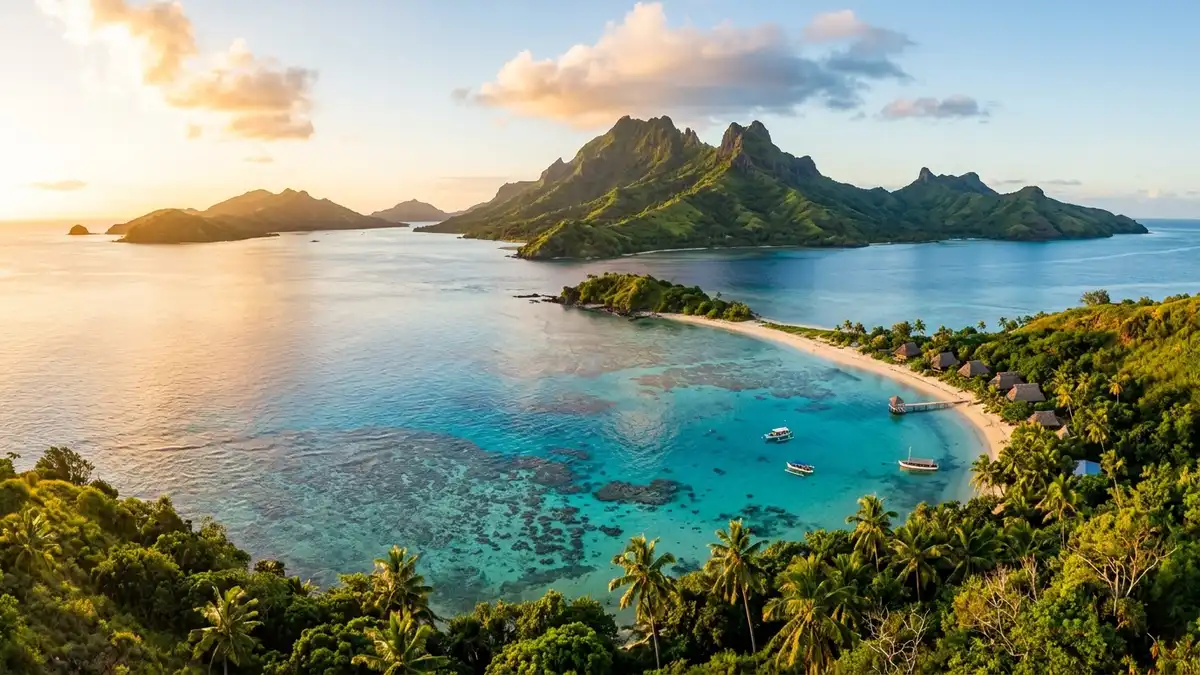
Fiji's 333 islands offer something for every kind of traveler. The coral reefs are world-class for diving and snorkeling, the lagoons are that improbable shade of turquoise you assume is only possible in photographs, and the villages offer a cultural warmth that feels entirely unperformed. Fijian cuisine leans on fresh seafood, root vegetables like taro and cassava, and the ceremonial kava drink — sharing a bowl of kava with locals is one of those travel experiences that stays with you.
Timing matters here. June through August brings drier, cooler conditions and is peak season for good reason — the weather is reliably beautiful. December through January is busy with holiday travelers and can see higher rainfall, particularly on the eastern sides of the islands. If you want the best combination of good weather and thinner crowds, the shoulder months on either side of the dry season are worth considering.
The one tip that genuinely changes the trip: don't rush to leave Nadi for the outer islands without spending at least a day or two on Viti Levu itself. The interior highlands and the local markets around Nadi give you a grounded sense of Fijian life that the resort islands, wonderful as they are, simply can't replicate.