


Route Briefing: San Francisco to Málaga
There's something quietly thrilling about trading the fog of San Francisco Bay for the blazing Mediterranean sun of southern Spain, and the roughly fourteen-and-a-half hour journey to Málaga — with one stop along the way — is absolutely worth every minute in transit. This is a route that rewards the patient planner, and if you're flexible enough to connect through Madrid, London Heathrow, or Frankfurt, you'll find Iberia, British Airways, and Lufthansa all compete for your business on this corridor, which means fares can be genuinely competitive when you time your search right.
Speaking of timing: snag a roundtrip under $700 and you've done very well for yourself. Standard pricing runs closer to $1,000 to $1,400 or more, so the savings are real and meaningful. The golden rule here is to book three to six months ahead if you're targeting summer, because Málaga draws serious crowds from June through August — and for good reason. The Costa del Sol delivers reliably brilliant sunshine, warm sea temperatures, and that particular energy of a city that knows how to enjoy itself without apology.
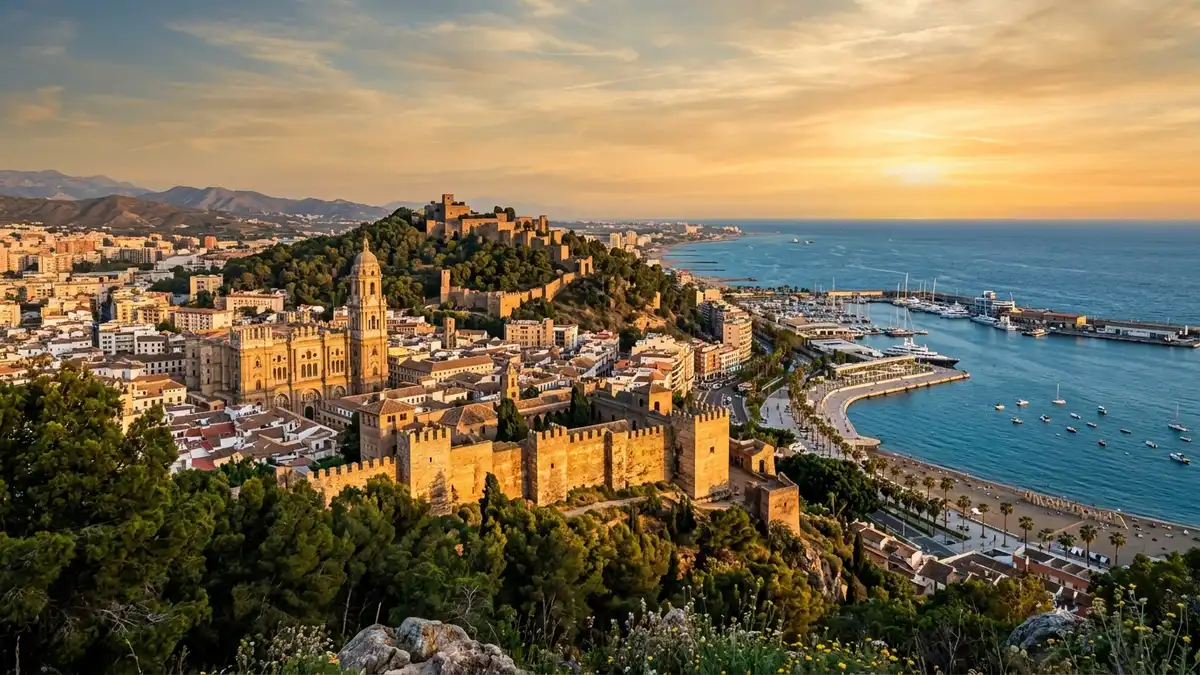
Málaga itself is far more than a beach resort gateway, though the beaches are genuinely lovely. This is the city that gave the world Pablo Picasso, and his birthplace and dedicated museum sit in the historic center, making for a surprisingly rich cultural detour between sunbathing sessions. The Alcazaba, a Moorish fortress rising above the city, offers sweeping views over the port and a tangible connection to Andalusia's layered history. Wander the old town in the early evening and you'll fall naturally into the local rhythm of tapas and cold local wine — Málaga has its own distinct sweet wine tradition worth exploring.
From Málaga Airport, the city center is easily reachable by train, with a direct rail connection running to the main station that's both affordable and straightforward — far less stressful than navigating traffic after a long-haul flight. It's the kind of arrival that eases you gently into Spanish pace.
If you want the destination without the peak-season prices and crowds, consider shoulder season travel in May or September. The weather remains warm and welcoming, the beaches are far less packed, and the city's restaurants and tapas bars feel more authentically local when they're not overwhelmed with summer visitors. That single shift in timing might be the most valuable tip on this entire route.