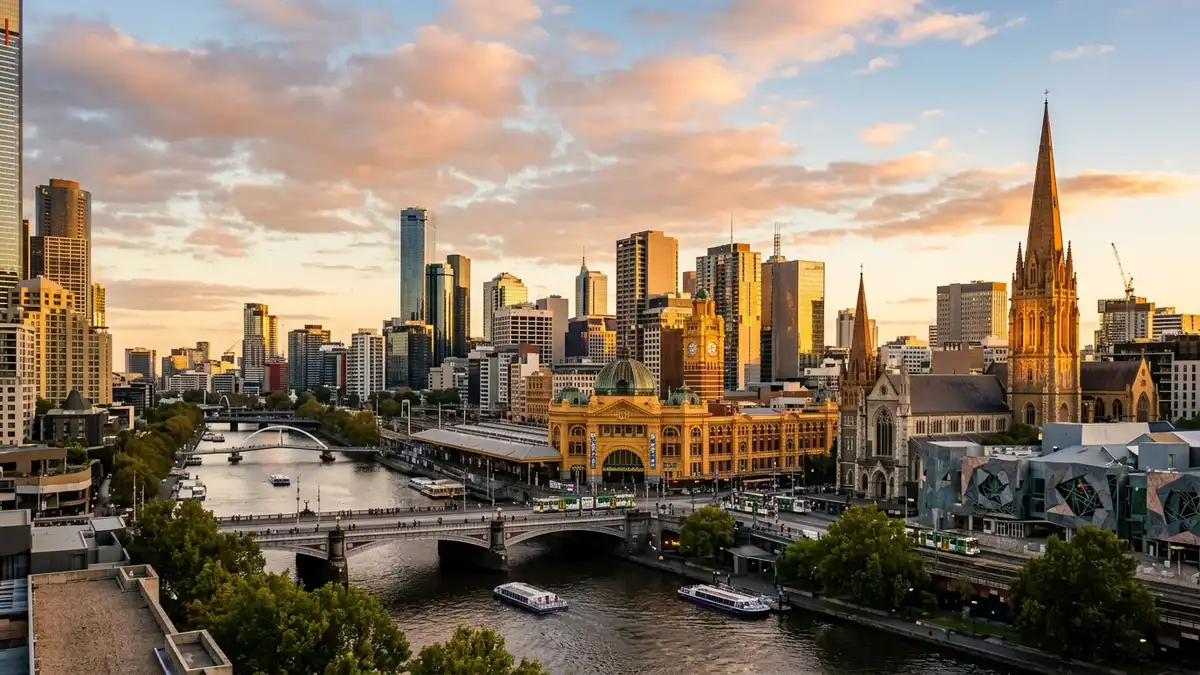



Route Briefing: San Francisco to Melbourne
San Francisco and Melbourne share a certain kinship — both cities wear their creativity openly, prize great food and coffee above almost everything else, and attract people who genuinely love where they live. That cultural common ground makes this long-haul journey feel less like crossing the Pacific and more like visiting a city that gets you.
The flight itself runs around 17 hours and 45 minutes with one stop, typically routing through Sydney or Auckland depending on your carrier. United Airlines, Air New Zealand, and Qantas all serve this route, and connections through those two hubs tend to offer the most competitive pricing and reliable schedules. A roundtrip fare under $900 is a genuine deal worth jumping on — standard pricing sits comfortably between $1,300 and $1,800 or more, so the savings are real. Book three to six months ahead and you give yourself the best shot at those lower fares, especially if you're flexible on which connecting city you pass through.
Melbourne rewards the curious traveler immediately. The city's laneway culture is unlike anything else in Australia — narrow alleyways like Hosier Lane are covered floor-to-ceiling in rotating street art, and tucked inside these same lanes you'll find espresso bars that take their craft with an almost religious seriousness. Melbourne's coffee culture is genuinely world-class, and locals will happily debate the merits of their neighborhood café with the same passion they bring to AFL football. Speaking of which, if there's a match at the Melbourne Cricket Ground while you're visiting, go. The MCG is one of the great sporting venues on earth, and the atmosphere is worth experiencing regardless of whether you follow the game.
The broader city is walkable and well-connected by tram, with the central city tram network free to ride within the designated free tram zone — a small but genuinely useful perk when you're getting your bearings. From Melbourne Airport, the SkyBus service runs regularly into the CBD, making arrival straightforward without the need to navigate an unfamiliar train system while jet-lagged.
Timing matters on this route. December and January represent peak season, coinciding with Australian summer and the holiday period — prices climb and accommodation books out fast, so plan well ahead if those months are non-negotiable. The shoulder seasons of March through May and September through November offer pleasant weather, thinner crowds, and noticeably better value across the board.
One tip worth keeping in your back pocket: Air New Zealand's Auckland connection frequently surfaces some of the most competitive fares on this route, and the airline's long-haul product punches above its weight for economy travelers. It's worth checking alongside the more obvious options.