


Route Briefing: San Francisco to Venice
There are few journeys in travel that feel genuinely transformative before you've even unpacked, and San Francisco to Venice is one of them. You leave one iconic waterfront city and arrive at another — except Venice operates by entirely different rules, ones that have held for centuries. That contrast alone makes the roughly 13 and a half hours of flying (with one stop) feel like a worthwhile investment.
Fares on this route can be surprisingly reasonable if you play it smart. Snag a roundtrip under $700 and you're doing very well. Standard pricing tends to settle in the $1,000 to $1,400 range, and it climbs steeply from there once summer arrives. Lufthansa, Swiss International Air Lines, and Air France are your most reliable carriers, routing you through Frankfurt, Zurich, or Paris respectively — all solid connecting hubs with comfortable terminals if you have a layover to fill. Flying midweek consistently beats weekend pricing on this corridor, so Tuesday or Wednesday departures are worth checking first.
Venice's peak season runs June through August, when the city is at its most vivid and most crowded. If summer is your target, book four to six months out — this is not a route where last-minute deals tend to appear. Shoulder season, particularly late April through May and September into October, rewards travelers with thinner crowds, gentler temperatures, and a city that feels slightly more like itself.
Once you land at Marco Polo Airport, the most memorable arrival option is the Alilaguna water bus, which carries you directly into the city across the lagoon. It takes longer than a land transfer, but floating toward Venice for the first time with the skyline materializing ahead of you is an experience worth the extra time. Vaporetto water buses then become your primary way of moving around the city itself — get comfortable with them early and they'll serve you well throughout your stay.
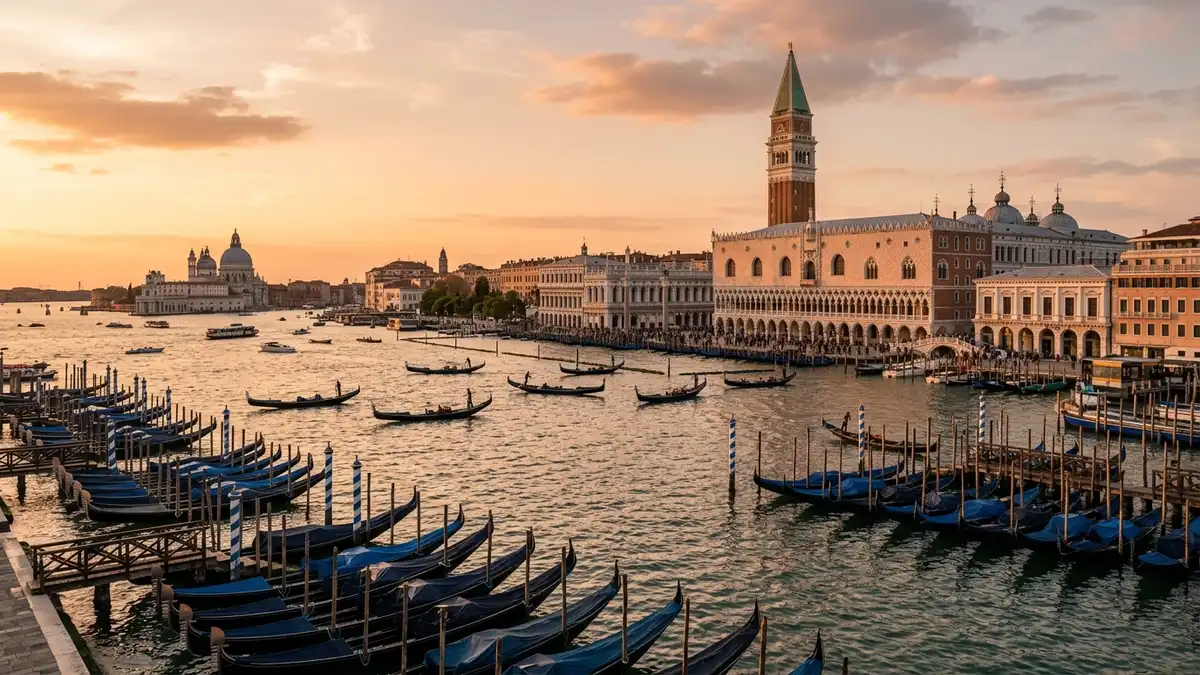
The city rewards slow exploration. Piazza San Marco and the Doge's Palace are essential, but Venice's real magic lives in the quieter sestieri away from the main tourist drag. The Dorsoduro neighborhood, the Rialto market in the early morning, the view from the Accademia Bridge at dusk — these are the moments that stay with you. The genuine tip worth remembering: eat where locals eat, which almost always means stepping at least two or three streets back from any major canal-side promenade. Venice has a reputation for tourist-trap dining, but the neighborhood bacari — traditional wine bars serving small cicchetti snacks — offer some of the most authentic and affordable eating in the city.
San Francisco to Venice is a long haul, but it's the kind of trip that earns its place on a lifetime list.