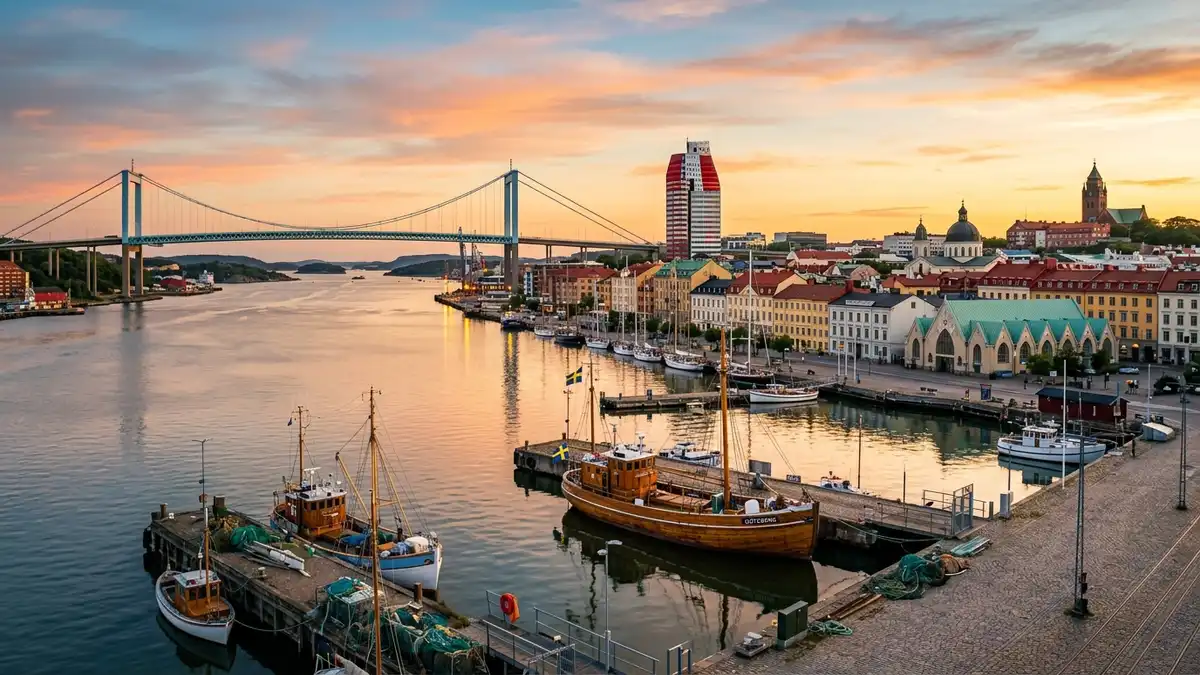



Route Briefing: Seattle to Gothenburg
Seattle and Gothenburg share more than you might expect — both are coastal cities built around maritime culture, surrounded by dramatic natural scenery, and deeply proud of their food scenes. That kinship makes this route feel less like a transatlantic leap and more like visiting a kindred spirit on the other side of the world.
Getting there takes around 13 and a half hours with a stop, typically connecting through Amsterdam, Copenhagen, or London. SAS, KLM, and British Airways are your most reliable options, and routing through Amsterdam or Copenhagen tends to offer both competitive pricing and genuinely convenient layovers — Copenhagen in particular is a pleasure to pass through, and if your schedule allows a longer connection, it's worth stepping outside the airport. A good deal on this route lands under $700 roundtrip; standard fares run between $1,000 and $1,400 or more, so booking three to five months ahead is the single smartest move you can make, especially if you're targeting summer.
And summer is worth targeting. June through August is when Gothenburg fully comes alive — the archipelago outside the city becomes one of the most beautiful places in northern Europe, a scattering of granite islands and fishing villages accessible by ferry. Swedes take their summers seriously, and the long golden evenings have a particular magic that's hard to describe until you've experienced one. That said, Gothenburg rewards visits in other seasons too. The city has a cozy, lived-in warmth that makes autumn and winter feel atmospheric rather than bleak.
The city itself is compact and walkable, centered around a network of canals and trams. Gothenburg's tram system is one of the most extensive in Scandinavia and is genuinely the easiest way to get around once you arrive. From Landvetter Airport, there are regular bus connections into the city center that are straightforward and affordable.
Gothenburg's food culture is the real revelation for most visitors. The west coast of Sweden produces exceptional seafood — shrimp, crab, oysters, and fish prepared with a simplicity that lets the ingredients speak — and the city has developed a serious restaurant scene around that foundation. The Haga neighborhood, with its old wooden houses and independent cafés, is the place to spend a slow morning. Linnégatan is where locals actually eat and drink in the evenings.
The experience-enhancing tip worth remembering: if you can time your visit to include a day trip into the southern archipelago, do it without hesitation. Renting a bike on one of the car-free islands and cycling between fishing villages is the kind of afternoon that makes a trip genuinely unforgettable — and it costs almost nothing once you're there.