


Route Briefing: Seattle to Ho Chi Minh City
Seattle and Ho Chi Minh City sit on opposite ends of the Pacific, but that roughly 17-and-a-half-hour journey with one stop is absolutely worth every minute in the air. This is a route that rewards the patient traveler — and with roundtrip fares occasionally dipping under $700, the math becomes hard to argue with. EVA Air, Korean Air, and China Airlines dominate this corridor, routing you through Taipei, Seoul, or Tokyo respectively, all of which are solid hub connections with comfortable terminals and reliable onward service into Tan Son Nhat International Airport.
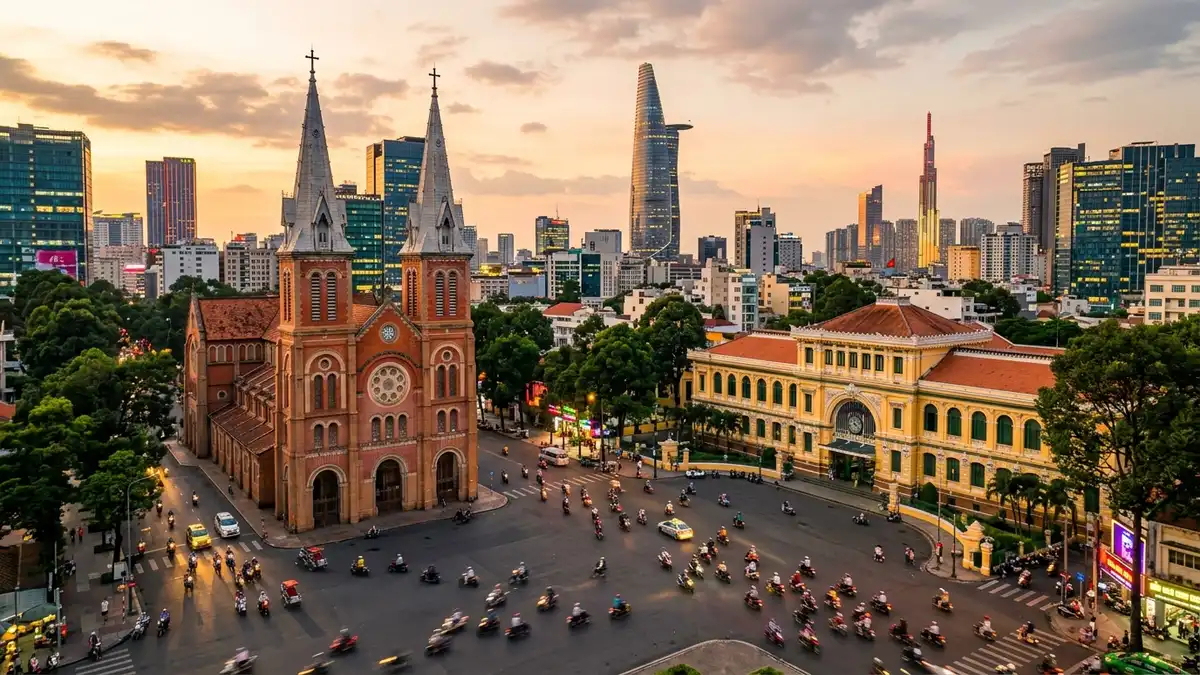
Ho Chi Minh City — still called Saigon by most locals, and you should feel free to use both — is one of Southeast Asia's most kinetic urban experiences. The city moves at a pace that's simultaneously chaotic and deeply human. Motorbikes pour through every intersection in a fluid, almost choreographed swarm, and learning to cross the street by walking slowly and steadily is genuinely one of the first skills you'll need. The French colonial architecture scattered through Districts 1 and 3 gives the city a layered visual identity that photographs beautifully and rewards slow walking.
War history is inescapable here, and that's not a bad thing. The War Remnants Museum is confronting and essential — it offers a perspective on the American War, as it's known locally, that you simply won't find anywhere else. The Cu Chi Tunnels, a short trip outside the city, give you a visceral sense of the underground network used during the conflict.
But honestly, much of your best time will be spent eating. Pho, banh mi, com tam (broken rice), and fresh spring rolls are everywhere and cost very little. Street food stalls and small family-run restaurants are consistently excellent — don't feel pressure to seek out anything fancy.
From the airport, taxis and ride-hailing apps like Grab are the most straightforward way into the city center, which is only a short distance away. Grab in particular is reliable, metered, and easy to use from the moment you land.
For timing, aim to avoid the Tet holiday period around late January or early February unless you specifically want to experience the celebrations — many businesses close and domestic travel prices spike sharply. The dry season from December through April offers the most comfortable weather, though December and January also bring peak tourist pricing. Booking three to six months out gives you the best shot at those sub-$700 fares. If you have flexibility, shoulder months like March or October can offer a sweet spot of decent weather and quieter crowds.