


Route Briefing: Seattle to Kuala Lumpur
Getting from Seattle to Kuala Lumpur takes around 20 and a half hours with one stop, and honestly, that layover is part of the appeal. The most competitive routings connect through Seoul, Tokyo, or Hong Kong — meaning you're flying with Korean Air, Japan Airlines, or Cathay Pacific, all of which are genuinely excellent carriers that make a long-haul journey feel far more comfortable than it has any right to. If you can snag a roundtrip under $700, you're doing very well on this route. Standard pricing runs $1,000 to $1,400 or more, so booking three to six months ahead is the move that separates the savvy travelers from the ones paying full fare.
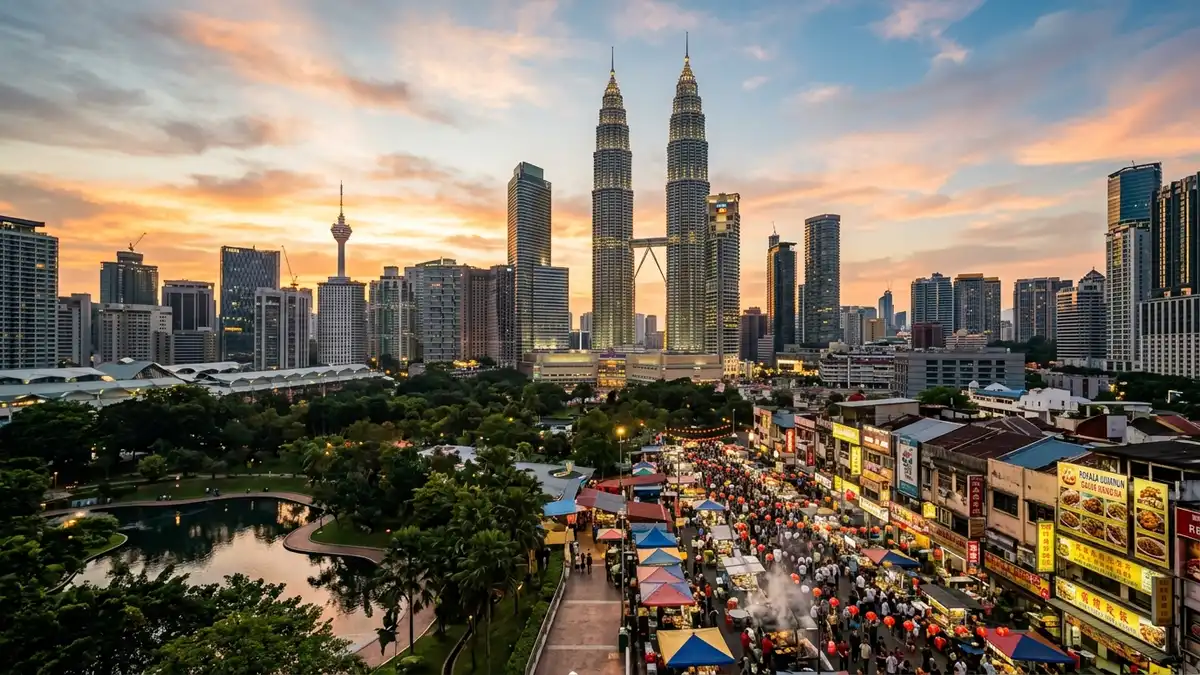
Kuala Lumpur rewards the effort it takes to reach it in ways that are hard to overstate. The city is one of Southeast Asia's great melting pots — Malay, Chinese, and Indian cultures have been layering on top of each other for generations, and nowhere is that more deliciously obvious than in the food. Jalan Alor is the city's most famous street food strip, where hawker stalls serve everything from char kway teow to satay well into the early hours of the morning. The variety is staggering and the prices are genuinely low, which means you can eat extraordinarily well without any financial guilt whatsoever.
The Petronas Twin Towers remain one of the most striking skylines in the world — seeing them lit up at night from KLCC Park is one of those travel moments that actually lives up to the photographs. The city also has excellent shopping malls, a vibrant arts scene in neighborhoods like Bangsar, and easy access to day trips including the Batu Caves, a dramatic Hindu temple complex built into limestone cliffs just north of the city center.
From Kuala Lumpur International Airport, the KLIA Ekspres train connects directly to KL Sentral station in the city center in under 30 minutes, making arrival refreshingly straightforward after a long flight.
Timing matters here. June through August and December through January are peak seasons, bringing higher fares and more crowds. If your schedule allows, the shoulder months on either side of those windows offer a noticeably better deal and a more relaxed experience. The city is warm and humid year-round, so pack light, breathable clothing regardless of when you go.
One tip worth keeping in mind: your layover city isn't just a connection — it's a bonus destination. Many airlines offer stopover programs that let you spend a night or two in Seoul or Tokyo at minimal extra cost. On a journey this long, turning your transit hub into a mini-adventure is one of the smartest things you can do.