


Route Briefing: Seattle to Sofia
Seattle to Sofia is one of those routes that rewards the curious traveler willing to put in a little extra effort — roughly 17 and a half hours of flying with one or two stops, but landing in a city that most Western tourists have barely discovered. That combination of effort and reward is exactly what makes it worthwhile.
Connecting through Frankfurt, Vienna, or Istanbul tends to give you the most competitive pricing, and the carriers doing it best on this route are Lufthansa, Austrian Airlines, and Turkish Airlines. A genuinely good deal lands under $700 roundtrip, while standard fares push into the $1,000 to $1,400 range. The sweet spot for booking is three to six months out, particularly if you're targeting summer travel between June and August, when Sofia and the surrounding Bulgarian countryside are at their most vibrant. That said, this is a year-round route, and Sofia in shoulder season — think April, May, or September — offers milder crowds and still-pleasant weather.
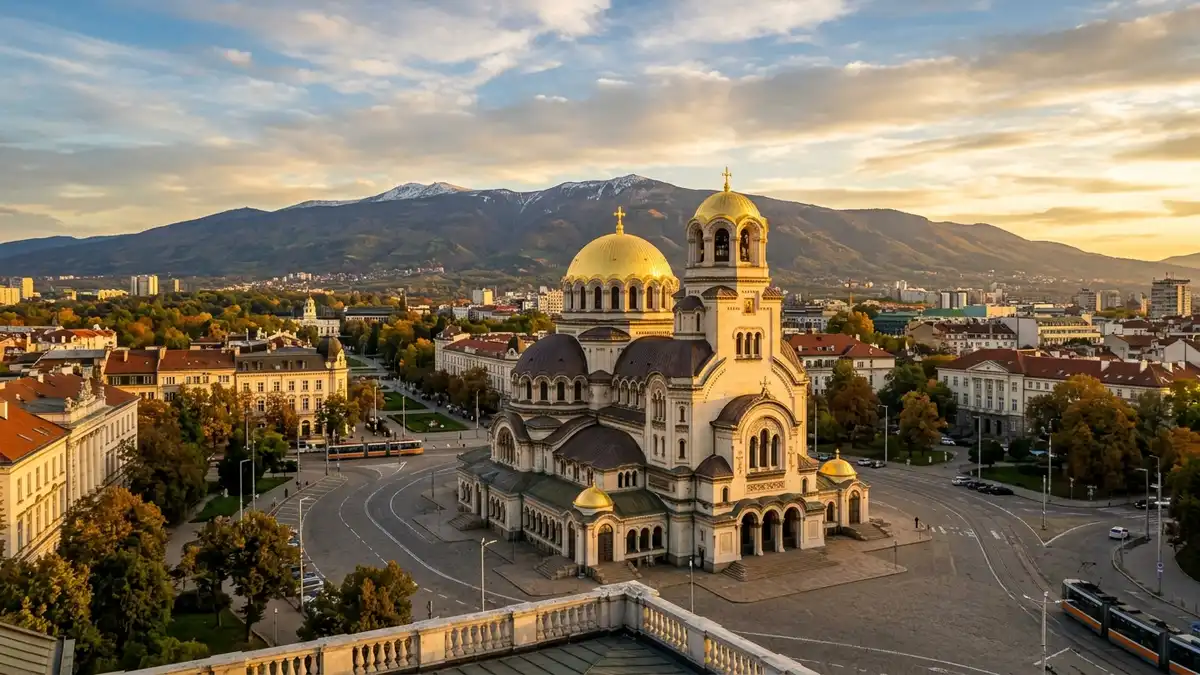
Sofia itself is the kind of city that makes you feel like you've stumbled onto something the rest of the world hasn't caught up to yet. Seven thousand years of continuous settlement means the layers of history are genuinely staggering — Roman ruins sit casually beneath the city streets, Orthodox churches and Ottoman mosques stand within blocks of each other, and Soviet-era architecture adds its own strange grandeur to the mix. The Alexander Nevsky Cathedral is one of the most impressive Orthodox churches in the Balkans and absolutely worth an early morning visit before the tour groups arrive. The city also sits at the foot of Vitosha Mountain, which means hiking trails are essentially accessible from the city limits — a remarkable thing for a capital.
Don't overlook Sofia's thermal springs, which have drawn people here since antiquity. The city has public mineral water fountains where locals fill bottles daily, a small but telling detail about how deeply the springs are woven into everyday life.
From Sofia Airport, the metro connects directly into the city center quickly and cheaply, making arrival straightforward even after a long journey. Skip the taxi queue and take the train — you'll be in the heart of the city before you've fully shaken off the flight.
The single best money-saving tip for this destination: Bulgaria uses the Bulgarian lev, not the euro, and the cost of living remains significantly lower than most of Western Europe. Your food, accommodation, and transport budget will stretch considerably further here than almost anywhere else on the continent. That value, combined with the depth of history and the genuine warmth of the city, is exactly why Sofia deserves to be on your radar.