


Route Briefing: Singapore to Bangkok
Just two hours and twenty minutes separates Singapore's gleaming efficiency from Bangkok's gloriously chaotic energy — and that short hop across the Gulf of Thailand might be one of the best value trips you'll ever take. When fares dip below $150 roundtrip, which they regularly do on this busy corridor, it's genuinely hard to justify staying home on a long weekend.
Thai Airways, Singapore Airlines, and Bangkok Airways all service this route year-round, so you're never short of options. The sweet spot for booking is four to eight weeks out — leave it much later and you'll be looking at standard fares of $250 or more. If your schedule has any flexibility, flying mid-week rather than Friday or Sunday can shave another 10 to 15 percent off the price, which in Bangkok translates directly into extra street food, extra cocktails, or a longer tuk-tuk adventure.
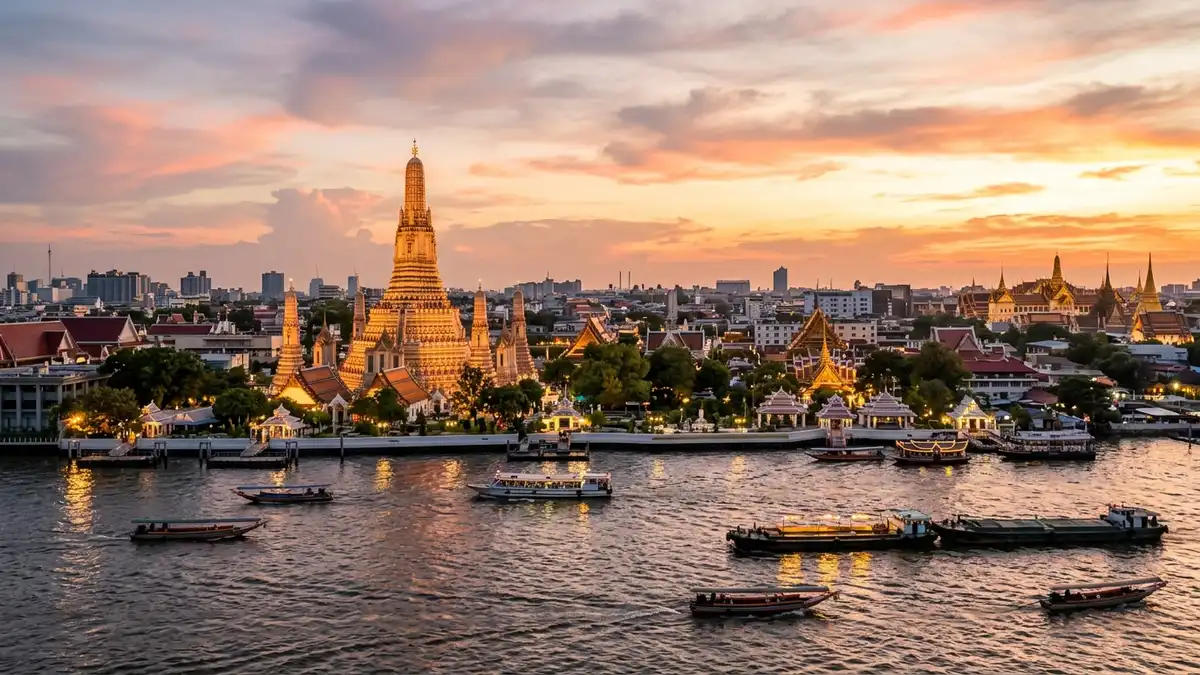
Bangkok rewards the curious traveller in ways that few cities can match. The Grand Palace and Wat Phra Kaew remain genuinely breathtaking even if you've seen a hundred photos — the scale and intricacy of the gilded architecture has to be experienced in person. Across the Chao Phraya River, Wat Arun's mosaic-covered spires catch the light differently at every hour of the day. Beyond the temples, the city is a masterclass in contrast: ferocious heat and noise at street level, then a cold beer and a city-wide sunset from a rooftop bar fifty floors up.
The street food alone justifies the flight. Pad thai, boat noodles, mango sticky rice, and som tum are everywhere and genuinely excellent at the most modest price points. Bangkok's markets — from the famous Chatuchak Weekend Market to the atmospheric riverside floating markets — are worth building your itinerary around.
Arriving at Suvarnabhumi Airport, the city's main international hub, you have a straightforward and affordable option into the centre: the Airport Rail Link connects directly to central Bangkok in around thirty minutes and is far more reliable than road transport during peak hours. It's the insider move that saves both time and money compared to a taxi in traffic.
Timing matters here. December and January are peak season, drawing crowds for the festive period and New Year celebrations — the atmosphere is electric but prices rise and popular spots get busy. If you prefer breathing room, the shoulder months either side of peak season offer a more relaxed experience with fares that reflect it. Just pack light, breathable clothing whatever time of year you go — Bangkok is hot, full stop.