


Route Briefing: Singapore to Budapest
Singapore to Budapest is one of those routes that rewards the patient traveller — not the shortest journey at around 14 and a half hours with a stop, but the payoff on the other end is genuinely spectacular. Connecting through Doha, Dubai, or Istanbul with carriers like Qatar Airways, Emirates, or Turkish Airlines tends to unlock the most competitive fares, and if you can snag a roundtrip under $700, you're doing very well on this route. Standard pricing pushes past $1,000, so booking two to four months ahead gives you the best shot at those lower fares. The good news is Budapest runs year-round, so you're never truly locked out.
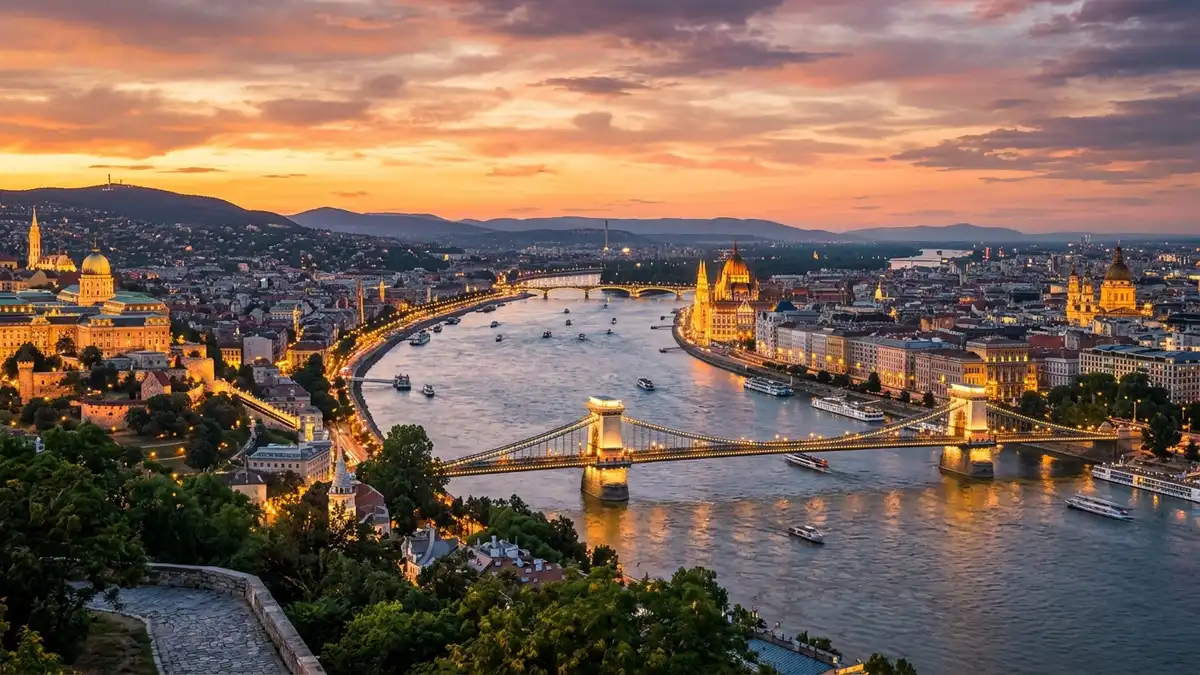
Budapest is one of Europe's most underrated capitals, and that's saying something given how loudly its fans talk about it. Straddling the Danube with Buda's castle-topped hills on one side and the flat, buzzing energy of Pest on the other, the city earns its nickname — the Pearl of the Danube — without any irony. The Hungarian Parliament building, sitting right on the riverbank, is genuinely one of the most beautiful structures on the continent, especially lit up after dark. The thermal bath culture here is serious business; locals treat it as a way of life rather than a tourist attraction, and soaking in a grand 19th-century bathhouse is an experience you simply won't replicate elsewhere in Europe.
Then there are the ruin bars — sprawling, deliberately ramshackle venues built inside abandoned buildings in the Jewish Quarter, filled with mismatched furniture, street art, and an atmosphere that somehow feels both chaotic and welcoming. Budapest's food and drink scene punches well above its weight, and your money stretches noticeably further here than in Western European capitals, which makes the long-haul flight feel like a smart investment.
Peak season runs June through August when the city is warm, lively, and hosting festivals, but shoulder seasons in spring and autumn offer a genuinely lovely experience with thinner crowds and softer prices on accommodation. Winter brings a moody, atmospheric charm and excellent Christmas markets if you can handle the cold.
From Budapest Ferenc Liszt International Airport, the city centre is easily reachable by public transport — the 100E airport express bus runs directly to the metro network, making it a straightforward and affordable transfer. Skip the overpriced airport taxis and use this instead; it's what locals would tell you to do.
One tip worth keeping in mind: pick up some Hungarian forints on arrival rather than relying solely on card payments, as smaller establishments and market vendors often prefer cash. It's a small thing that smooths out the first day considerably.