


Route Briefing: Singapore to Quito
Few flight routes on earth demand as much commitment as Singapore to Quito — a 28-plus hour journey spanning virtually the entire globe — but the reward waiting at the other end makes every layover worthwhile. This is one of the most logistically complex long-haul routes you can book, typically requiring two or more stops, with American Airlines, Copa Airlines, and LATAM Airlines covering the most reliable connections. Your two main routing options are through Miami or Bogotá, and it genuinely pays to compare both, since pricing and layover times can vary significantly depending on the day and season. A roundtrip under $900 is a genuinely good find on this route; standard fares typically run between $1,200 and $1,800 or more, so patience at the booking stage pays real dividends. Give yourself three to six months of lead time, as seat availability on this niche corridor is limited.
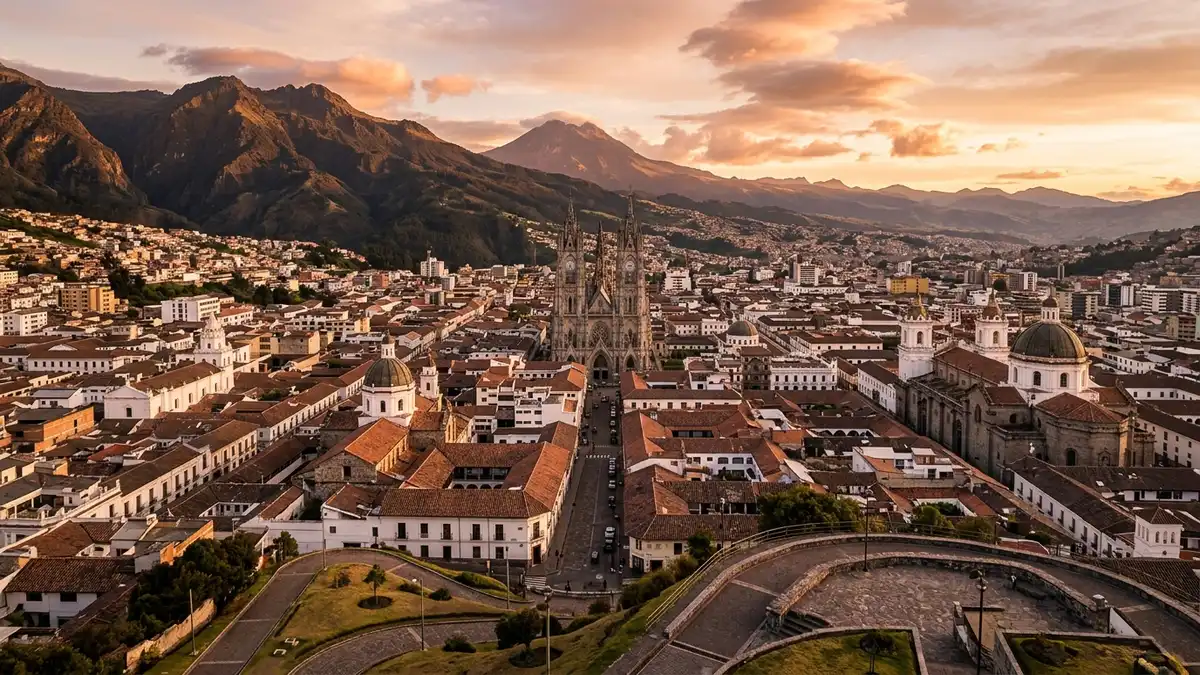
Quito itself is one of South America's most rewarding capital cities, sitting at roughly 2,850 metres above sea level in a dramatic Andean valley — which means your first day should be taken slowly regardless of how eager you are to explore. Altitude adjustment is real here, so hydrate well, eat lightly, and resist the urge to sprint uphill immediately. The historic centre, a UNESCO World Heritage Site, is among the best-preserved colonial old towns in the Americas, filled with ornate baroque churches, cobblestone plazas, and a skyline punctuated by the famous winged Virgin statue on El Panecillo hill. The Church of La Compañía de Jesús alone is worth the flight.
Beyond the city, Quito serves as the primary gateway to the Galápagos Islands, making it a natural launchpad for one of the world's great wildlife experiences. Domestic flights to the islands depart from Quito's Mariscal Sucre International Airport, the same modern facility where you'll land after your long transpacific journey. The airport sits outside the city, and official taxis and pre-arranged transfers are the most straightforward way to reach the historic centre or the Mariscal neighbourhood, which is popular with travellers for its restaurants and accommodation options.
Timing your visit matters. June through August brings dry, clear weather and is peak season, meaning higher prices and more crowds at popular sites. December and January also see a surge in visitors. If you want a quieter, more affordable experience, the shoulder months on either side of these windows offer a smart compromise — the city remains fully alive and the Andes scenery is spectacular year-round.
The single best tip for this route: if your connection takes you through Bogotá with a longer layover, consider it a bonus rather than a burden. El Dorado Airport is well-equipped, and a few hours in Colombia's capital is a genuine preview of South American energy before you even reach Ecuador.