


Route Briefing: Singapore to Riga
Few cities reward the long-haul traveller quite like Riga does. Yes, you're looking at around sixteen and a half hours in the air with a stop along the way, but the moment you step into the Latvian capital and find yourself surrounded by the most concentrated collection of Art Nouveau architecture in the world, every hour feels justified. This is a city that genuinely surprises people — sophisticated, historically layered, and far less crowded than its Western European counterparts, which means your travel budget stretches considerably further once you arrive.
On the flight itself, Finnair routing through Helsinki and Lufthansa through Frankfurt are your most reliable options for both competitive pricing and smooth connections. Turkish Airlines via Istanbul is another solid choice worth comparing. Roundtrip fares under $700 represent genuinely good value on this route — snag that and you're doing well. Standard pricing sits between $1,000 and $1,400, so booking two to four months ahead is the move that separates the savvy travellers from those paying full freight. The Helsinki connection is particularly worth considering if you want a short, efficient layover with minimal stress.
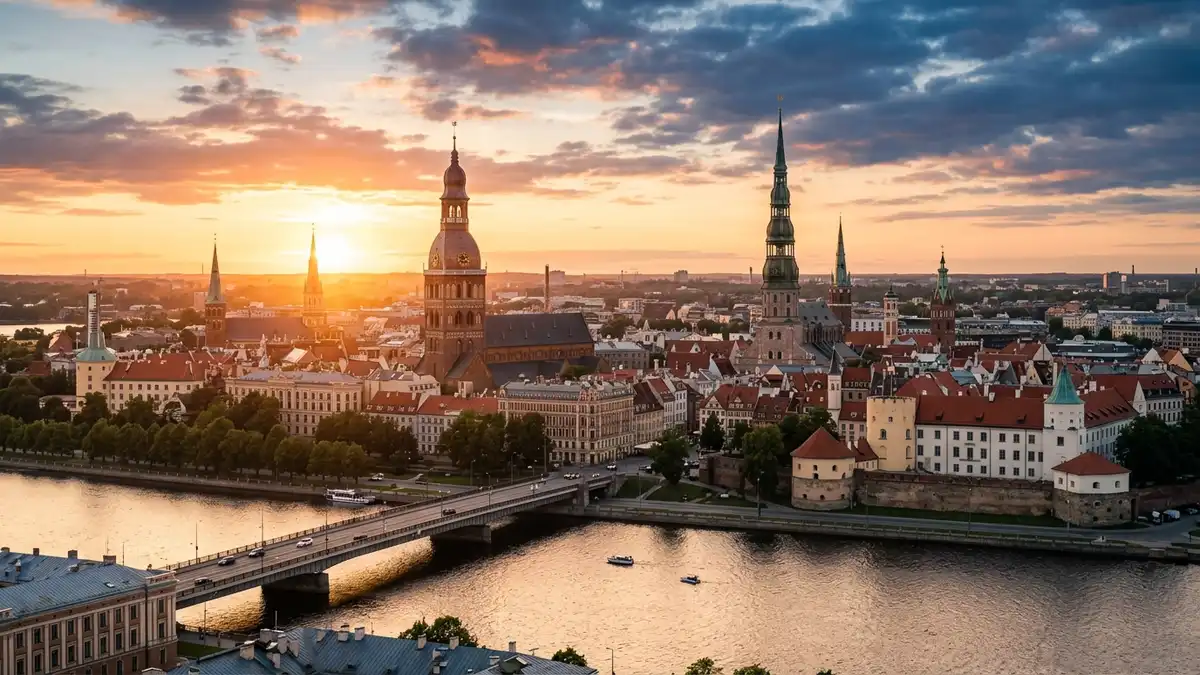
Riga's Old Town is a UNESCO World Heritage Site, and wandering its cobblestone streets feels like moving through several centuries simultaneously — medieval guild halls, Gothic churches, and Baroque townhouses all jostling for attention. Then step outside the old walls and the Art Nouveau boulevards open up, with ornate facades featuring faces, figures, and floral motifs that are genuinely jaw-dropping in their detail. The Central Market, housed in repurposed zeppelin hangars near the train station, is one of the largest markets in Europe and an essential first morning stop — local cheeses, smoked fish, rye bread, and fresh produce give you an immediate sense of Latvian food culture.
The Daugava River runs through the city and gives Riga a sense of openness and light that feels especially magical in summer. Peak season runs June through August when the days are long, the outdoor terraces are buzzing, and the city is at its most energetic. That said, Riga in winter has its own moody, atmospheric appeal — the Christmas market is genuinely lovely, and hotel prices drop noticeably.
From Riga International Airport, the city centre is easily reachable by bus, making arrival straightforward and affordable. The airport sits close to the city, so you won't spend a fortune or a significant chunk of time getting to your accommodation.
The one tip worth burning into your memory: explore beyond the tourist core into the quieter residential neighbourhoods. The wooden architecture districts, particularly the Āgenskalns area across the river, show you a completely different and deeply authentic side of Riga that most visitors miss entirely.