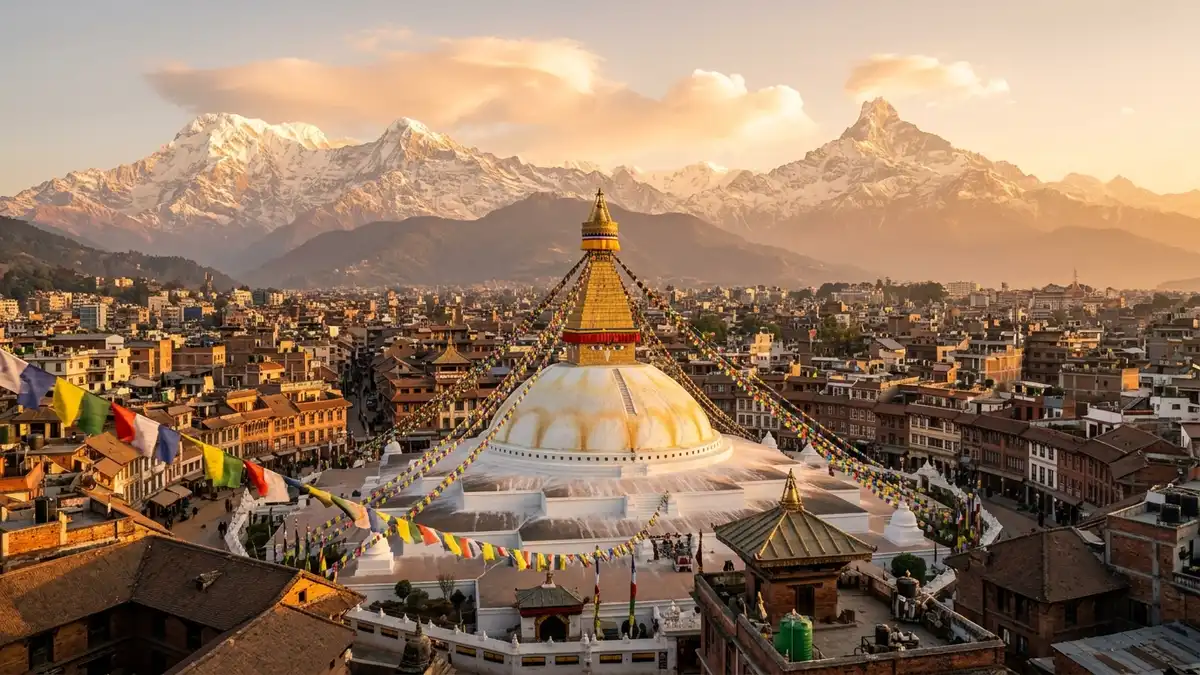



Route Briefing: Sydney to Kathmandu
Few flights carry the same sense of anticipation as the journey from Sydney to Kathmandu. You're not just crossing time zones — you're crossing into an entirely different relationship between humans and the natural world. At around 13 hours and 30 minutes with one stop, it's a manageable journey for the reward waiting at the other end: a city where ancient temple bells echo against a backdrop of the world's highest mountain range.
Fares on this route are genuinely reasonable if you plan ahead. Snag a roundtrip ticket under $700 and you've done well — standard pricing sits comfortably above $1,000, so the gap between a good deal and a mediocre one is significant. Air India, China Eastern, and Malaysia Airlines are your most reliable options, connecting through Delhi, Guangzhou, or Kuala Lumpur respectively. Each hub routing has its own charm, but from a pure value perspective, keep your eyes on all three and let the price guide you.
Timing matters enormously here. Kathmandu is a year-round destination, but October through November and March through May are the golden windows — these are the trekking seasons when skies clear, mountain views sharpen, and the trails to Everest Base Camp and the Annapurna Circuit are alive with energy. Monsoon season brings lush green landscapes but also heavy cloud cover and disrupted mountain views, so factor that into your expectations. Book two to four months ahead of your intended travel dates to access the most competitive fares, especially if you're targeting those peak trekking windows.
Arriving at Tribhuvan International Airport, you'll find yourself just a short drive from the city centre — taxis are readily available at the airport, and agreeing on a fare before you get in is standard practice. The Thamel neighbourhood is where most travellers base themselves, a dense, colourful maze of guesthouses, gear shops, and rooftop restaurants that somehow manages to feel both chaotic and welcoming.
Kathmandu itself rewards slow exploration. Durbar Square, Boudhanath Stupa, and Pashupatinath Temple are genuinely unmissable — each one layered with centuries of history and daily devotional life that no photograph quite captures. The smell of incense, the spin of prayer wheels, the sound of monks chanting — it settles into you quickly.
The one tip worth holding onto: if trekking is on your agenda, consider hiring a licensed local guide rather than going fully independent. Beyond the safety benefits, a knowledgeable guide transforms the experience from a physical challenge into a cultural immersion you simply can't replicate with a map and a guidebook alone.