


Route Briefing: Washington D.C. to Amman
There's something quietly thrilling about booking a flight from Washington D.C. to Amman — you're not just crossing an ocean, you're stepping into one of the oldest continuously inhabited cities on earth, and from there, into landscapes that feel genuinely otherworldly. The route runs year-round, clocking in around thirteen and a half hours with one stop, and carriers like Royal Jordanian, Turkish Airlines, and Qatar Airways all service it well. Royal Jordanian in particular is worth checking directly on their website, since they occasionally run promotional fares through London and other hubs that aggregators don't always surface. A roundtrip under $700 is a genuinely good deal here — standard pricing tends to land between $1,000 and $1,400 or more, so booking three to six months out gives you the best shot at the lower end.
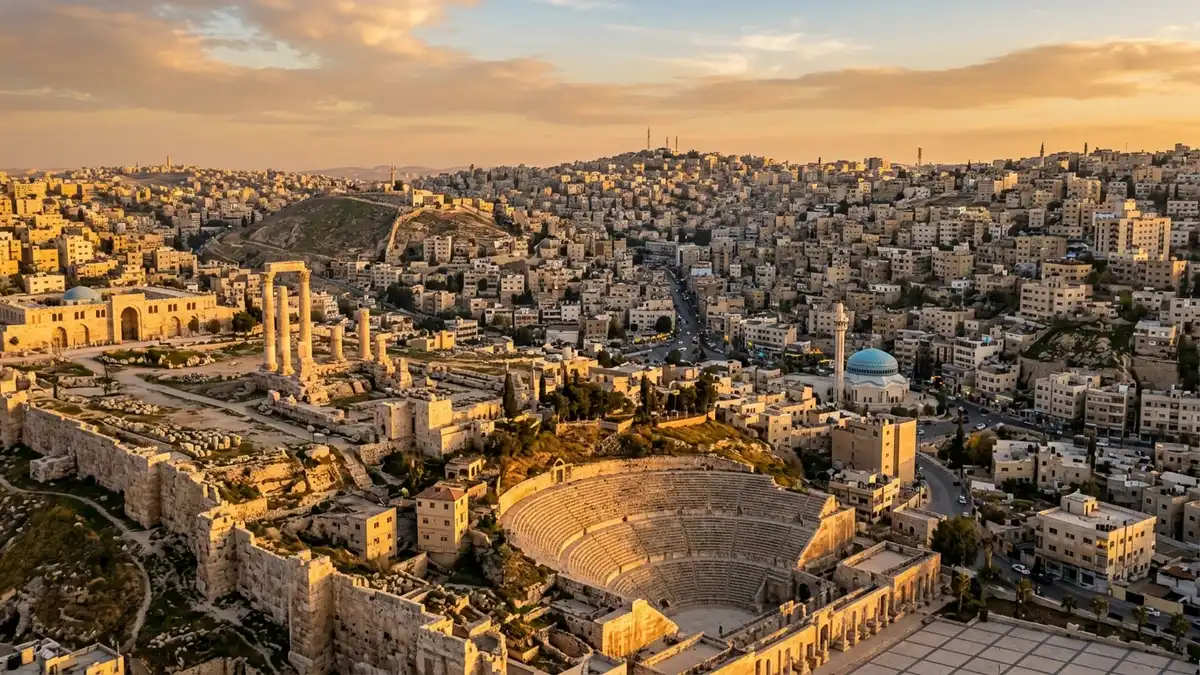
Amman itself tends to surprise first-time visitors. It's a sprawling, hilly city built across multiple jabal — hills — and it moves at a pace that feels both modern and deeply rooted. The older western neighborhoods have a certain faded elegance, while the downtown area around the Roman Theatre and the Citadel gives you history you can practically touch. The food culture alone justifies the journey: mansaf, the national dish of lamb cooked in fermented dried yogurt, is something you should seek out immediately, and the mezze tradition here is extraordinary.
But Amman is really the launchpad. Petra is the obvious pilgrimage — the rose-red city carved into sandstone cliffs is one of those rare places that actually exceeds its reputation. The Dead Sea is a short drive from the capital and offers a genuinely surreal floating experience at the lowest point on earth. And Wadi Rum, the vast desert of rust-colored rock formations in the south, is the kind of place that recalibrates your sense of scale entirely.
Peak travel season runs June through August and again around late December, when prices and crowds both climb. The sweet spot for most travelers is spring — March through May — when temperatures are comfortable, the landscape is at its greenest, and you'll share the major sites with noticeably fewer people. Autumn offers similar advantages.
One practical note on arrival: Queen Alia International Airport sits south of the city, and taxis are widely available from the arrivals hall. Agree on a fare before you get in, or ask for the meter — a habit worth keeping throughout Jordan. The country runs on Jordanian dinars, and while cards are accepted in many places, carrying some local cash smooths things considerably once you're outside the capital. Jordan is also one of the more straightforward destinations in the region for first-time Middle East visitors — welcoming, relatively easy to navigate, and genuinely rewarding at every turn.