


Route Briefing: Washington D.C. to Bruges
There's something almost cinematic about trading the marble monuments of Washington D.C. for the candlelit cobblestones of Bruges, and the good news is that this transatlantic journey is far more accessible than most travelers realize. With a roughly nine-and-a-half-hour trip including one stop, you're looking at a manageable overnight flight that deposits you in Belgium ready to wander one of Europe's most remarkably preserved medieval cities.
On the fare side, anything under $600 roundtrip is genuinely worth jumping on — standard pricing tends to creep above $900, so patience and timing matter here. United Airlines, Brussels Airlines, and Lufthansa all serve this corridor, and a smart trick is to check connections routed through Frankfurt or Munich, which can sometimes undercut fares going directly through Brussels. Book two to four months ahead and you'll be in the best position to catch those lower prices before they evaporate.
Brussels Airport is your arrival point, and from there Bruges is easily reached by train — Belgian rail is efficient and reliable, and the journey from the airport into Bruges takes roughly an hour with a connection through Brussels city center. It's a genuinely pleasant way to decompress after a long flight and watch the Flemish countryside roll past your window.
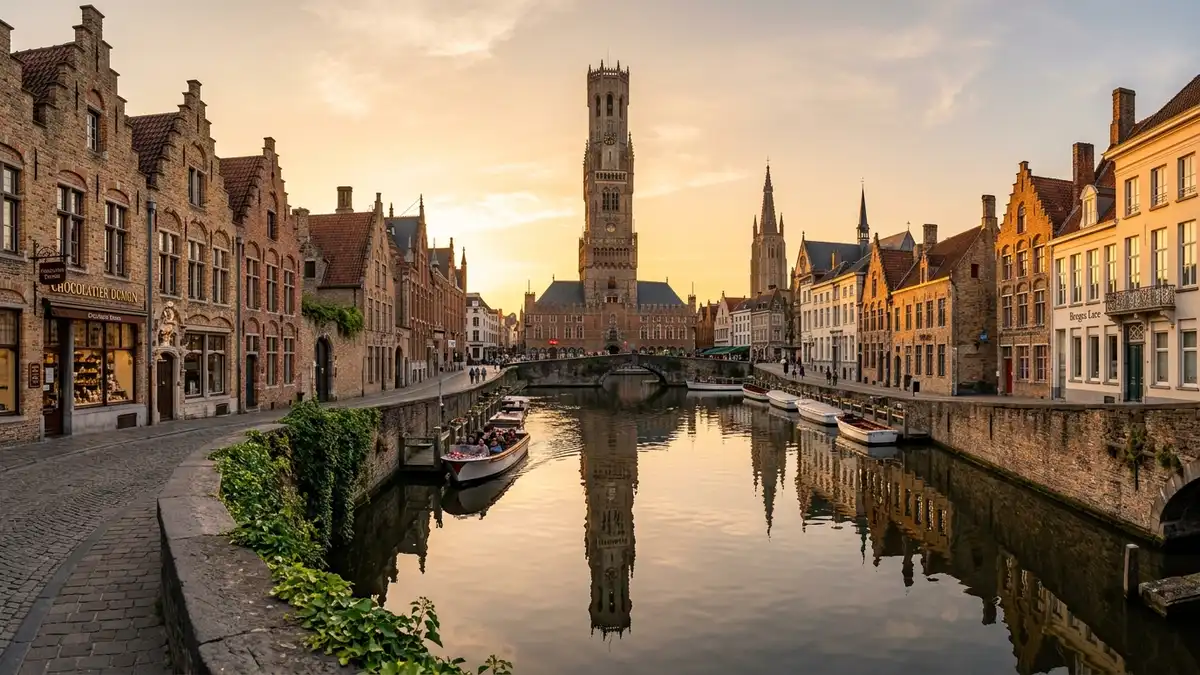
As for Bruges itself, the city earns every bit of its fairy-tale reputation. The historic center is compact and almost entirely walkable, threaded with canals that reflect the spires of the Church of Our Lady and the Belfry tower that has watched over the market square for centuries. This is a city where getting pleasantly lost is half the point — ducking into chocolate shops, crossing humpbacked bridges, and stumbling upon quiet courtyards that feel untouched by the modern world.
Peak season runs June through August when the weather is warmest and the city buzzes with visitors, but Bruges in the shoulder seasons — particularly spring and late autumn — has a quieter, more atmospheric quality that many travelers actually prefer. The canals catch the mist differently in October, and you'll share the streets with far fewer crowds.
One experience-enhancing tip worth knowing: Bruges is small enough that a single well-placed base near the historic center puts virtually everything within a short walk. Prioritizing central accommodation over cheaper options on the outskirts pays dividends in a city this compact — you'll want to be out on those streets early in the morning before the day-trippers arrive from Brussels, when the light is soft and the canals are nearly still.