


Route Briefing: Washington D.C. to Budapest
Budapest has a way of making you feel like you've discovered something the rest of the world hasn't quite caught onto yet — even though it absolutely has. From Washington D.C., you're looking at roughly ten and a half hours in the air with one stop, typically connecting through Frankfurt on Lufthansa or through Vienna on Austrian Airlines. Both are excellent options, and routing through Vienna in particular has a certain poetic logic to it, given how deeply the two cities share a Habsburg history. Fares under $650 roundtrip represent genuinely strong value for a transatlantic trip to one of Europe's most rewarding capitals, while standard pricing tends to run between $900 and $1,200 or more. Book three to five months out, especially if you're targeting summer, and you'll give yourself the best shot at landing in that sweet spot.
Peak season runs June through August, when the city hums with outdoor festivals, rooftop bars, and long golden evenings along the Danube. That said, Budapest rewards visitors in every season. Spring brings blooming parks and manageable crowds, while winter wraps the city in a moody, atmospheric charm that suits its grand architecture perfectly.
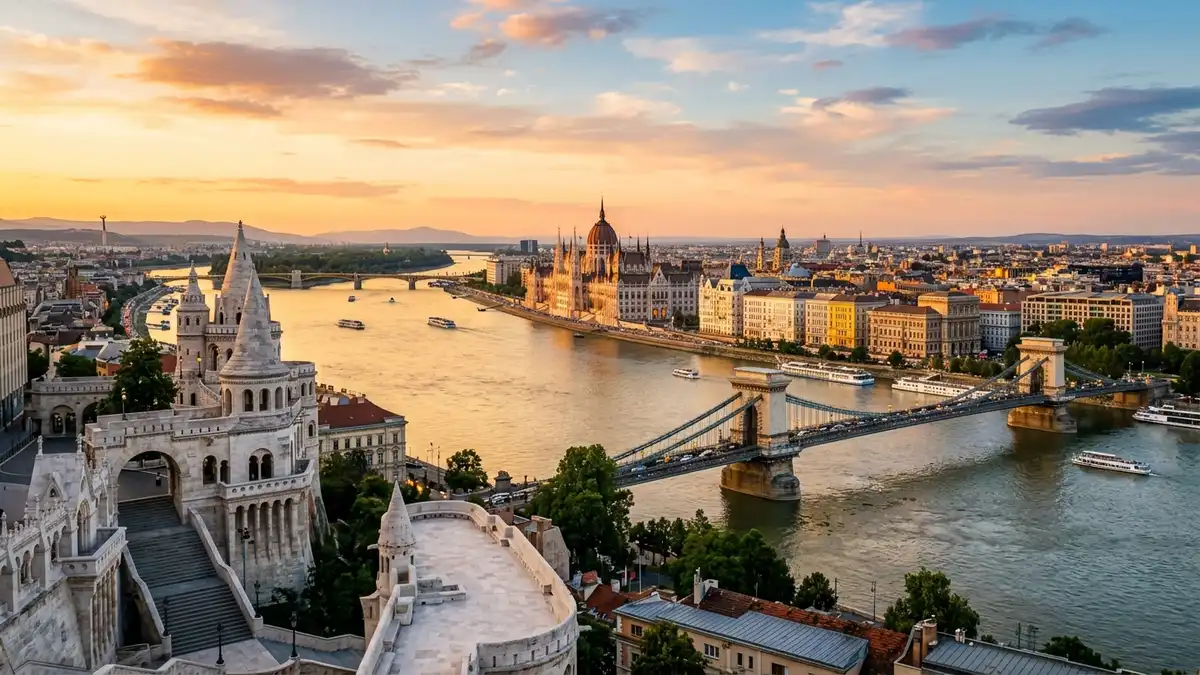
The city itself delivers on every front. The Hungarian Parliament building, sitting right on the Danube's edge, is one of the most breathtaking pieces of civic architecture anywhere in Europe — worth seeing both in daylight and illuminated at night. The thermal bath culture here is genuine and deeply embedded in daily life, not just a tourist gimmick, and spending a few hours soaking in one of the historic bathhouses is essentially mandatory. The ruin bar scene in the Jewish Quarter, centered around the labyrinthine Szimpla Kert, offers an entirely unique nightlife experience you won't replicate anywhere else.
From Budapest Liszt Ferenc International Airport, the city center is easily reachable by public transit — a combination of the airport shuttle bus and the metro will get you downtown affordably and without any fuss.
Here's the tip that genuinely changes a Budapest trip: the Hungarian forint gives Western visitors remarkable purchasing power. Excellent sit-down meals, quality wine, and even spa entry fees cost a fraction of what you'd pay in Paris or Amsterdam. This isn't a budget destination that feels budget — it's a world-class city that simply hasn't priced itself like one yet. That combination of beauty, history, and value is exactly why the D.C. to Budapest route punches well above its weight.