


Route Briefing: Washington D.C. to Cairo
Few routes from the American East Coast carry the same sense of genuine adventure as the flight from Washington D.C. to Cairo. You're trading the monuments of a young democracy for the monuments of one of the oldest civilizations on Earth — and that contrast alone makes the roughly thirteen and a half hours of travel time feel entirely worth it.
EgyptAir, Turkish Airlines, and Lufthansa all serve this route with one-stop connections, and EgyptAir frequently offers the most competitive fares given it's the national carrier flying into its home hub. A roundtrip under $700 is a genuinely good deal here — standard pricing tends to run between $1,000 and $1,400 or more, so when fares dip, it's worth jumping on them. Book two to four months ahead for the best shot at those lower prices, and check fares mid-week, particularly Tuesdays and Wednesdays, when pricing tends to be more favorable.
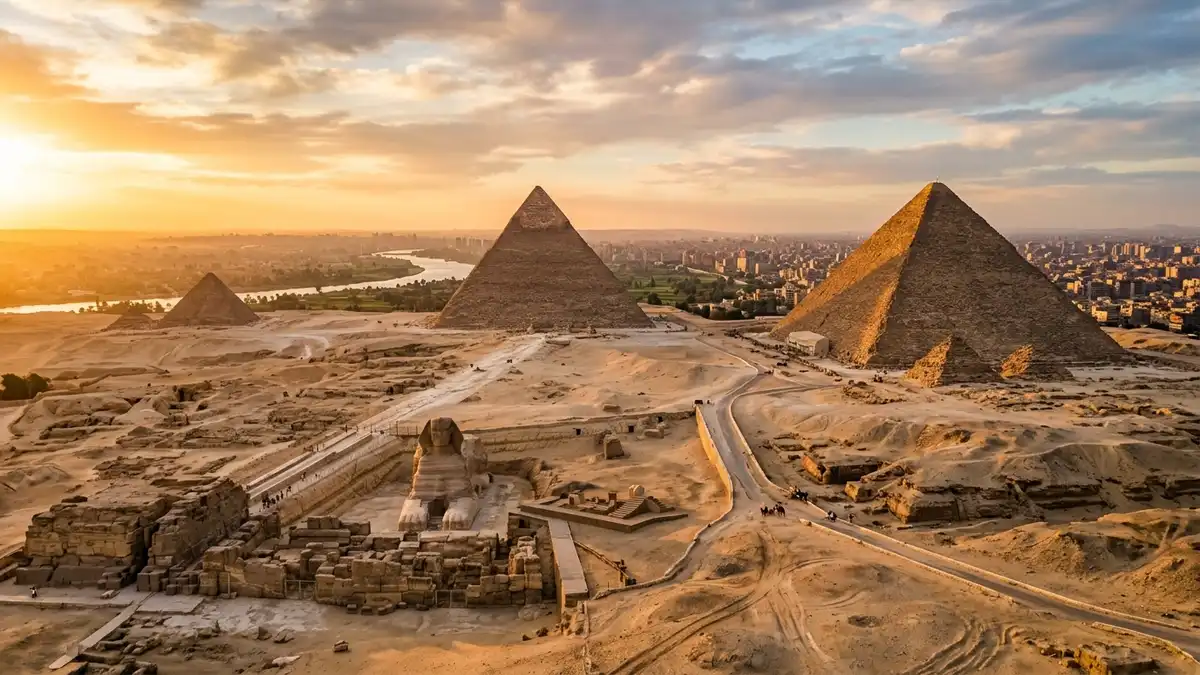
Cairo itself is overwhelming in the best possible way. The Pyramids of Giza and the Great Sphinx sit on the city's western edge — you can see them from certain neighborhoods — and no amount of photographs prepares you for standing at their base. The Egyptian Museum in Tahrir Square holds one of the world's most extraordinary collections of ancient artifacts, including the treasures of Tutankhamun. Beyond the ancient world, Islamic Cairo is a living, breathing historic district with medieval mosques, bustling souks, and the famous Khan el-Khalili bazaar where you can spend hours getting happily lost.
The food scene rewards curiosity. Koshari — a hearty mix of rice, lentils, pasta, and spiced tomato sauce — is Cairo's beloved street food and costs almost nothing. Fresh-baked bread, grilled meats, and strong tea are staples of daily life here, and eating where locals eat is always the right call.
From Cairo International Airport, taxis and ride-hailing apps are the most practical ways into the city center, though agree on a fare before getting into an unmarked cab. The drive into central Cairo can vary significantly depending on traffic, which in this city is famously unpredictable.
Timing matters. Peak season runs June through August and again in December and January, when crowds at major sites are at their heaviest and prices climb. If you have flexibility, the shoulder months of October, November, and March offer more comfortable temperatures and thinner crowds at the Pyramids — a meaningful difference when you're standing in the desert sun. Cairo is a year-round destination, but visiting outside peak windows gives you a noticeably different experience.
The one tip worth emphasizing: hire a licensed guide for your first day at Giza. The site is large, the context is rich, and a knowledgeable guide transforms what could be a confusing visit into something genuinely memorable.