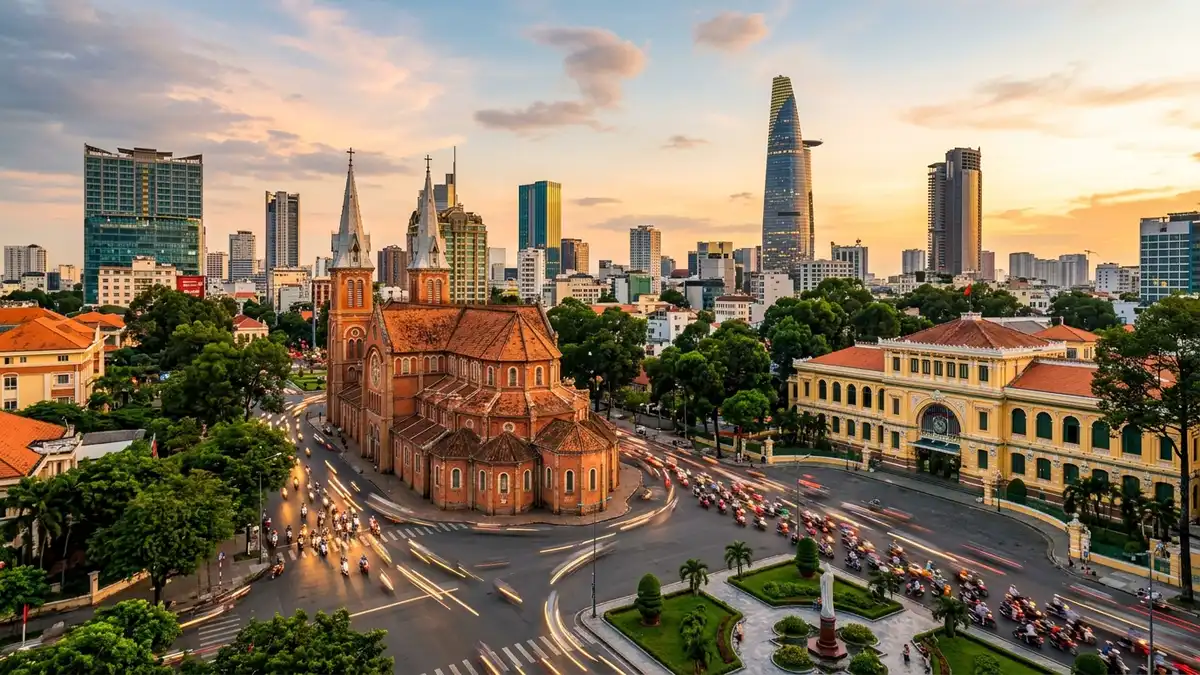



Route Briefing: Washington D.C. to Ho Chi Minh City
Washington D.C. to Ho Chi Minh City is one of those routes that genuinely rewards the effort. Yes, you're looking at around twenty and a half hours in the air with a stop along the way, but what waits on the other end is a city so alive, so layered, and so relentlessly delicious that the journey feels like a fair trade the moment you step outside the terminal. Korean Air, Cathay Pacific, and Japan Airlines are the carriers most worth watching on this route, and their hubs in Seoul, Hong Kong, and Tokyo respectively tend to produce the most competitive fares. If you can snag a roundtrip under $700, you've done very well. Standard pricing runs $1,000 to $1,400 or more, so patience and planning genuinely pay off here — aim to book three to six months out for the best shot at those lower fares.
Timing matters enormously on this route. Late December through February brings Tet, Vietnam's Lunar New Year, which is a spectacular cultural experience but also the busiest and most expensive travel window of the year. If you want to witness the city transformed by lanterns, family reunions, and festive energy, book early and expect crowds. For a quieter, more budget-friendly visit, the dry season months outside of peak holiday windows offer pleasant conditions in the south. June through August is another busy period, so again, early booking is your best friend.
Ho Chi Minh City itself — still called Saigon by most locals — hits you immediately with its energy. The streets are a constant, beautiful negotiation between motorbikes, vendors, and pedestrians. The War Remnants Museum is essential, sobering, and important. The Reunification Palace offers a fascinating window into Cold War-era history. The Ben Thanh Market area pulses day and night. And the food scene is simply extraordinary — banh mi, pho, fresh spring rolls, and broken rice dishes are everywhere, and eating well here costs almost nothing.
From Tan Son Nhat International Airport, the city center is only a handful of kilometers away, and taxis and ride-hailing apps like Grab are reliable, widely used, and reasonably priced options for getting in. Grab in particular is worth downloading before you land — it removes the guesswork on pricing and is trusted by travelers throughout Southeast Asia.
One tip that makes a real difference: use your layover strategically. A long connection in Seoul or Tokyo isn't a burden if you plan for it — both cities offer transit visa-free access for many nationalities, and even a few hours outside the airport can turn a layover into a mini adventure before the main event.