


Route Briefing: Washington D.C. to Kuala Lumpur
Few long-haul routes from the American East Coast offer the kind of cultural payoff that Washington D.C. to Kuala Lumpur delivers. You're looking at roughly 20 and a half hours of travel with one stop, and the reward waiting at the other end — a city that somehow blends Malay, Chinese, and Indian influences into one of the most vibrant, affordable, and genuinely welcoming metropolises in Asia — makes every hour worthwhile.
The route itself is well-served by some of the world's most consistently praised carriers. Qatar Airways routing through Doha and Cathay Pacific through Hong Kong tend to offer the most competitive fares and comfortable connections, with Korean Air via Seoul rounding out your options. A roundtrip under $700 is the sweet spot to aim for — that's a genuinely excellent deal for this distance. Standard fares creep up to $1,100 and beyond, so booking three to six months ahead is your single most powerful move. The Doha and Hong Kong routings are worth prioritizing not just for price but because both hubs are well-run, easy to navigate during a layover, and far less stressful than scrambling through a chaotic connection.
Once you land at Kuala Lumpur International Airport, the KLIA Ekspres train whisks you directly into KL Sentral station in the city center in under 30 minutes — fast, reliable, and far more sensible than navigating traffic in a taxi after a 20-hour journey.
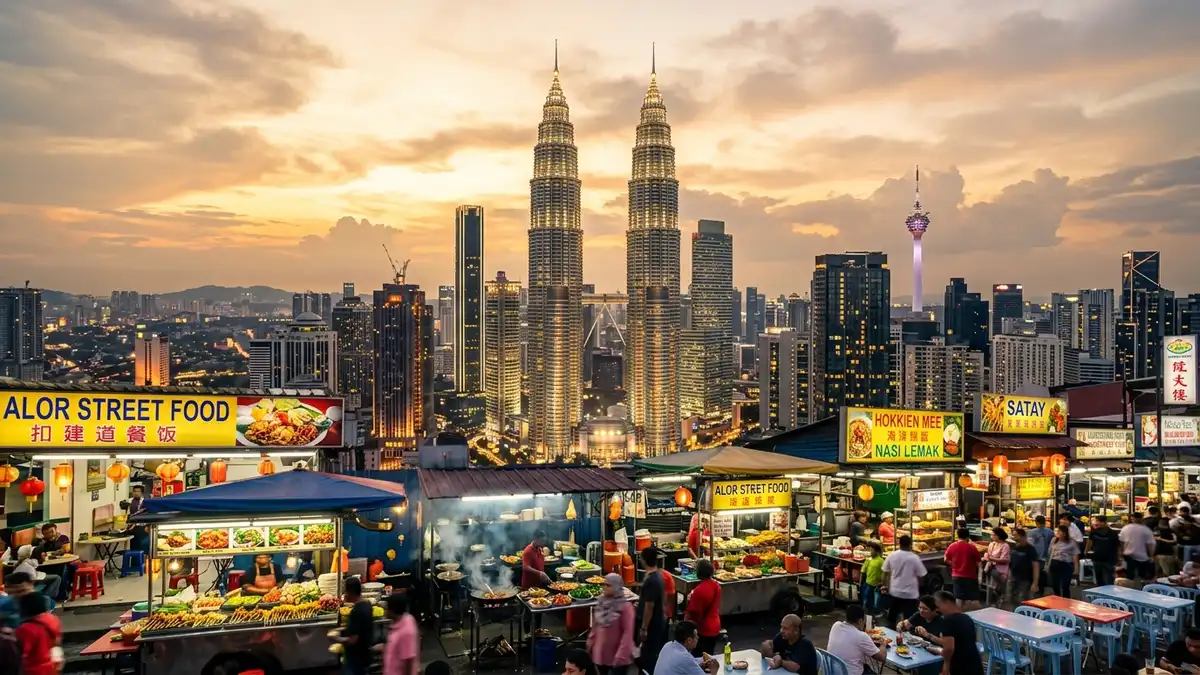
The city itself rewards curious, hungry travelers above almost anywhere else in Southeast Asia. The Petronas Twin Towers are genuinely jaw-dropping up close, but KL's real magic lives at street level. Jalan Alor is the kind of food street that reminds you why people travel in the first place — hawker stalls serving char kway teow, satay, and fresh seafood well into the night. The Brickfields neighborhood, known as KL's Little India, and the historic Chinatown district around Petaling Street add layers of texture that feel nothing like a tourist performance.
Timing matters here. June through August and December through January are peak seasons, bringing higher prices and bigger crowds. If your schedule allows, the shoulder months on either side offer a quieter, cheaper experience with the same incredible food and culture. KL's tropical climate means rain is possible year-round, so a light packable jacket is always worth throwing in your bag.
The value proposition in KL is hard to overstate. World-class food, striking architecture, genuinely warm locals, and a cost of living that makes your dollar stretch further than almost anywhere — this is a route that punches well above its ticket price.