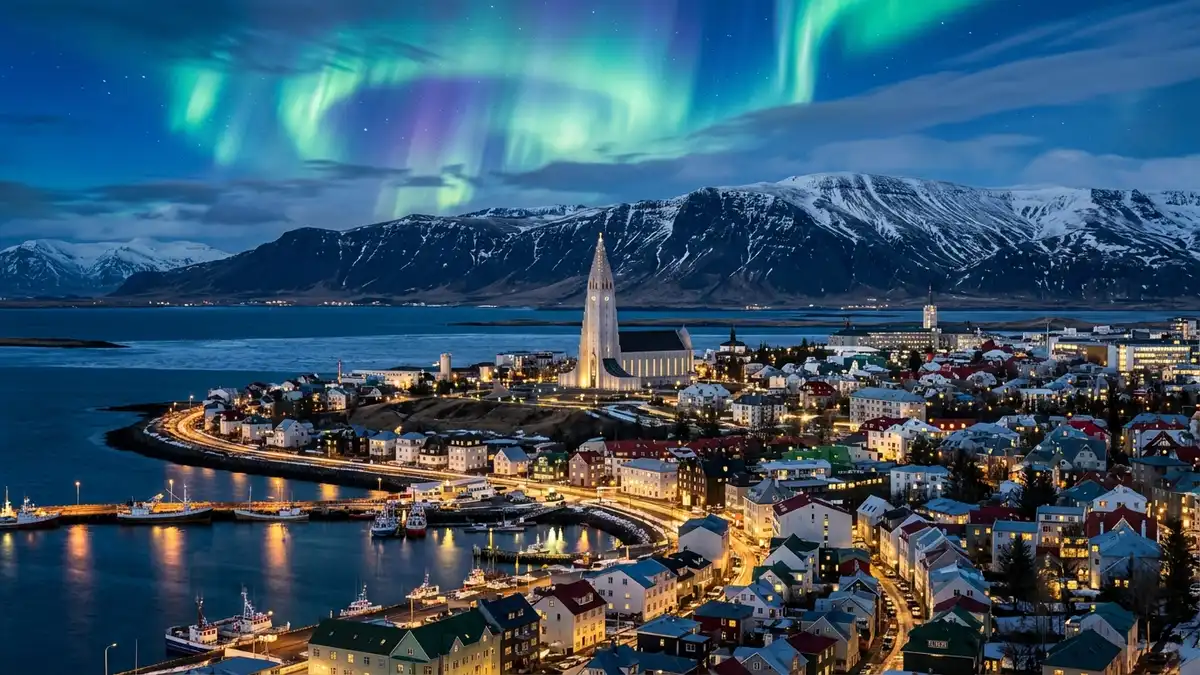



Route Briefing: Washington D.C. to Reykjavik
Few routes from the American East Coast feel quite as transformative as the roughly six hours and forty-five minutes separating Washington D.C. from Reykjavik. You board in one of the world's great political capitals and step off into a place that feels genuinely otherworldly — a small, walkable city perched at the edge of the Arctic, where geysers erupt an hour's drive from downtown and the sky occasionally catches fire with the Northern Lights. For a direct transatlantic flight, that's an extraordinary return on your time.
Icelandair and United both serve this route, and if you catch a good deal — roundtrip under $500 — you'd be hard-pressed to find better value for a European adventure. Standard fares creep above $800, so timing your search matters. Book four to six months ahead if you're targeting summer, because June through August is when Iceland draws enormous crowds chasing the midnight sun and the country's dramatic highland landscapes. The flip side is that April and September offer meaningfully lower fares, thinner crowds, and — crucially for many travelers — a realistic chance of seeing the Northern Lights, which require darkness that the endless summer sun simply doesn't allow.
Once you land at Keflavík International Airport, the city is roughly fifty kilometers away. A dedicated bus service connects the airport to central Reykjavik, making it a straightforward and affordable transfer without needing to arrange a rental car on arrival. Speaking of cars — if the Golden Circle is on your list, and it absolutely should be, renting one for at least a day or two unlocks the whole country. The Golden Circle alone covers Þingvellir National Park, the Geysir geothermal area, and Gullfoss waterfall, and it's entirely doable as a day trip from the capital.
The Blue Lagoon, Iceland's famous geothermal spa, sits conveniently close to the airport — many travelers stop there on arrival or departure to ease the transition. Just book well in advance, as it sells out regularly during peak season.
Reykjavik itself is compact and deeply walkable, with a vibrant food scene built around lamb, fresh seafood, and skyr. The city has a creative, slightly eccentric energy that belies its small size, and the iconic Hallgrímskirkja church offers one of the best panoramic views in the country from its tower.
The single best tip for this route: seriously consider a shoulder season trip. April and September give you the dramatic volcanic scenery without the summer premium, and the chance to witness the Aurora Borealis makes the whole experience feel like something you genuinely earned.