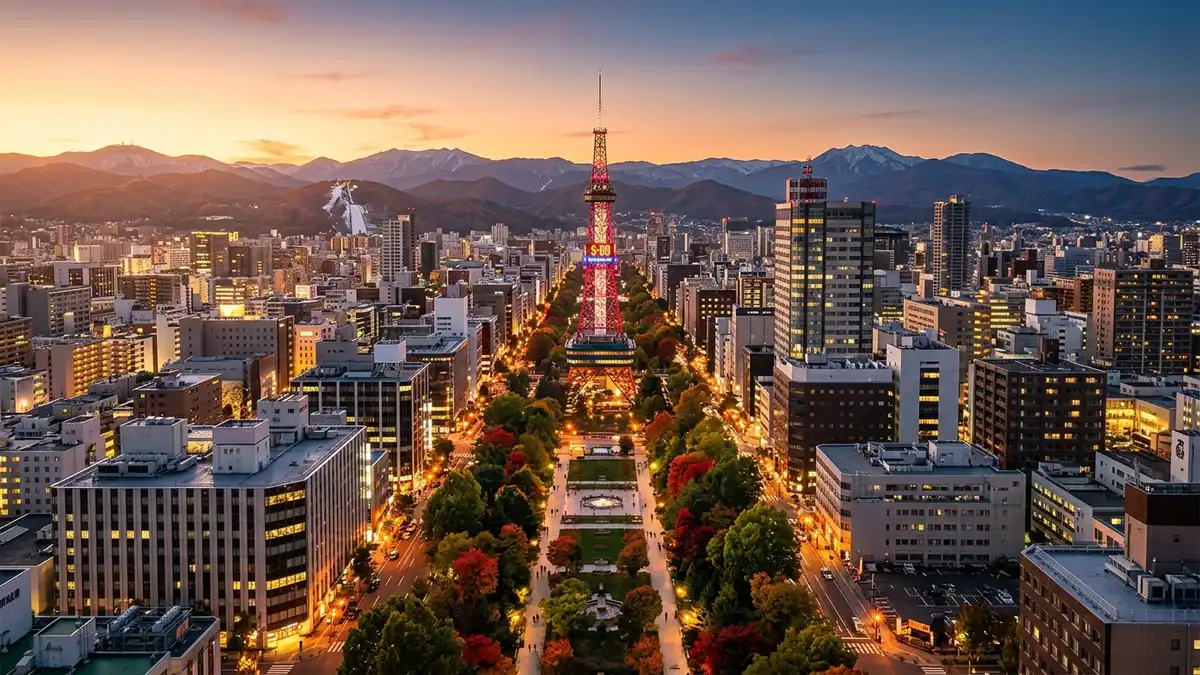



Route Briefing: Washington D.C. to Sapporo
Few American cities carry the kind of intellectual and diplomatic weight that Washington D.C. does, so there's something quietly poetic about flying from the seat of U.S. power to Sapporo — a city that feels like Japan's great escape, tucked away on the northern island of Hokkaido where the pace slows, the air gets crisp, and the food becomes almost unfairly good.
The journey runs around 16 hours and 30 minutes with one stop, typically routing through Tokyo or Chicago depending on your carrier. United Airlines, ANA, and JAL all serve this route well, and if you're flexible with your travel dates, snagging a roundtrip under $800 is genuinely achievable — a real bargain for this distance. Standard fares climb past $1,200, so booking three to six months out is the smartest move you can make. Connecting through Tokyo's Narita or Haneda airports tends to offer the most competitive pricing and the smoothest onward connections to Sapporo's New Chitose Airport.
From New Chitose, getting into the city is refreshingly straightforward. The airport has direct train access into central Sapporo, making it one of the easier arrivals in Japan — no navigating a labyrinthine transfer system after a long-haul flight, which your legs will thank you for.
Sapporo rewards visitors in almost every season, but the two peak windows are summer and deep winter, and they offer completely different cities. July and August bring mild temperatures and lush greenery — a welcome contrast to Hokkaido's brutal winters — along with fresh seafood and outdoor festivals. But honestly, late December through February is when Sapporo becomes something close to magical. The Snow Festival in February draws visitors from around the world to see enormous ice sculptures carved with almost absurd precision, and the nearby ski resorts at places like Niseko and Furano are considered among the finest powder destinations on the planet.
Then there's the food. Sapporo-style ramen — rich, miso-based, often topped with butter and corn — is a genuine regional treasure, and the city's brewing heritage means a cold local beer feels like a cultural obligation rather than an indulgence. Hokkaido dairy is also exceptional, so expect cream, cheese, and soft-serve to appear in places you wouldn't expect.
One tip worth remembering: if you're flying through Tokyo on a longer layover, Japan's transit rules often allow you to step out and explore briefly. Even a few hours in Tokyo before continuing north adds remarkable value to a trip that's already crossing a serious stretch of the Pacific.