


Route Briefing: Washington D.C. to Sofia
Few routes from the American East Coast offer this kind of reward-to-effort ratio. You're looking at roughly thirteen and a half hours of travel with one stop, connecting through Frankfurt, Vienna, or Istanbul depending on whether you fly Lufthansa, Austrian Airlines, or Turkish Airlines — three solid carriers that regularly offer the most competitive fares on this corridor. Lock in your tickets two to four months ahead and you stand a real chance of landing a roundtrip under $700, which is genuinely exceptional for transatlantic travel to Europe. Standard fares creep up to $1,000 or beyond, so that early-booking window matters.
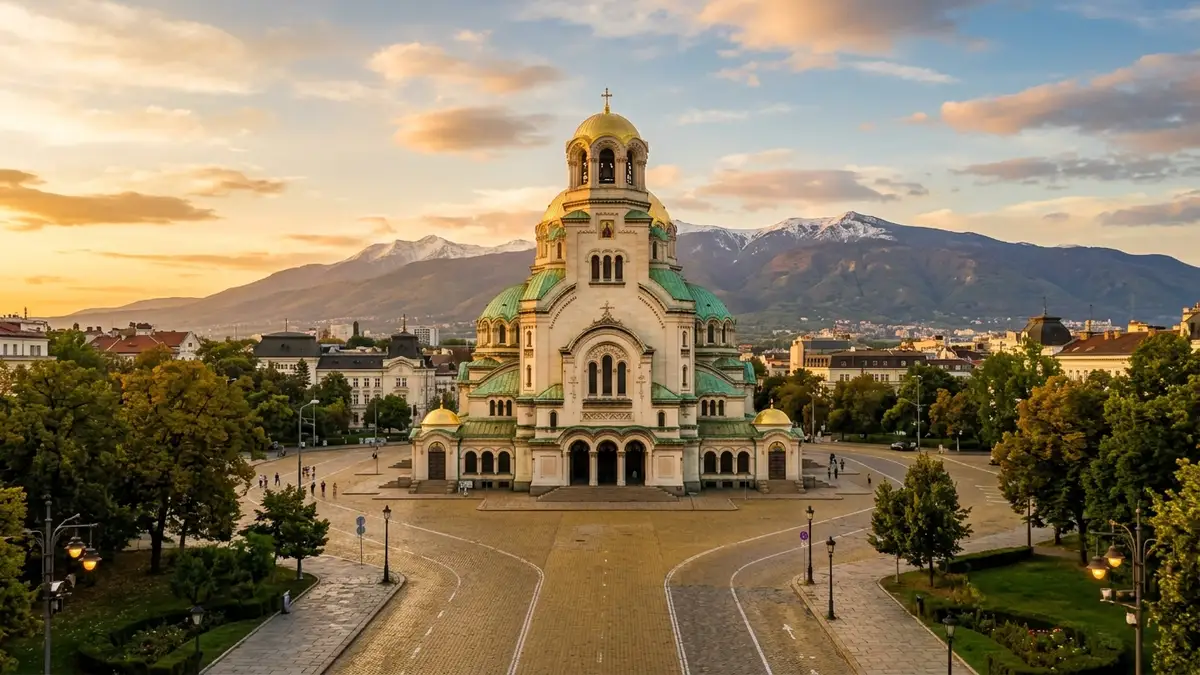
Sofia doesn't get the Instagram traffic of Prague or Lisbon, and that's precisely the point. This is a city sitting on nearly seven thousand years of continuous human settlement, layered with Thracian, Roman, Byzantine, Ottoman, and Soviet history all visible within a short walk of each other. The Rotunda of St. George, one of the oldest buildings in the city, sits tucked between a Soviet-era hotel and a Roman ruin in what feels like an open-air history lesson. The Alexander Nevsky Cathedral is one of the largest Orthodox cathedrals in the world and genuinely stops you in your tracks. And then there are the thermal springs — Sofia is one of the few European capitals built on natural hot mineral springs, some of which have been flowing publicly for centuries.
The city is extraordinarily affordable by Western European standards. A sit-down meal, a glass of local wine, a tram ride — your money stretches in ways that feel almost old-fashioned. The Bulgarian lev is pegged to the euro, so currency exchange is straightforward and predictable.
Peak season runs June through August when the weather is warm and the city's outdoor café culture is in full swing, but shoulder seasons — particularly May and September — offer pleasant temperatures with noticeably thinner crowds. Winter has its own appeal if you're drawn to the ski resorts in the nearby Vitosha mountain range, which rises dramatically right behind the city.
From Sofia Airport, the metro connects directly to the city center quickly and cheaply, making arrival refreshingly painless after a long journey. Skip the taxi queue and take the train — you'll be in the heart of the city before you've had time to feel jet-lagged.
The one tip worth repeating to anyone on this route: use your layover city intentionally. A long connection in Vienna or Istanbul isn't wasted time — it's a bonus destination. Both airports sit close enough to their city centers that even a six-hour layover can mean a quick espresso in a Viennese café or a glimpse of the Bosphorus. Book accordingly.