


Route Briefing: Washington D.C. to Varanasi
Few routes in the world carry you quite so far — not just in miles, but in time itself. Washington D.C. to Varanasi is a journey from one of the world's youngest capitals to one of its oldest living cities, a place that has been continuously inhabited for over three thousand years. That contrast alone makes the roughly twenty-and-a-half hours of travel, typically with one or two stops, feel entirely worth it.
Air India, Emirates, and Qatar Airways are your strongest options on this route, with connections commonly routing through Delhi or Mumbai before the final leg into Varanasi's Lal Bahadur Shastri Airport. Choosing a Delhi connection is often smart — it tends to keep total travel time manageable and gives you a domestic Indian leg that's usually smooth and well-timed. A roundtrip under $900 is a genuinely good deal here; standard fares typically run between $1,200 and $1,600 or more, so if you spot something below that threshold, move quickly.
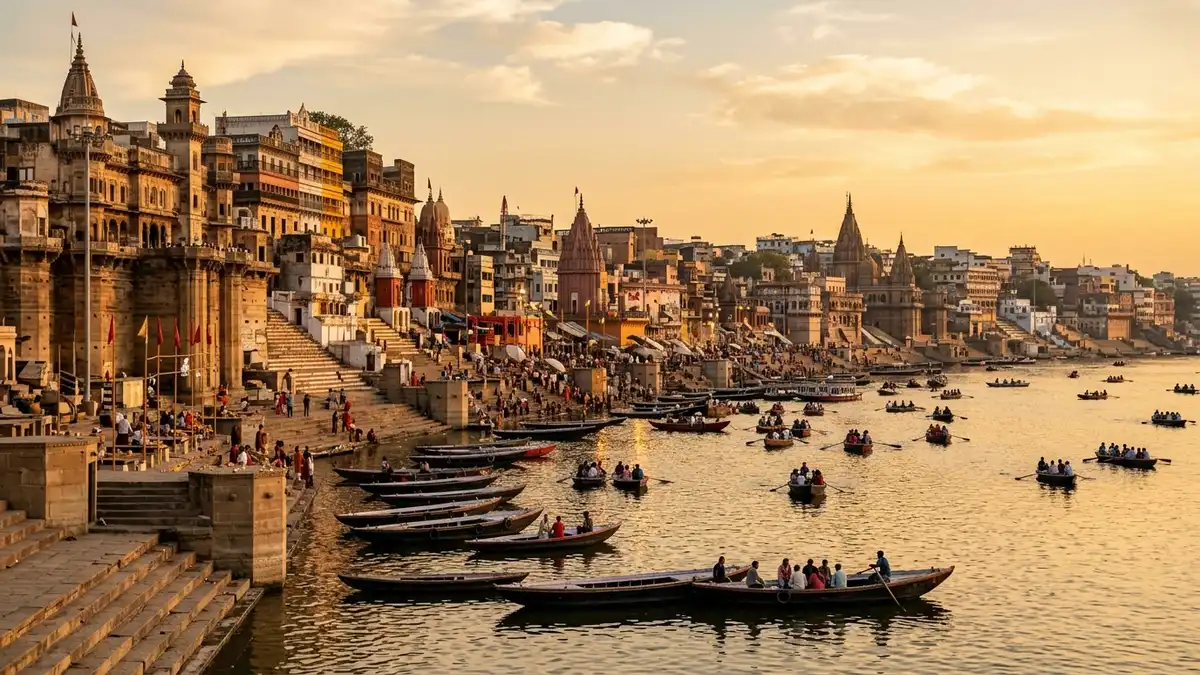
Varanasi rewards patience and presence more than any itinerary can capture. The city's famous ghats — the long stone staircases descending to the Ganges — are where daily life, death, and devotion unfold simultaneously and without apology. The Ganga Aarti ceremony at Dashashwamedh Ghat, performed each evening with fire, incense, and chanting, is one of those experiences that genuinely defies description. The old city's narrow lanes are a sensory labyrinth of silk weavers, chai stalls, flower sellers, and ancient temples. Varanasi is also the spiritual heartland of Hinduism and holds deep significance for Buddhists, as the nearby site of Sarnath is where the Buddha delivered his first sermon.
October through February is peak season for good reason — the weather is far more forgiving than the punishing summer heat, and major festivals including Diwali transform the city into something otherworldly, with the ghats lit by thousands of oil lamps reflected on the river. If you're targeting festival periods, book three to five months in advance; fares and accommodation both tighten considerably around Diwali and other major celebrations.
From the airport, taxis and auto-rickshaws are the standard way into the city. The old city itself is largely inaccessible to vehicles, so expect to walk the final stretch to most guesthouses near the ghats — pack light if you can.
One tip that genuinely enhances the experience: rise before dawn on at least one morning and hire a small rowboat on the Ganges. Watching the city wake up from the water, with mist on the river and the ghats slowly coming to life, is the kind of moment that stays with you long after the jet lag fades.