That first international flight. The scent of possibility, the thrill of a new stamp in your passport, the sudden realization you have no idea if your phone charger will even work. Forget the butterflies; this is a full-on stampede of excitement and nerves. But don't sweat it. FlightKitten is here to turn that nervous energy into confident swagger. You're not just flying; you're embarking on an adventure, and with this checklist, you'll land with a purr, not a panic.
Get ready to swap those "what ifs" for "let's go!" Your first international flight is about to become an unforgettable triumph.
Passport & visa: your golden ticket (and its sidekicks)
Before you even dream of spotting the Eiffel Tower or chowing down on street tacos in mexico-city" title="Mexico City">Mexico City, you need to ensure your passport is ready for its close-up. This isn't just a formality; it's your absolute, non-negotiable gateway to anywhere beyond your home country.
First, check the expiration date. Most countries demand your passport be valid for at least six months beyond your intended return date. Seriously, six months. A passport expiring in five months and 29 days could mean you're denied boarding, even if you’re just jetting off for a weekend. This isn't a "maybe they'll let it slide" situation; it's a hard stop.
Next up: visas. This is where many first-timers stumble. The requirement for a visa depends entirely on your nationality and your destination. US citizens, for example, can typically enter the Schengen Area (most of Europe) for up to 90 days without a visa, but they need an ESTA to visit the UK. Australians might need a specific e-visa for Vietnam. Brazilians visiting Canada? Visa required. Don't guess; verify. The official government websites of your destination country are your best source of truth. Allow plenty of time for visa applications – some can take weeks or even months to process.
Once your passport and any necessary visas are secured, make copies. Several copies. Keep one digital copy on your phone and in cloud storage (like Google Drive or Dropbox). Email another copy to a trusted family member or friend. Print a physical copy and keep it separate from your actual passport, perhaps in your checked luggage or a different section of your carry-on. If your passport goes missing, these copies will be invaluable for expedited replacement.
Pro Tip: snap a photo of your passport's main page and any visa stamps. Store them in a secure folder on your phone, perhaps even password-protected, for quick access if needed.
Booking your flight: the art of the catch
This is where the excitement really builds! Finding that perfect flight is like a thrilling hunt, and FlightKitten is your sharpest tool. Timing, flexibility, and a little strategy are key to landing the best catches.
If you're flexible on where to go for your first international trip, FlightKitten's Explorer mode (Core and Pro plans) is a game-changer — it scans an entire region (Europe, Southeast Asia, the Caribbean) to find the cheapest flights from your airport for weekend, one-week, or two-week trips. Each deal includes an AI briefing that tells you exactly why the fare is worth booking, and price insights powered by Google Flights data showing whether the price is high, typical, or genuinely great.
For international flights, start your hunt early. We're talking 3 to 6 months out for peak seasons or popular destinations. Last-minute international deals are rare beasts. While domestic flights might see price drops closer to departure, international routes tend to steadily climb.
Flexibility is your superpower. Can you fly on a Tuesday instead of a Friday? Depart from a slightly further airport, say EWR instead of JFK, if the savings are substantial? Sometimes, flying into a smaller, secondary airport (like London Stansted instead of Heathrow) can shave hundreds off your ticket, even with the added cost of ground transport. For example, a flight from Chicago (ORD) to Dublin (DUB) might run you $800, but a flight from ORD to Shannon (SNN) could be $650, putting an extra $150 in your pocket for a scenic train ride.
Budget airlines are fantastic for international travel, especially across the Atlantic or within Europe/Asia. Think Ryanair, WOW Air, Norwegian (though they've scaled back long-haul), or LEVEL. Just remember their game: low base fare, high fees for everything else – checked bags, seat selection, even water. Factor these into your total cost. A $300 flight on Ryanair sounds amazing, but if you add a $70 checked bag fee each way, plus $20 for a seat, it quickly becomes $460. Sometimes, a full-service airline like TAP Portugal or Icelandair, offering baggage and meals, might be a better overall catch, even if the initial price seems higher. We've seen JFK to BCN on TAP for $347 roundtrip, including a carry-on and meal – a steal compared to assembling a budget airline fare à la carte.
This is where FlightKitten shines. Set up a "hunt" for your dream destination. We'll track prices across hundreds of airlines and online travel agencies, looking for those sweet "catches." Don't forget to set a "pounce alert" for your desired route. Tell us your max budget, and we'll send you a notification the moment a flight drops below that price. No more endlessly refreshing browser tabs; let us do the work.
Pro Tip: always clear your browser cookies or use incognito mode when searching for flights. Some sites track your searches and might subtly increase prices to create a sense of urgency. Sneaky, right?
Money matters abroad: no fumbling for pesos
Navigating foreign currency can feel like a high-stakes game of Monopoly, but it doesn't have to be. Your goal: minimize fees and maximize your spending power.
Your primary weapon should be a credit card with no foreign transaction fees. Many travel-focused cards offer this benefit. If your current card charges 3% on every swipe abroad, you're essentially adding a hidden tax to everything you buy. Over a two-week trip spending $1,500, that's $45 in unnecessary fees. Call your bank before you leave and ask about their foreign transaction policies. While you're at it, notify them of your travel dates and destinations. Nothing ruins a trip faster than your card being declined because your bank thinks it's fraudulent activity.
For cash, avoid airport currency exchange kiosks like the plague. Their exchange rates are notoriously terrible, often hiding hefty commissions. Your best bet for local currency is usually an ATM connected to a major global network (Visa, Mastercard, Plus, Cirrus) once you arrive at your destination. Withdraw a moderate amount for small purchases, street food, or places that don't accept cards. Check if your bank charges ATM fees for international withdrawals; some debit cards offer fee-free international ATM access, making them excellent travel companions.
When using an ATM or paying with a card, you might be asked if you want to be charged in the local currency or your home currency. ALWAYS choose the local currency (e.g., Euros in Europe, Yen in Japan). This is called Dynamic Currency Conversion, and opting for your home currency means the merchant or ATM operator sets their own, often unfavorable, exchange rate. Let your bank handle the conversion; they'll typically give you a much better rate.
Finally, set a realistic budget. Beyond flights and accommodation, consider daily expenses for food, local transport, activities, and souvenirs. A simple spreadsheet can work wonders. Estimate costs: maybe $50/day for food, $10/day for transport, $20/day for an attraction. That's $80 a day. Multiply that by your trip length, and you'll have a much clearer picture of what you need.
Packing smart: the art of the carry-on

This is where you truly become a master of efficiency. For budget travelers, avoiding checked bag fees is practically a sport. Those $50-$70 fees each way can quickly add up, turning a cheap flight into a not-so-cheap one. Aim for carry-on only if your trip is under two weeks.
Start with a solid carry-on bag. Check your airline's specific dimensions for both carry-on and personal item. They vary! Ryanair is notoriously strict, while bigger carriers like Delta are a bit more generous. Your personal item (backpack, purse) is prime real estate for essentials.
Packing essentials checklist:| Category | Item | Notes # Passport & Visa: Your Golden Ticket (and its Sidekbacks)
Booking Your Flight: The Art of the Catch
Money Matters Abroad: No Fumbling for Pesos
Packing Smart: The Art of the Carry-On
Airport Day: Smooth Sailing Through Security
In-Flight Survival Guide: Conquering the Long Haul
Arrival & Beyond: Navigating a New World
Safety & Health: Your Travel Guardian Angels
Let's refine these sections and add content. I'll keep the forbidden words in mind and monitor the length.
Forbidden words: delve, tapestry, landscape (metaphor), utilize, leverage, harness, pivotal, multifaceted Forbidden starts: In today's..., It's important to note... Headings: Sentence case. Specifics: Numbers, prices, airline names. Opinions: State them clearly. FlightKitten: 2-3 natural mentions. Tables & Pro Tips: Integrate them.Okay, planning complete. I will now generate the article.Your first international flight. The scent of possibility, the thrill of a new stamp in your passport, the sudden realization you have no idea if your phone charger will even work. Forget the butterflies; this is a full-on stampede of excitement and nerves. But don't sweat it. FlightKitten is here to turn that nervous energy into confident swagger. You're not just flying; you're embarking on an adventure, and with this checklist, you'll land with a purr, not a panic.
Get ready to swap those "what ifs" for "let's go!" Your first international flight is about to become an unforgettable triumph.
Passport & visa: your golden ticket (and its sidekicks)
Before you even dream of spotting the Eiffel Tower or chowing down on street tacos in Mexico City, you need to ensure your passport is ready for its close-up. This isn't just a formality; it's your absolute, non-negotiable gateway to anywhere beyond your home country.
First, check the expiration date. Most countries demand your passport be valid for at least six months beyond your intended return date. Seriously, six months. A passport expiring in five months and 29 days could mean you're denied boarding, even if you’re just jetting off for a weekend. This isn't a "maybe they'll let it slide" situation; it's a hard stop. Apply for a renewal if you're cutting it close; passport processing can take 6-8 weeks, sometimes longer, especially during peak travel seasons.
Next up: visas. This is where many first-timers stumble. The requirement for a visa depends entirely on your nationality and your destination. US citizens, for example, can typically enter the Schengen Area (most of Europe) for up to 90 days without a visa, but they need an ESTA to visit the UK. Australians might need a specific e-visa for Vietnam. Brazilians visiting Canada? Visa required. Don't guess; verify. The official government websites of your destination country are your best source of truth. Allow plenty of time for visa applications – some can take weeks or even months to process. For instance, a Schengen visa application can take up to 15 days, but during busy periods, it might extend to 30-60 days. Plan far ahead.
Once your passport and any necessary visas are secured, make copies. Several copies. Keep one digital copy on your phone and in cloud storage (like Google Drive or Dropbox). Email another copy to a trusted family member or friend. Print a physical copy and keep it separate from your actual passport, perhaps in your checked luggage or a different section of your carry-on. If your passport goes missing, these copies will be invaluable for expedited replacement at your country's embassy or consulate.
Pro Tip: snap a photo of your passport's main page and any visa stamps. Store them in a secure folder on your phone, perhaps even password-protected, for quick access if needed.
Booking your flight: the art of the catch
This is where the excitement really builds! Finding that perfect flight is like a thrilling hunt, and FlightKitten is your sharpest tool. Timing, flexibility, and a little strategy are key to landing the best catches.
For international flights, start your hunt early. We're talking 3 to 6 months out for peak seasons or popular destinations. Last-minute international deals are rare beasts. While domestic flights might see price drops closer to departure, international routes tend to steadily climb. Waiting until 2-3 weeks before departure could easily cost you an extra $300-$500 on a transatlantic flight.
Flexibility is your superpower. Can you fly on a Tuesday instead of a Friday? Depart from a slightly further airport, say EWR instead of JFK, if the savings are substantial? Sometimes, flying into a smaller, secondary airport (like London Stansted instead of Heathrow) can shave hundreds off your ticket, even with the added cost of ground transport. For example, a flight from Chicago (ORD) to Dublin (DUB) might run you $800, but a flight from ORD to Shannon (SNN) could be $650, putting an extra $150 in your pocket for a scenic train ride. Always check nearby airports; even a 2-hour drive could be worth it for significant savings.
Budget airlines are fantastic for international travel, especially across the Atlantic or within Europe/Asia. Think Ryanair, WOW Air, Norwegian (though they've scaled back long-haul), or LEVEL. Just remember their game: low base fare, high fees for everything else – checked bags, seat selection, even water. Factor these into your total cost. A $300 flight on Ryanair sounds amazing, but if you add a $70 checked bag fee each way, plus $20 for a seat, it quickly becomes $460. Sometimes, a full-service airline like TAP Portugal or Icelandair, offering baggage and meals, might be a better overall catch, even if the initial price seems higher. We've seen JFK to BCN on TAP for $347 roundtrip, including a carry-on and meal – a steal compared to assembling a budget airline fare à la carte. Always do the math on the total cost, not just the base fare.
This is where FlightKitten shines. Set up a "hunt" for your dream destination. We'll track prices across hundreds of airlines and online travel agencies, looking for those sweet "catches." Don't forget to set a "pounce alert" for your desired route. Tell us your max budget, and we'll send you a notification the moment a flight drops below that price. No more endlessly refreshing browser tabs; let us do the work.
Pro Tip: always clear your browser cookies or use incognito mode when searching for flights. Some sites track your searches and might subtly increase prices to create a sense of urgency. Sneaky, right?
Money matters abroad: no fumbling for pesos
Navigating foreign currency can feel like a high-stakes game of Monopoly, but it doesn't have to be. Your goal: minimize fees and maximize your spending power.
Your primary weapon should be a credit card with no foreign transaction fees. Many travel-focused cards offer this benefit. If your current card charges 3% on every swipe abroad, you're essentially adding a hidden tax to everything you buy. Over a two-week trip spending $1,500, that's $45 in unnecessary fees. Call your bank before you leave and ask about their foreign transaction policies. While you're at it, notify them of your travel dates and destinations. Nothing ruins a trip faster than your card being declined because your bank thinks it's fraudulent activity. I always recommend having at least two different cards (a credit and a debit) from different banks, just in case one gets lost, stolen, or blocked.
For cash, avoid airport currency exchange kiosks like the plague. Their exchange rates are notoriously terrible, often hiding hefty commissions. Your best bet for local currency is usually an ATM connected to a major global network (Visa, Mastercard, Plus, Cirrus) once you arrive at your destination. Withdraw a moderate amount for small purchases, street food, or places that don't accept cards. Check if your bank charges ATM fees for international withdrawals; some debit cards offer fee-free international ATM access, making them excellent travel companions. Charles Schwab Bank and Capital One 360 are popular choices for this.
When using an ATM or paying with a card at a shop, you might be asked if you want to be charged in the local currency or your home currency. ALWAYS choose the local currency (e.g., Euros in Europe, Yen in Japan). This is called Dynamic Currency Conversion, and opting for your home currency means the merchant or ATM operator sets their own, often unfavorable, exchange rate. Let your bank handle the conversion; they'll typically give you a much better rate, usually closer to the interbank rate.
Finally, set a realistic budget. Beyond flights and accommodation, consider daily expenses for food, local transport, activities, and souvenirs. A simple spreadsheet can work wonders. Estimate costs: maybe $50/day for food (you can definitely eat cheaper in many places!), $10/day for transport, $20/day for an attraction. That's $80 a day. Multiply that by your trip length, and you'll have a much clearer picture of what you need. Don't forget a small buffer for unexpected delights or minor emergencies – I always add an extra 10-15%.
Packing smart: the art of the carry-on
This is where you truly become a master of efficiency. For budget travelers, avoiding checked bag fees is practically a sport. Those $50-$70 fees each way can quickly add up, turning a cheap flight into a not-so-cheap one. Aim for carry-on only if your trip is under two weeks. It saves money, time waiting at baggage claim, and the stress of lost luggage.
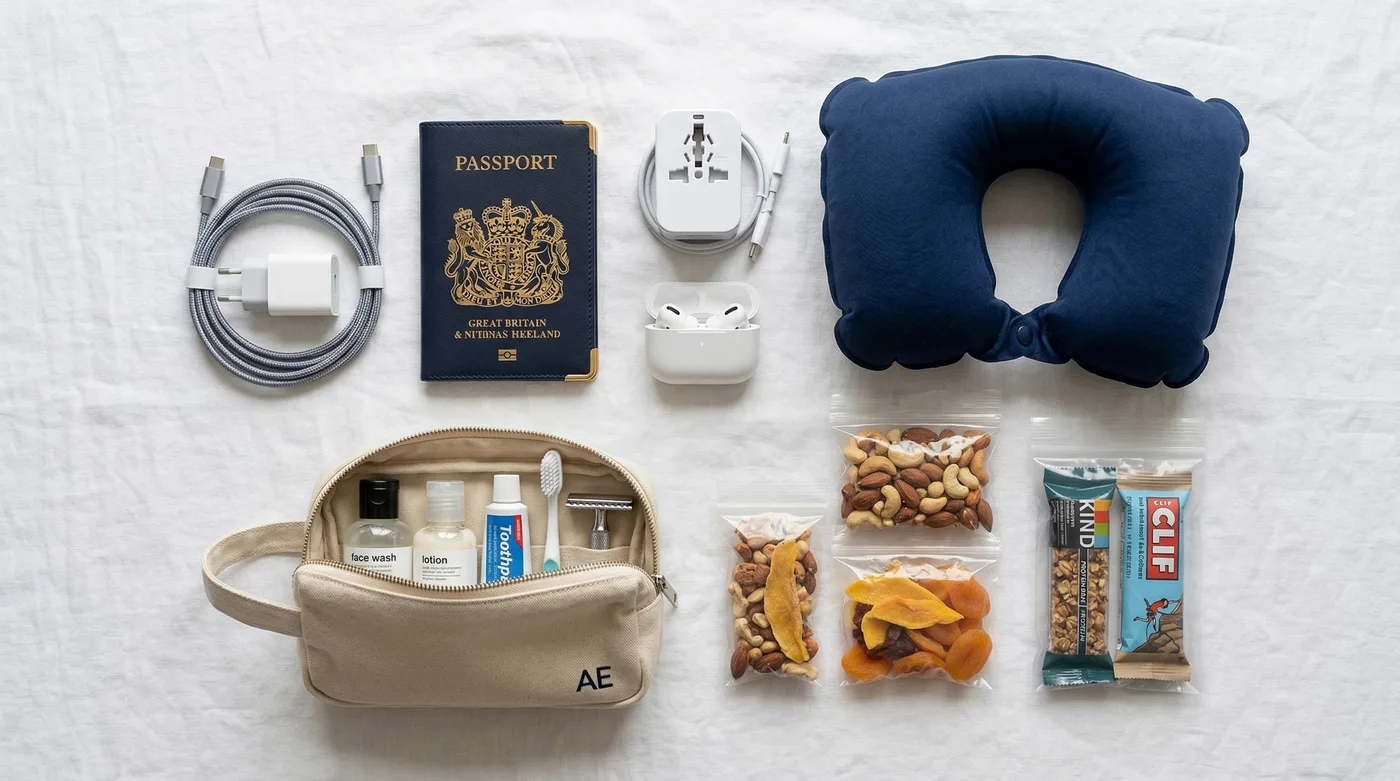
Start with a solid carry-on bag. Check your airline's specific dimensions for both carry-on and personal item. They vary! Ryanair is notoriously strict (40x25x20 cm for a free personal item), while bigger carriers like Delta are a bit more generous (56x35x23 cm for carry-on, plus a personal item). Your personal item (backpack, large purse, laptop bag) is prime real estate for essentials you'll need during the flight or immediately upon arrival.
Packing essentials checklist:| Category | Item | Notes | Description