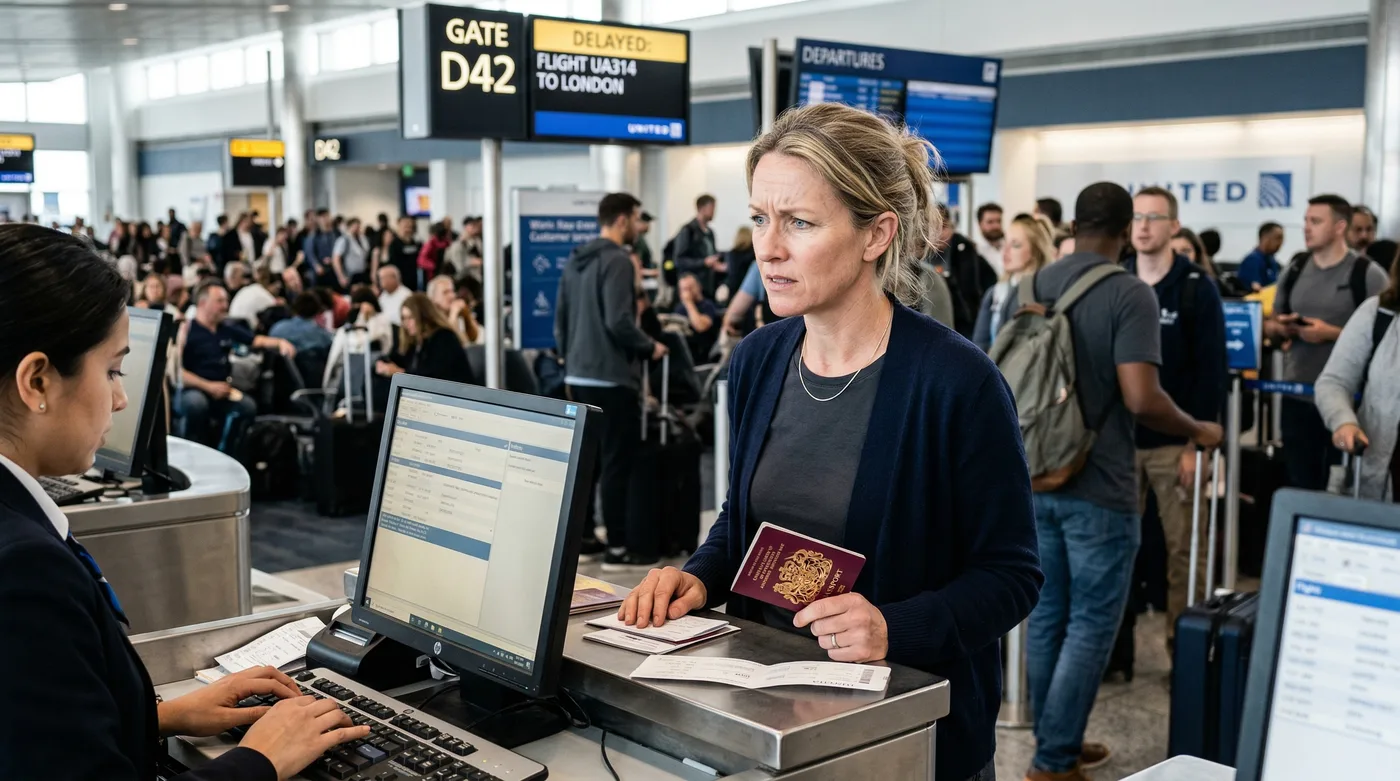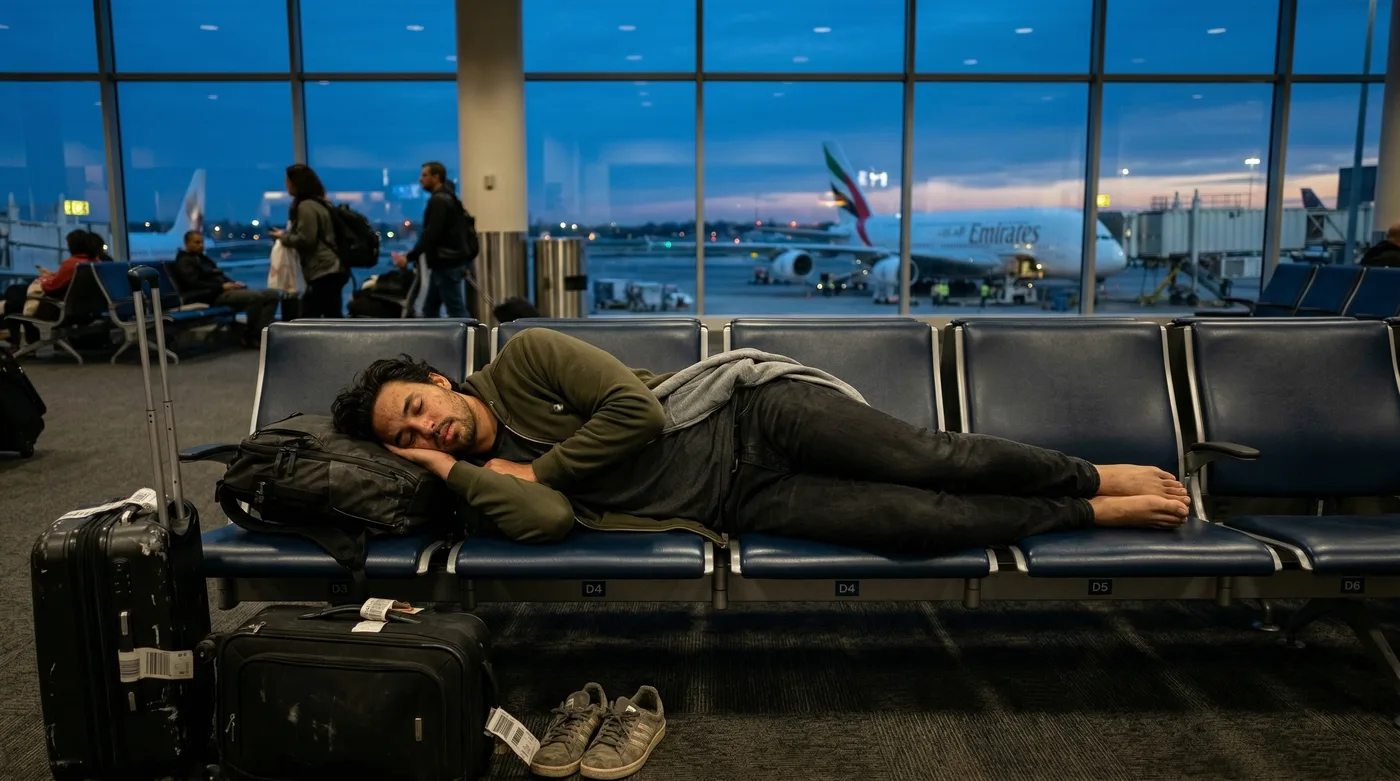
I once landed in Tokyo after a 14-hour economy seat on United — the kind with 31 inches of pitch where your knees file a formal complaint — and spent the first full day of my trip face-down on a capsule hotel mattress. Not because I hadn't slept on the plane. Because I'd done everything wrong before I boarded.
Jet lag advice on the internet is mostly recycled garbage dressed up as science. "Stay hydrated!" Cool, thanks. "Try melatonin!" At what dose? When exactly? Nobody says. So let's actually break down what the research shows, what frequent long-haul flyers swear by, and what's just placebo wrapped in a sleep mask.
Why jet lag hits economy harder than business
This isn't a class warfare thing — it's physics. Your circadian rhythm is a roughly 24-hour internal clock driven by light exposure, meal timing, and physical activity. When you cross multiple time zones fast, the clock doesn't update instantly. Your body still thinks it's 3am when the locals are eating lunch.
But economy class makes this worse in specific, measurable ways. Cabin pressure in economy is technically the same as business on the same aircraft, but you're far less likely to move around, you're eating when the cart comes by rather than when you choose, and you're almost certainly sleeping in a position that would make a chiropractor weep. All of that compounds circadian disruption.
On a JFK-NRT (New York to Tokyo) flight — you can catch this on JAL around $680-$820 roundtrip if you set a FlightKitten hunt and wait for a fare drop — you're crossing 13-14 time zones. That's not a "drink some water and power through" situation. That's a multi-day physiological reset.
The light exposure piece (this is the big one)
If you take nothing else from this article, take this: light is the most powerful tool you have for resetting your circadian clock. Not melatonin. Not sleep apps. Light.
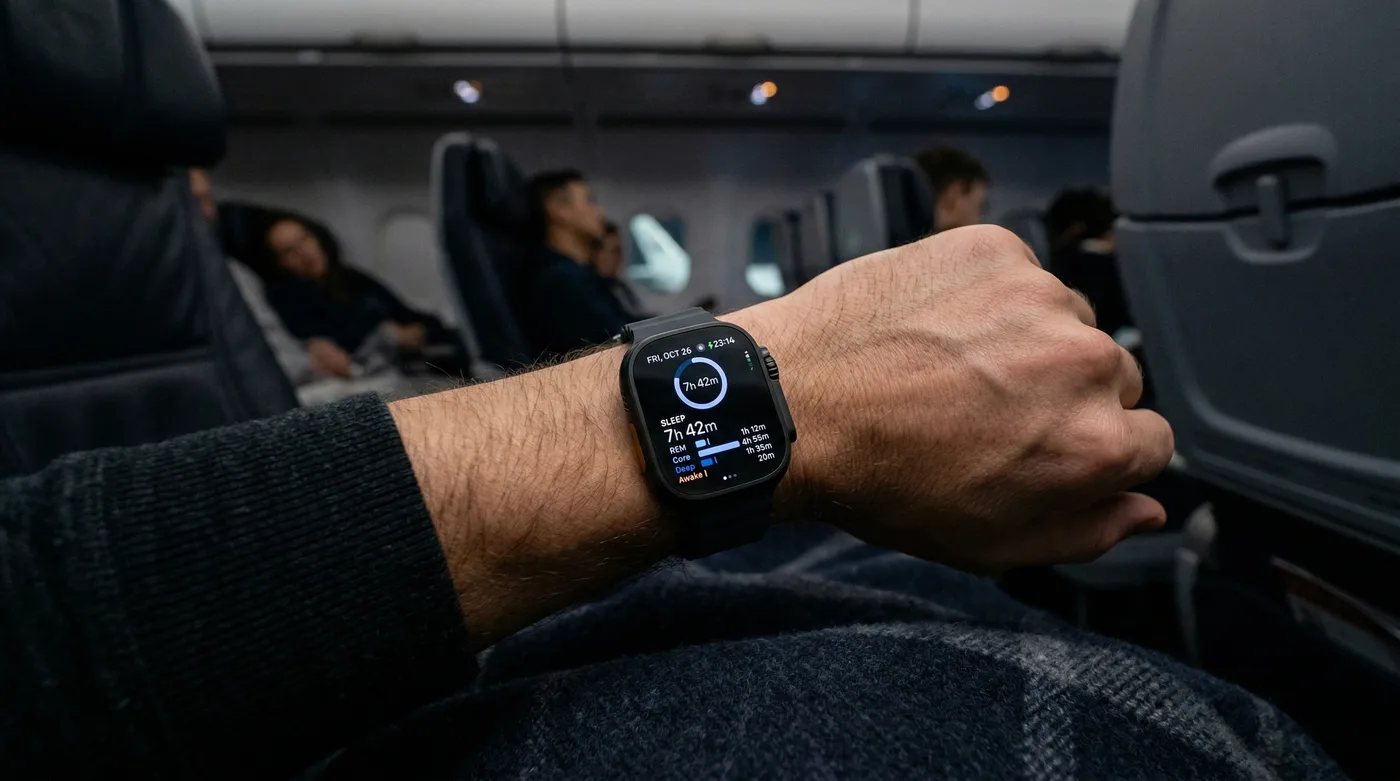
Your suprachiasmatic nucleus — the brain region that runs your internal clock — responds to light hitting your retina. Specifically, it suppresses melatonin production when it detects bright light, which signals "daytime" to your whole system. Get the timing right and you can shift your clock by 1-2 hours per day. Get it wrong and you extend your jet lag by the same amount.
Here's how to apply this practically:
Flying east (say, New York to London, which you can do on Norse Atlantic for $299-$380 roundtrip right now): You need to advance your clock. Seek bright light in the morning at your destination, avoid it in the evening. Don't sit by the window at dinner with the sunset blasting your face. Flying west (London back to New York, or LAX to Tokyo): You need to delay your clock. Seek evening light at your destination, avoid early morning brightness. Wear sunglasses if you land at 6am and the sun is already up.The free app Timeshifter — built with actual circadian science researchers — will generate a personalized light/dark schedule based on your specific flight. It costs $9.99 for a single trip plan or $24.99/year for unlimited. Worth every cent if you're doing a JFK-SYD run.
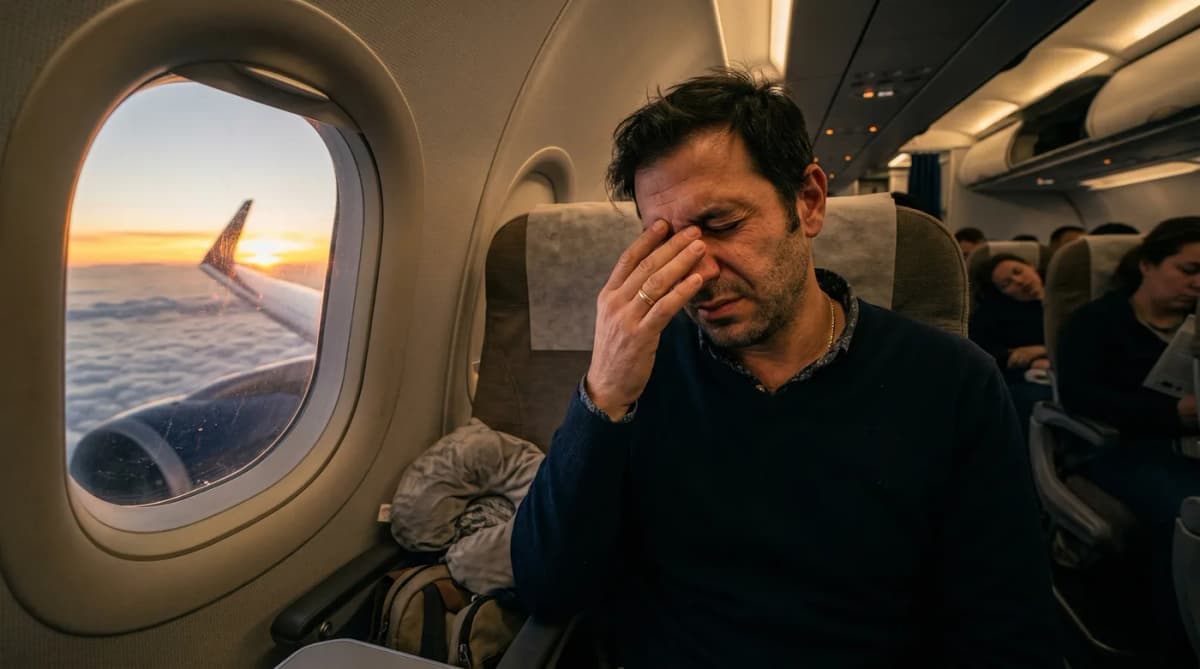
Pro Tip: On overnight eastbound flights, close your window shade for the entire flight even if you're awake. That sunrise at 30,000 feet two hours before landing in Europe is beautiful and it will wreck your first two days.
What melatonin actually does (and doesn't do)
Melatonin is not a sleeping pill. This is the most common misunderstanding I see, even among frequent flyers who should know better.
Melatonin is a timing signal. It tells your brain "it's getting dark, start winding down." Taking 10mg because you can't sleep is like screaming into a phone because the signal is weak — more isn't better, it's just louder noise.
The research-supported dose for jet lag is 0.5mg to 3mg, taken at your destination's bedtime on the day you arrive. Most over-the-counter melatonin in the US is 5-10mg, which is pharmacologically overkill and may actually cause grogginess the next day.
Cut a 5mg tablet in half. Take it at 10pm local time at your destination, not on the plane, not at your home timezone's bedtime. Timing is everything.
What melatonin won't do: fix your jet lag if your light exposure is wrong, make you fall asleep immediately, or compensate for 22 hours of travel on a $487 ORD-DXB connection through Frankfurt.
The caffeine strategy nobody talks about
Caffeine blocks adenosine receptors — adenosine is the chemical that builds up in your brain the longer you're awake, creating sleep pressure. This is useful, but most travelers use caffeine like a blunt instrument when it's actually a scalpel.
The half-life of caffeine is roughly 5-6 hours. That coffee you had at 3pm? Half of it is still in your system at 9pm. On a long-haul flight where you're trying to sleep at a specific time to sync with your destination, random caffeine consumption is actively working against you.
A smarter approach:
- Cut caffeine completely for 12-16 hours before the sleep window you're targeting at your destination
- Use it strategically on arrival day to push through until local bedtime (no earlier than 6pm local)
- Don't touch it after 2pm local time for the first three days
This is harder than it sounds on a 15-hour economy seat where the flight attendant keeps offering you coffee. I've failed at this more times than I'd like to admit, including on a SIN-LHR flight on Singapore Airlines (worth every penny of the $620 economy fare, by the way — the seat pitch alone is a minor miracle) where I accepted a cappuccino at hour 11 and then stared at the ceiling of my London hotel until 4am.
Sleep on the plane: the honest economics
Here's the uncomfortable truth about sleeping in economy: it's hard, and no amount of tips fully compensates for a 17-inch seat with a 31-inch pitch on a 13-hour flight.
That said, there's a meaningful difference between sleeping badly and sleeping catastrophically. A few things that actually move the needle:
Seat selection: Bulkhead and exit rows get the legroom press, but window seats are genuinely better for sleep. You control the shade, you have a wall to lean on, and nobody climbs over you at 3am. On a 777 in a 3-4-3 configuration, avoid the middle section entirely if you're flying solo. Neck pillow geometry: The standard U-shaped neck pillow is designed for someone sleeping upright with their head falling forward. If you're leaning against a window, a J-shaped or wrap-style pillow (the Trtl is ugly but functional) actually keeps your head stable. I wasted money on three different U-shaped pillows before figuring this out. The recline math: Reclining your seat gives you maybe 15-20 degrees. It's not nothing, but it's also not worth the social friction on a packed flight. If you're going to recline, do it early and fully — half-reclined is the worst of both worlds.| Airline | Route | Economy pitch | Approx. roundtrip fare | Sleep-friendliness |
|---|---|---|---|---|
| Singapore Airlines | SIN-LHR | 32" | $580-$720 | High — good seat design |
| JAL | JFK-NRT | 31" | $680-$820 | High — quieter cabin |
| Norse Atlantic | JFK-LGW | 31" | $299-$420 | Medium — newer 787 |
| United | EWR-FRA | 30" | $420-$560 | Low — inconsistent |
| Spirit | N/A | 28" | Under $200 domestic | Don't try to sleep |
The food and fasting debate
There's a theory — based on research from Harvard's Brigham and Women's Hospital — that fasting for 12-16 hours before your destination's breakfast time can help reset your circadian clock via food cues rather than light. The idea is that your body has a secondary clock tied to feeding patterns.
Does it work? Possibly. The original research was promising but the sample sizes were small. I've tried it twice on transatlantic flights and felt better on arrival both times, though I can't rule out placebo.
What I'm more confident about: eating the airline meal on your home timezone's schedule (which is what most people do) actively confuses your body. If you land in Paris at 7am and you've been eating at New York meal times, your gut is thoroughly confused about what's happening.
Practical middle ground: skip the midnight snack service on overnight flights, eat breakfast when the crew serves it before landing, and eat a proper meal at local lunchtime on arrival day even if you're not hungry.
Pro Tip: Airplane food is often high in sodium, which causes water retention and bloating — both of which make economy discomfort worse. If you're on a long-haul and can choose, the vegetarian or LFML (low-fat meal) special options are usually less aggressively salted. Order them when you book.
Exercise and movement: the part everyone skips
Your lymphatic system doesn't have a pump. It moves via muscle contractions. Sitting completely still for 11 hours means your circulation slows, your legs swell, and your body's stress response ticks upward — all of which make jet lag worse.
You don't need to do a full aisle workout and annoy everyone around you. Standing up once per hour, doing 10-15 calf raises at your seat, and walking to the back galley twice during a long flight is enough to meaningfully improve circulation.
On arrival, a 20-30 minute walk outside — ideally in daylight, which doubles as your light exposure dose — does more for jet lag recovery than any supplement. This is free. It requires zero gear. Almost nobody does it because they're tired and the hotel bed is right there.
The bed will still be there in 30 minutes. Go outside first.
What doesn't work (the hall of shame)
Since we're being honest:
Alcohol: Makes you feel sleepy, destroys sleep quality, dehydrates you, and suppresses REM sleep. The free wine in economy is a trap. One drink is fine. Three drinks is why you feel like death in Dublin. Sleeping pills (prescription or OTC): Ambien and its cousins can knock you out but they suppress the deep sleep stages your brain actually needs for recovery. You land having "slept" but feeling worse than if you'd stayed awake. Antihistamine-based OTC sleep aids (Benadryl, ZzzQuil) are even worse — they cause next-day grogginess that compounds jet lag. Homeopathic jet lag remedies: No. The studies don't support them. Save the $18. Sleeping the whole first day: If you land at 9am local time and sleep until 6pm, you've just told your circadian clock that 6pm is morning. You will be awake at 3am. Push through to at least 9pm local, even if it's miserable.Building your actual pre-flight routine
This is what I do before any flight crossing more than 6 time zones, and it's based on everything above rather than vibes:
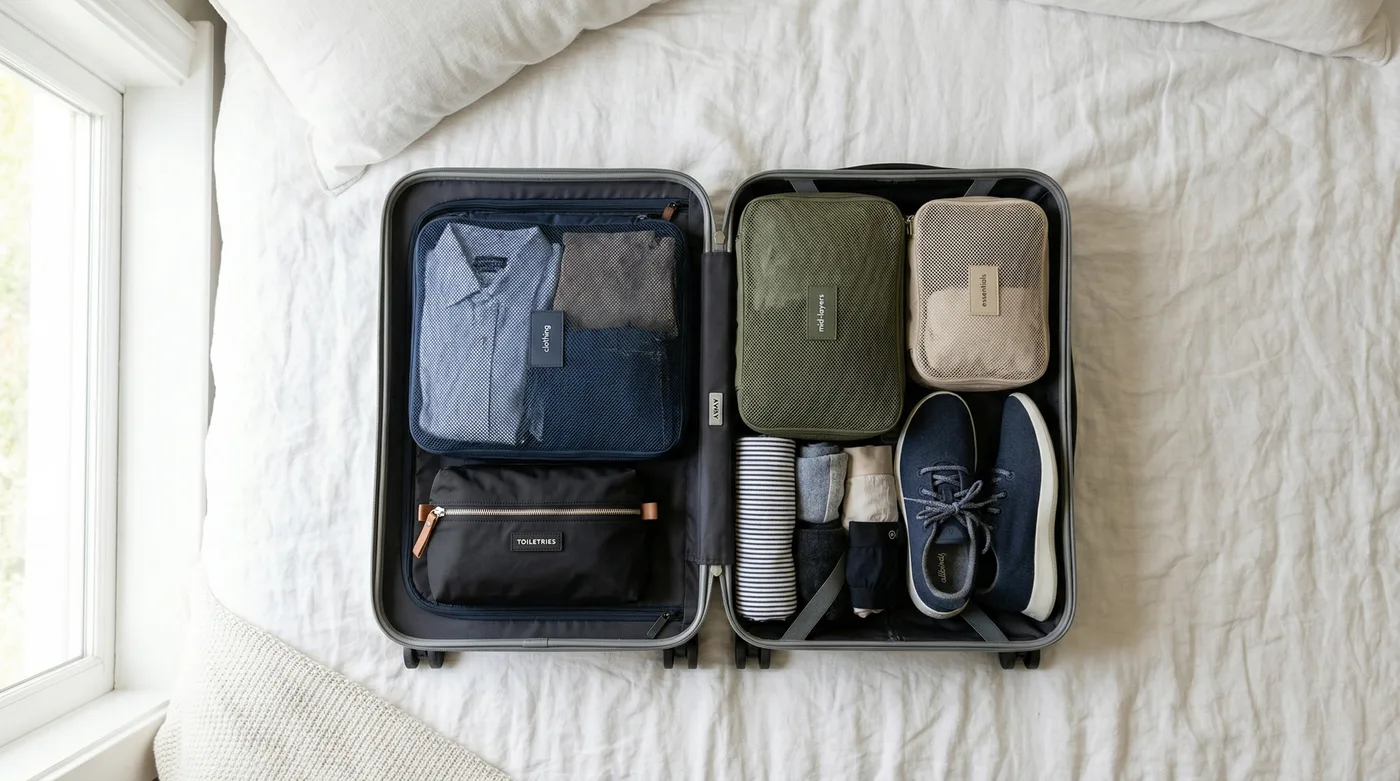
3 days before: Start shifting sleep 30-60 minutes earlier (eastbound) or later (westbound) each night. It's not dramatic, but it gives your clock a head start. Day of flight: Download Timeshifter, set your route, follow the light schedule. Pack earplugs (foam, not just the airline's foam — bring your own), an eye mask, and a half-tablet of 0.5-1mg melatonin. On the plane: Eat at destination meal times, not home times. Avoid alcohol. Move hourly. Sleep only during the Timeshifter-recommended window. Arrival day: Get outside in natural light at the right time per your direction of travel. Eat at local meal times even if your stomach disagrees. Stay awake until at least 9pm local. Take melatonin at 10pm. Days 2-3: Keep the light schedule. Don't nap for more than 20 minutes. You'll be about 80% recovered by day 3 on most transatlantic routes.The bottom line
Jet lag is a circadian problem, so the solutions are circadian tools: light, timing, and consistency. Everything else — the pills, the gadgets, the $60 "jet lag supplements" — is noise.
The good news is that the most effective interventions are free. Light exposure costs nothing. Moving around the cabin costs nothing. Skipping the 1am wine service costs nothing (it saves you money, actually).
If you're hunting a long-haul deal on FlightKitten right now — JFK-BCN on TAP is sitting at $347 roundtrip, and JFK-NRT on JAL drops to the high $600s a few times a year if you set a pounce alert — don't let jet lag eat the first three days of a trip you waited months to afford. The flight is the cheapest part. Losing your first two days to a preventable circadian crash is the expensive part.
Set the hunt. Book the flight. And for the love of all things, close your window shade when the sun comes up over Greenland.