A United Airlines ticket from Newark to Orlando was $340. A United ticket from Newark to Orlando with a connection in Denver was $189. Same plane, same seat, same bag of pretzels. The only difference: the second passenger got off in Denver and never boarded the second flight.
That's hidden city ticketing. Airlines have been furious about it for decades. They've sued travel sites over it, threatened to cancel frequent flyer accounts, and buried warnings in their terms of service. And yet, in 2026, it still works — sometimes spectacularly well, sometimes catastrophically badly.
Let me tell you exactly when to try it, when to run the other way, and what's changed in the last couple of years that you absolutely need to know.
What hidden city ticketing actually is
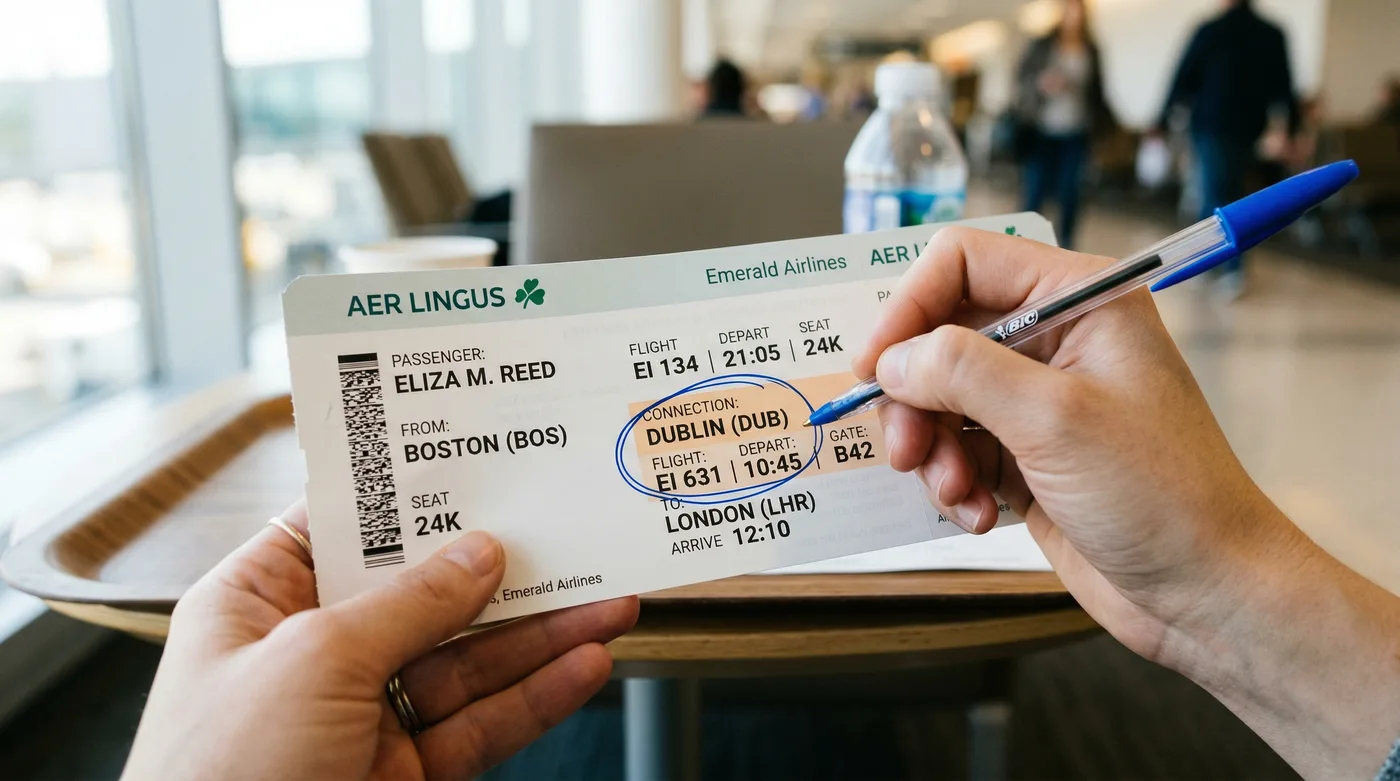
The premise is simple: you book a flight with a layover at your real destination, then skip the final leg. You're exploiting a quirk in airline pricing where routing through a hub can be cheaper than flying direct to that hub.
It sounds obvious once you see it. Airlines price routes based on competition, demand, and about seventeen other factors their revenue management algorithms chew through overnight. A direct EWR-DEN route competes with Frontier, Southwest, and Spirit. EWR-DEN-MCO? That's United competing mostly with itself on the back half. The pricing doesn't always make logical sense to humans. That's the gap you're squeezing through.
The practice got its modern name "skiplagging" from the site Skiplagged.com, which was sued by United and Orbitz back in 2014. United lost. The site is still running. Draw your own conclusions.
The legal and practical reality in 2026
Here's the part most guides get wrong: hidden city ticketing is not illegal. It has never been illegal. What it is, is a violation of most airlines' Contracts of Carriage — the terms you agreed to when you bought the ticket.
The practical consequences of getting caught range from "nothing" to "your frequent flyer account gets nuked." In 2025, American Airlines made headlines by retroactively canceling the AAdvantage accounts of several passengers who had done this repeatedly on the same routes. Delta has automated flagging for passengers who consistently skip final legs. This is new-ish behavior. The airlines are paying more attention than they were five years ago.
What they almost never do: charge you the fare difference on the spot, deny you boarding, or take any legal action against individual passengers. The risk is almost entirely about loyalty programs.
If you have 80,000 hard-earned Delta SkyMiles sitting in an account, this is not the strategy for you. If you're a points-free, loyalty-program-agnostic budget traveler who just wants to get from A to B cheaply? The calculus looks different.
Where the real price gaps still exist
I spent a few hours in January 2026 pulling actual fare data to see where hidden city opportunities were still showing up consistently. The short answer: they're most common on routes where a major carrier dominates the hub but faces real competition on the spoke.
Some patterns I found:
| Route (hidden city) | Marketed destination | Approx. savings | Carrier |
|---|---|---|---|
| EWR → DEN (via MCO) | Orlando | $90–$160 | United |
| ORD → SEA (via LAX) | Los Angeles | $70–$130 | American |
| JFK → MIA (via BOS) | Boston | $40–$80 | JetBlue |
| ATL → DFW (via PHX) | Phoenix | $80–$150 | Delta |
| LAX → NYC (via MIA) | Miami | $60–$110 | American |
The JFK-BOS-MIA JetBlue one is interesting because JetBlue prices its Boston routes aggressively against Delta and American on that corridor, which sometimes creates a situation where flying "through" Boston to Miami is cheaper than just flying to Boston. I've personally used a variation of this.
Pro Tip: The best hidden city opportunities tend to appear 3–6 weeks out, not at the last minute. Airlines tighten up pricing on short-haul legs as departure approaches, which can actually close the gap you were counting on. Set a FlightKitten hunt on both the direct route and the connecting route, and compare them as the travel date gets closer.
The rules that keep you out of trouble
If you're going to try this, there's a short list of rules that aren't optional. Breaking any of them turns a clever move into an expensive disaster.
Carry-on bags only. This is the big one. If you check a bag, it goes to the final destination on your ticket. You get off in Denver, your bag goes to Orlando. You will not see it again that day. I cannot stress this enough — I have watched this happen to someone at O'Hare and it is not a fun afternoon. Book directly with the airline, not through an OTA. Expedia, Google Flights, and most third-party booking platforms prohibit hidden city ticketing in their terms and may cancel your ticket if they detect it. Booking direct also gives you slightly more flexibility if anything changes. One-way tickets only. If you book a round trip and skip the last leg of the outbound flight, the airline's system may automatically cancel your return ticket. This has happened. Book two separate one-ways. Don't do it on the same route repeatedly. Delta's automated systems in particular have gotten good at flagging accounts that show a pattern of skipping final legs on the same city pair. Once is invisible. Six times on ATL-PHX over eight months is a pattern. Have a backup plan. If the first leg of your flight is delayed and you miss your "connection" (which is actually your destination), you have no recourse. The airline will rebook you to the final ticketed destination, not the layover city. You're on your own.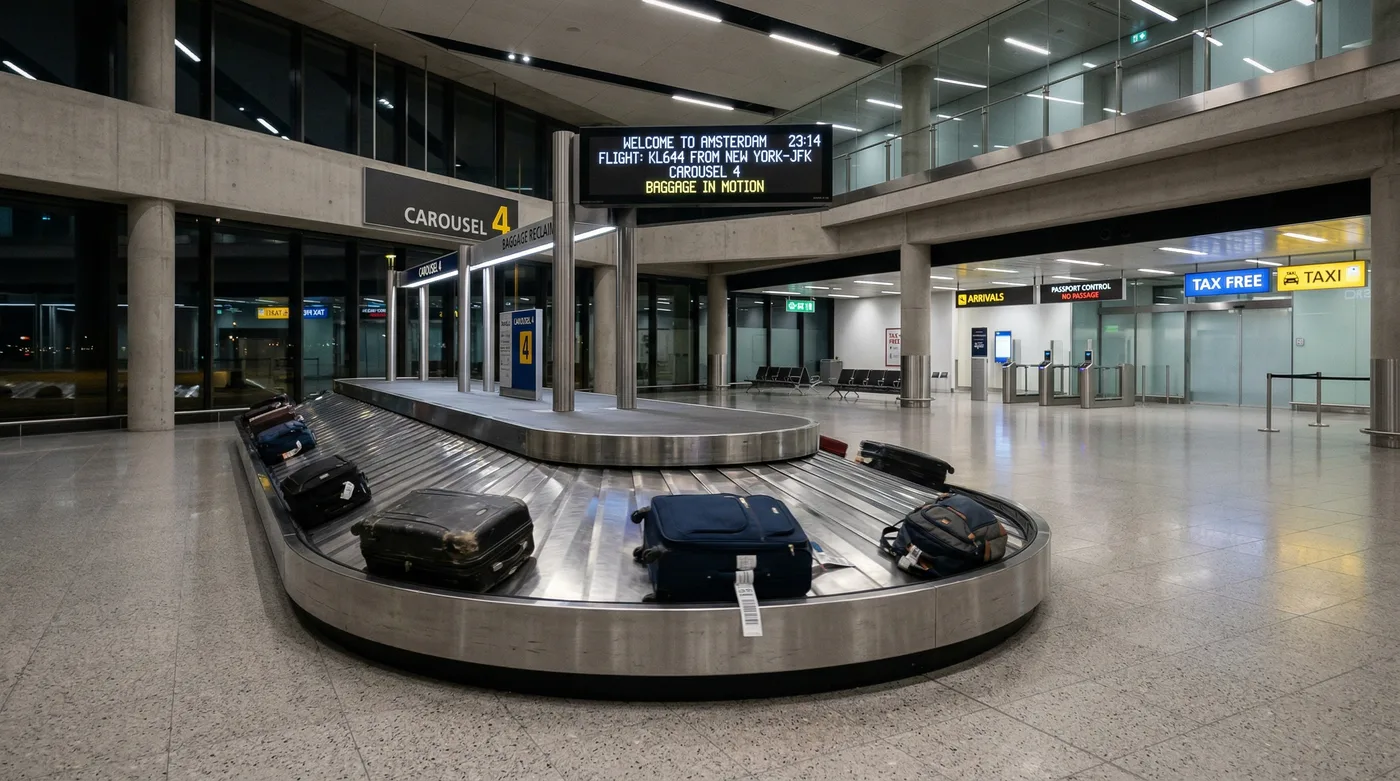
When it's genuinely not worth it
Hidden city ticketing gets oversold as a universal hack. It isn't. There are plenty of situations where the math just doesn't work or the risk profile is wrong.
Business travel is almost always a bad fit. You're probably on a corporate card, you may have status worth protecting, and the inflexibility is brutal if a meeting runs long and you need to change flights.
Families with kids and checked luggage: the carry-on rule alone kills it. You're not fitting a family of four's luggage into overhead bins, and the logistics of herding children through a "fake" connection while pretending you're going somewhere else is a special kind of stress nobody needs.
Anything involving international connections is a legal and logistical nightmare. Customs, immigration, visa requirements — the final destination on your ticket is what matters to border agents. Don't play games with this.
And honestly? Sometimes the savings just aren't enough. If the gap is $40 and you're adding a connection to what was a direct flight, you're paying in time and hassle for not much money. The sweet spot is $80+ in savings on a route where the connection city is actually convenient.
How airlines are fighting back in 2026
The airlines aren't sitting still. A few things have changed recently that you should know about.
Delta rolled out enhanced pattern detection in late 2024 that cross-references booking behavior with actual boarding scans. If your account shows repeated no-shows on final legs, it gets flagged for review. American has quietly added language to its AAdvantage terms that explicitly allows them to confiscate miles for "fare abuse" without defining it particularly precisely — which is a bit ominous.
United has started experimenting with "basic economy" fares on routes that were common hidden city targets, which doesn't block the practice but makes it less attractive since you lose seat selection and other flexibility.
The most significant change is that several airlines have gotten better at dynamic pricing that narrows the gap in the first place. Revenue management systems are smarter now. The $200 savings that used to be easy to find on certain routes has compressed to $60–$80 on many of them. Still worth it sometimes, but less of a slam dunk.
None of this makes hidden city ticketing obsolete. It just means you have to be more selective about when you pull the trigger.
Pro Tip: FlightKitten tracks both nonstop and connecting fares on major routes. If you're watching a route and you notice the connecting fare is consistently 25%+ cheaper than the nonstop, that's worth investigating manually on Skiplagged or Google Flights' full routing view. We flag the cheap catches — you decide how adventurous you want to get.
The alternatives that are honestly less stressful
Look, I like a clever booking trick as much as anyone. But hidden city ticketing has real operational friction that some of the alternatives don't.
Positioning flights — flying a cheap fare to a nearby hub to catch a cheaper international departure — are legal, flexible, and often produce similar savings. Flying EWR-ORD on a $89 United basic economy fare to catch a $380 ORD-FCO instead of paying $620 from Newark is completely above board and saves you $150.
Mix-and-match booking (booking legs separately on different carriers) requires more research but gives you full flexibility on each leg. The risk is that if one flight is delayed, the other carrier owes you nothing — but at least your bag goes where you're going.
And sometimes the answer is just: wait for a sale. A direct JFK-BCN on TAP Air Portugal was $347 in February 2026. That's a real number from a real FlightKitten catch. No tricks required, no risk of having your loyalty account torched, no standing in Denver wondering where your bag went.
So does it still work?
Yes. With caveats that matter.
Hidden city ticketing in 2026 works best for: solo travelers, carry-on-only trips, loyalty-program-free passengers, domestic US routes, and situations where the savings are $80 or more. It's gotten marginally riskier for frequent flyers and marginally less lucrative as airline pricing algorithms have improved, but the fundamental opportunity hasn't disappeared.
The travelers who get burned are the ones who treat it as a guaranteed hack rather than a calculated risk. You're not outsmarting the airline — you're exploiting a pricing quirk they haven't bothered to fully close. That's a different thing, and it requires a different mindset.
Do your homework on each specific itinerary. Check Skiplagged.com directly, compare against what Google Flights shows for the direct route, and run the numbers on whether the savings justify the constraints. Sometimes they do. Sometimes a legitimate sale fare is sitting right there and you don't need to be clever at all.
Set up your FlightKitten hunts on both the direct and connecting versions of your route. When a pounce alert lands in your inbox, you'll have the data to make a quick decision — and in this game, quick decisions are the ones that actually save you money.
The cheap seat is out there. Sometimes it requires a trick. Sometimes it just requires being the first one to click.