


Route Briefing: Amsterdam to Shanghai
Amsterdam to Shanghai is one of those long-haul routes that genuinely rewards the effort. At around ten and a half hours direct, it's a substantial journey, but the payoff is landing in one of the most visually arresting cities on the planet — a place where century-old colonial architecture meets a skyline that looks borrowed from science fiction.
KLM operates this route with the reliability you'd expect from one of Europe's most experienced long-haul carriers, and China Eastern offers a solid alternative, often at competitive prices. A good deal sits under $600 roundtrip, while standard fares typically climb above $900, so timing your booking matters. Aim to lock in tickets two to four months ahead of your travel dates. The route runs year-round, but pricing swings dramatically around Chinese national holidays — Golden Week in early October and Chinese New Year in January or February both send fares surging, so unless you specifically want to experience the festive atmosphere, those windows are best avoided for budget-conscious travelers.
If you do want the city buzzing with energy, June through August is peak season, warm and lively, though humidity can be intense. Spring and autumn tend to offer more comfortable temperatures and thinner crowds — genuinely pleasant conditions for walking the city.
You'll arrive at Pudong International Airport, which sits east of the city center. The Maglev train connects the airport to Longyang Road station at extraordinary speed, making it one of the most memorable airport transfers in the world — and a practical one at that. From Longyang Road you can connect onward via metro into the heart of the city.
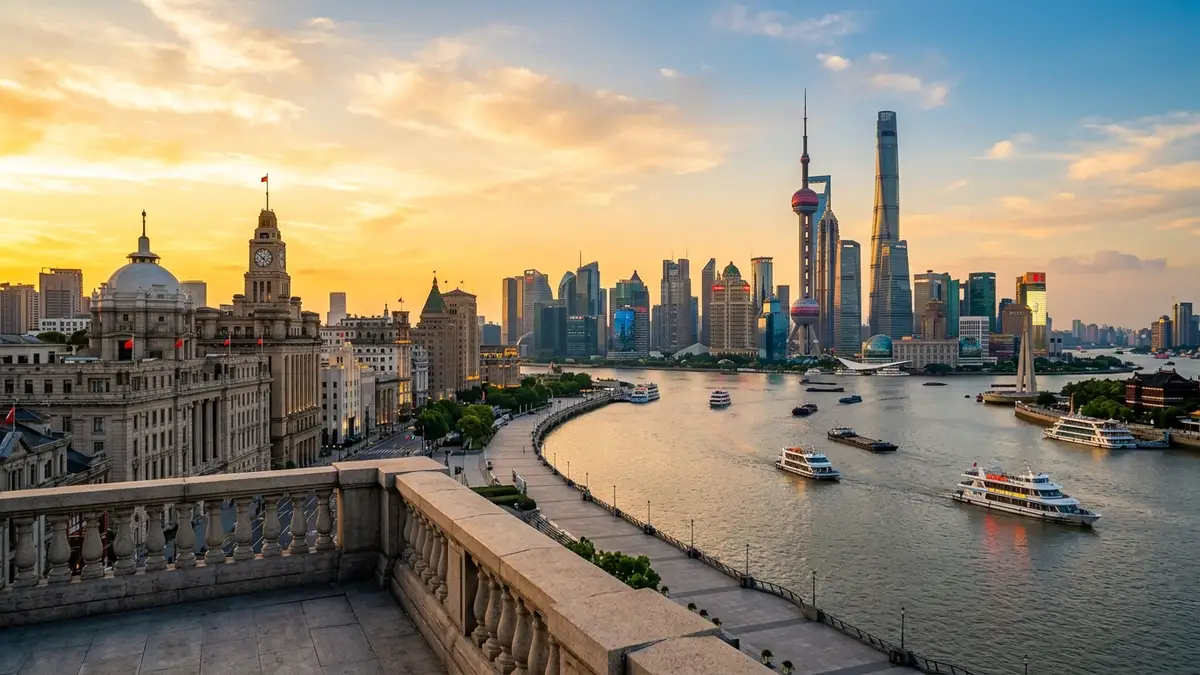
Shanghai itself operates on a scale that takes a day or two to absorb. The Bund is the obvious starting point — that sweeping waterfront promenade lined with grand Art Deco and neoclassical buildings, facing the glittering towers of Pudong across the Huangpu River. The contrast between the two banks is genuinely one of the great urban views anywhere. Yu Garden, tucked into the old city, offers a quieter counterpoint: classical Chinese landscaping, pavilions, and a warren of surrounding streets filled with street food and local commerce.
Shanghai's food scene is a destination in itself. Soup dumplings — xiaolongbao — are the dish to seek out, and the city's local Shanghainese cuisine tends toward sweeter, richer flavors than you might find elsewhere in China. Street food around the Yu Garden bazaar area gives you an immediate, affordable introduction.
One genuinely useful tip: download WeChat and set up a payment method before you arrive. Cashless mobile payments dominate daily life in Shanghai, and having it ready from day one makes everything from buying street food to paying for metro rides significantly smoother.