


Route Briefing: Boston to Shanghai
Boston and Shanghai sit on opposite ends of the Earth in almost every sense — one a compact, history-soaked New England city, the other a vertical, kinetic megalopolis that feels like it was designed by someone who read too many science fiction novels. That contrast alone makes this route one of the more rewarding long-haul journeys you can take from the American Northeast, and with roundtrip fares occasionally dipping under $700, it's genuinely one of the better value transcontinental routes out there.
The flight itself runs around 15 hours and 30 minutes with a stop, typically routed through hubs in Asia or on the West Coast depending on your carrier. Air China, China Eastern, and United Airlines are your main options, and each brings a different experience — so it's worth comparing not just price but layover duration before you commit. Book three to six months out for the strongest fares, and be strategic about timing: June through August is peak season when families travel and prices climb, and Chinese New Year turns the entire country into a logistical puzzle with airfare to match. The sweet spot is spring or autumn, when Shanghai's weather is genuinely pleasant and the city feels a little more breathable.
Arriving at Pudong International Airport, you have a genuinely thrilling option for getting into the city: the Maglev train, one of the fastest commercial trains in the world, which connects the airport to a metro station in a matter of minutes. From there, the metro system is extensive, affordable, and easy to navigate even without Mandarin skills, as signage is bilingual throughout.
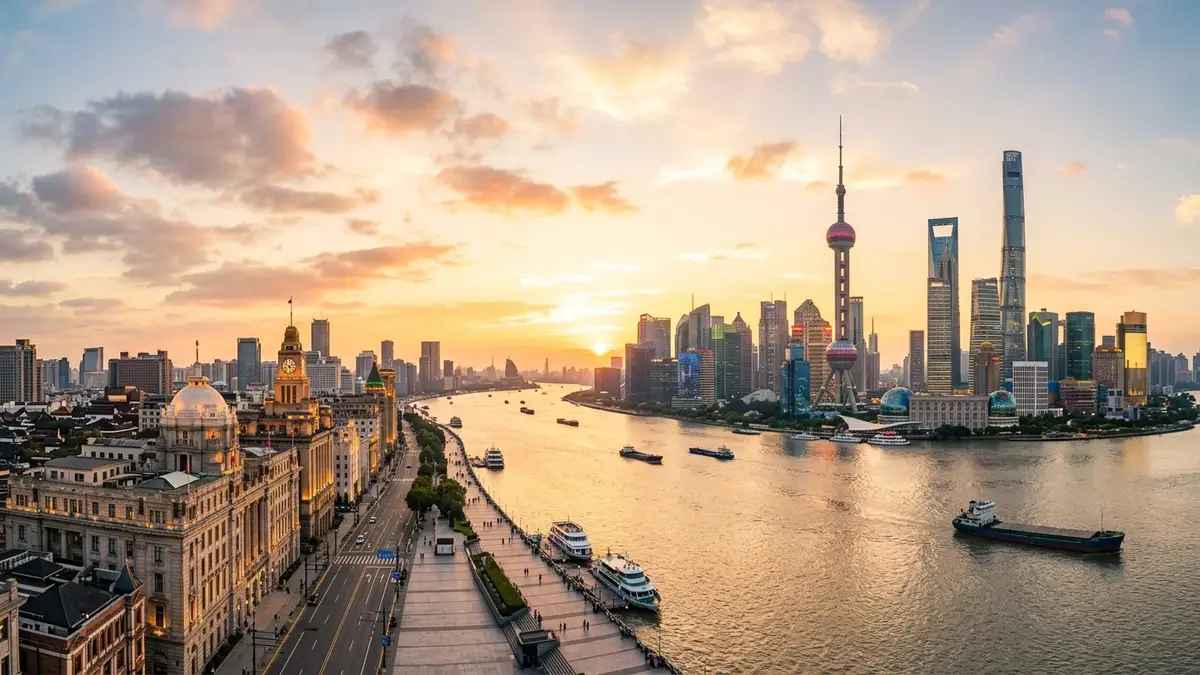
Shanghai rewards slow wandering as much as it does ticking off landmarks. The Bund is the obvious starting point — that sweeping waterfront promenade lined with colonial-era architecture staring across the Huangpu River at the impossibly futuristic Pudong skyline, including the Oriental Pearl Tower and the Shanghai Tower. Yu Garden in the Old City offers a completely different tempo: classical Chinese garden design, stone pavilions, and a surrounding bazaar that gets crowded but remains atmospheric. The French Concession neighborhood is worth an afternoon for its tree-lined streets, local café culture, and a sense of the city's layered history.
The single most useful tip for this trip: set up a VPN before you leave home. Many apps and websites you rely on daily are inaccessible in China, and installing a VPN once you've landed is far more complicated. Sort it out in Boston, and you'll save yourself real frustration on arrival.