


Route Briefing: Seattle to Shanghai
There's something quietly thrilling about boarding a direct flight from Seattle and landing eleven and a half hours later in one of the world's most electrifying cities. No layovers, no connection stress — just a single overwater arc across the Pacific and suddenly you're standing in Shanghai, a place that somehow manages to feel like the past and the future existing in the same breath.
The route itself is well-served year-round by Air China, Hainan Airlines, and United Airlines, which means you have real options when it comes to timing and comfort. A genuinely good deal lands under $600 roundtrip, though standard fares typically run between $900 and $1,200 or more. The sweet spot for booking is two to four months out, and flying mid-week rather than on weekends consistently yields better prices. The bigger thing to watch, though, is the Chinese calendar. Golden Week in early October and Chinese New Year between January and February send both crowds and fares surging — avoid those windows if budget is your priority, and you could save a meaningful 20 to 30 percent.
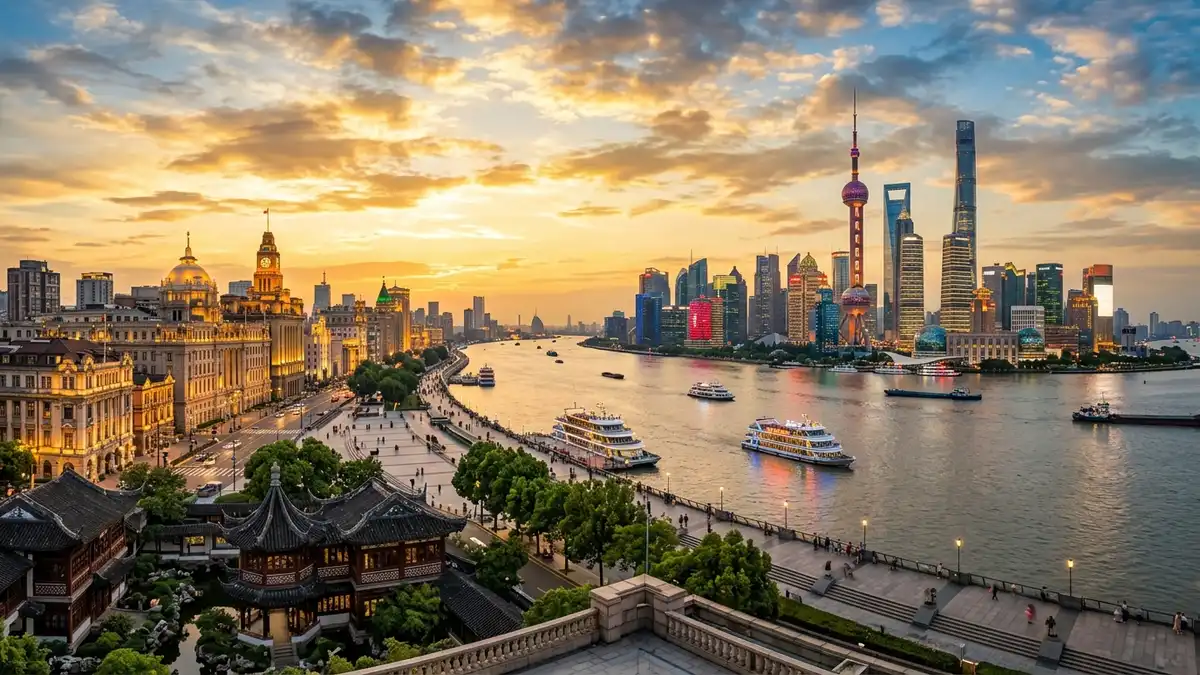
Shanghai rewards you immediately. The Bund is one of those rare waterfronts that actually lives up to its reputation — a colonial-era promenade facing the glittering Pudong skyline across the Huangpu River, where the Oriental Pearl Tower and the Shanghai Tower compete for your attention day and night. Pull yourself away from that view and head to Yu Garden, a classical Ming-dynasty garden tucked into the old city that offers a genuinely peaceful contrast to the surrounding bazaar energy. Shanghai's food scene is exceptional — soup dumplings, or xiaolongbao, are the dish you'll think about long after you've left, and the city's French Concession neighborhood is full of atmospheric streets perfect for wandering and eating.
From Pudong International Airport, the Maglev train is one of the most practical and genuinely fun arrival experiences anywhere in the world — it connects the airport to the metro system at extraordinary speed and costs a fraction of a taxi. From there, the metro network is extensive, affordable, and easy to navigate even without Mandarin.
If you can time your visit for spring or autumn, Shanghai's climate is at its most agreeable — warm without the intense humidity that settles over the city in summer. June through August is peak season, so if you do visit then, book accommodation and flights well ahead. Whenever you go, give yourself at least five or six days. Shanghai is a city that keeps revealing itself the longer you stay.